I'm still finding out what I'm about but I think it has something to do with writing and connecting with people and serving God. I don't believe I have to understand it all in order to do it and am pretty content with what comes my way, day by day. I believe there is a God who created all of us, the world we live in, the science we think disproves Him, well, everything. I know my natural tendency is to think I don't need God and I need to be saved from that. I know I need a savior and I'm thankful I have one. The small glimpses I get from the here and now of what my real home is going to be like when God restores it all - that's what fuels me, stirs my sense of adventure, and keeps me going. Until then, I write about what is.
I’m back alive. It’s exhilarating to have met the challenge, to be one of the less than one percent of the 6 million visitors to the canyon who actually get below the rim.
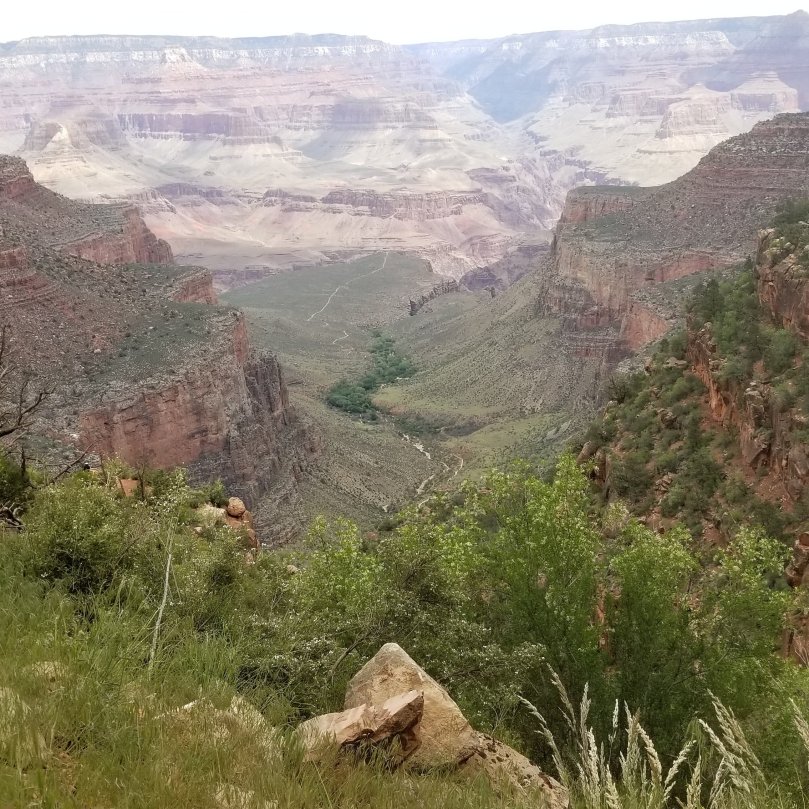
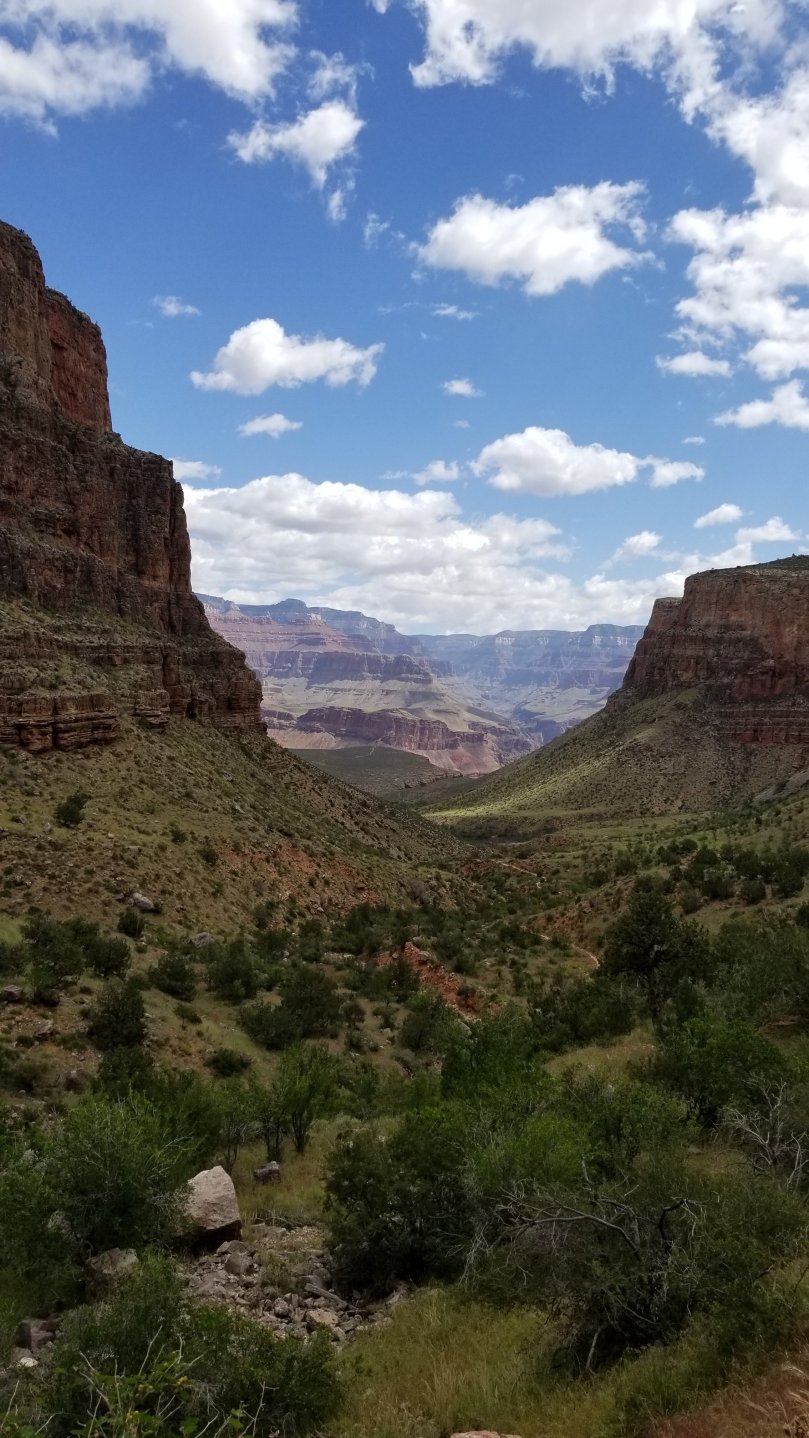
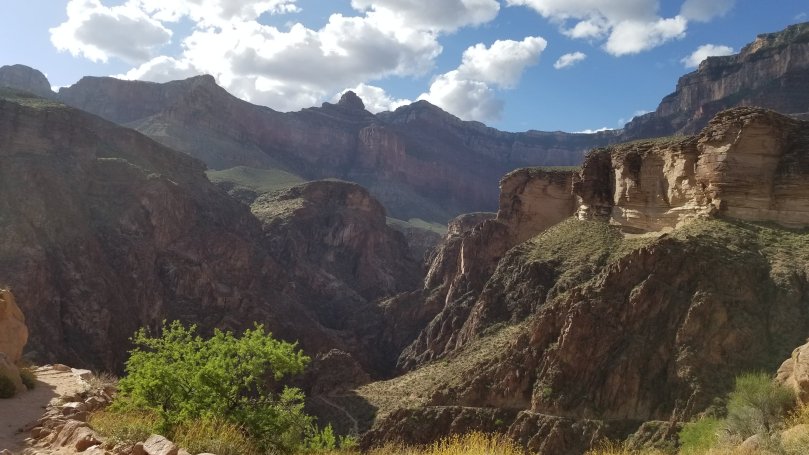
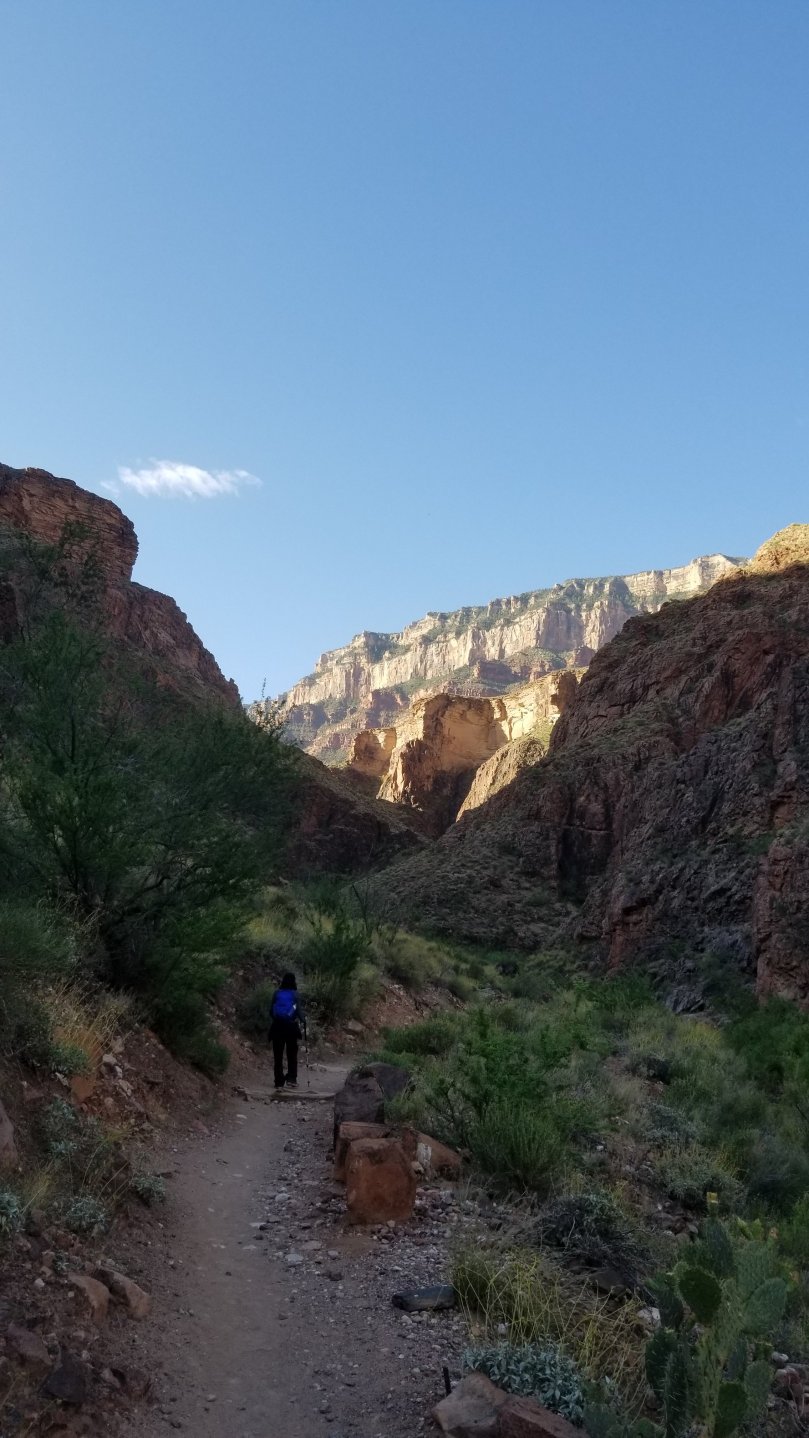
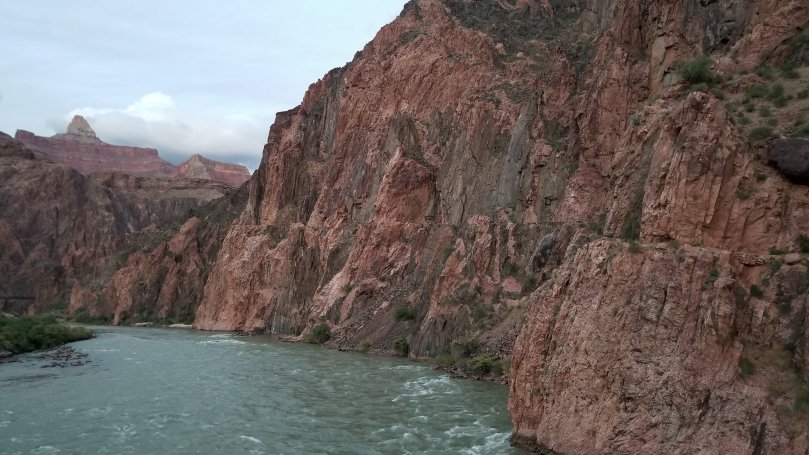
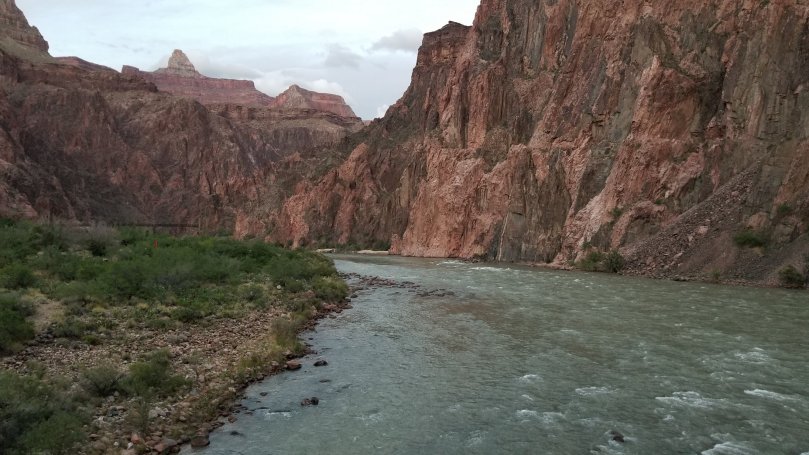
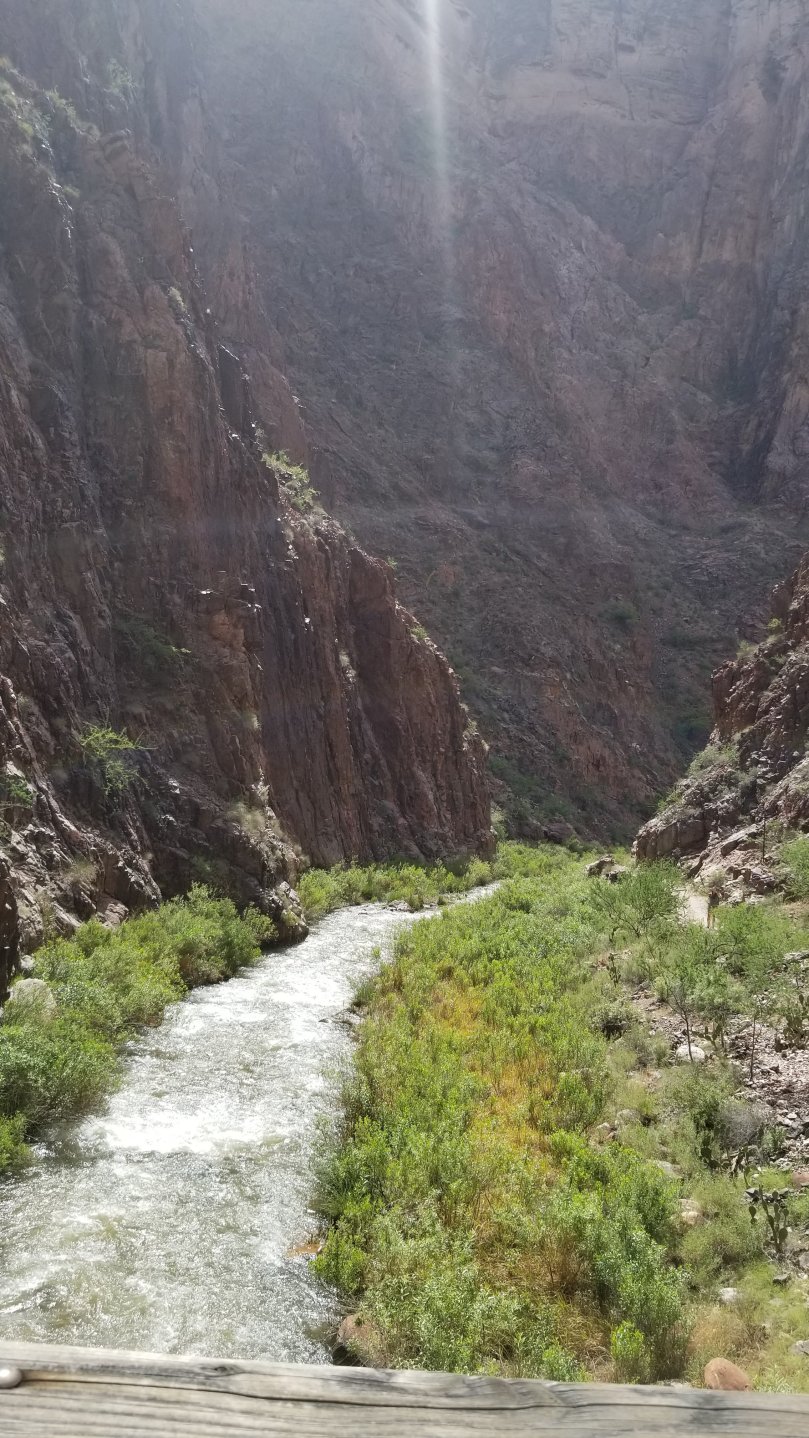
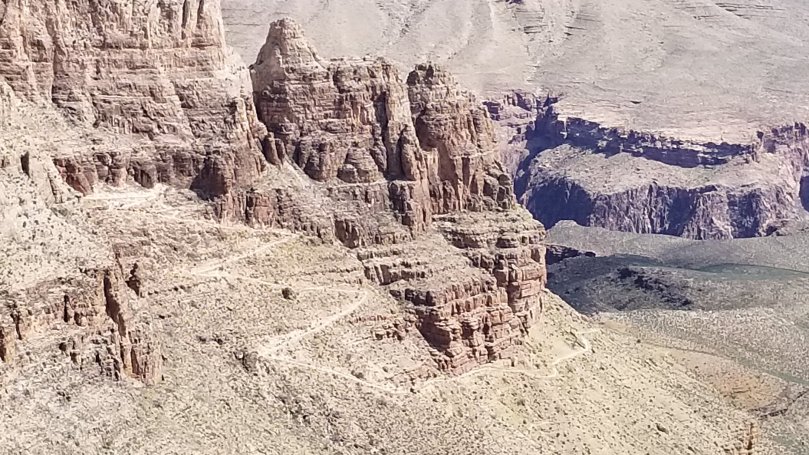
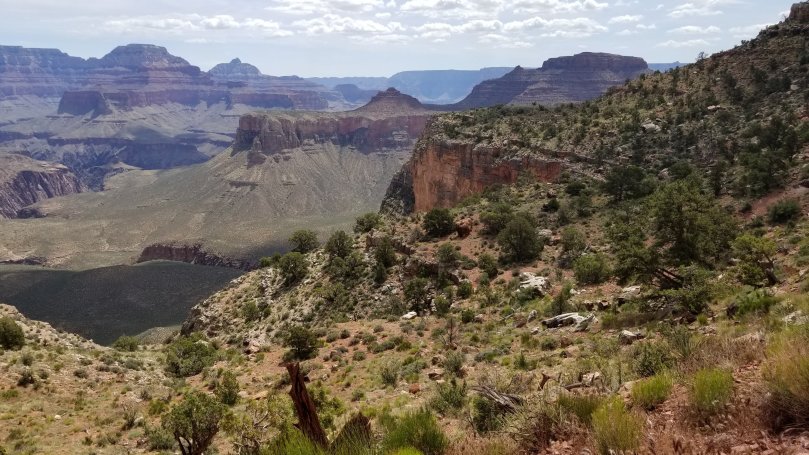
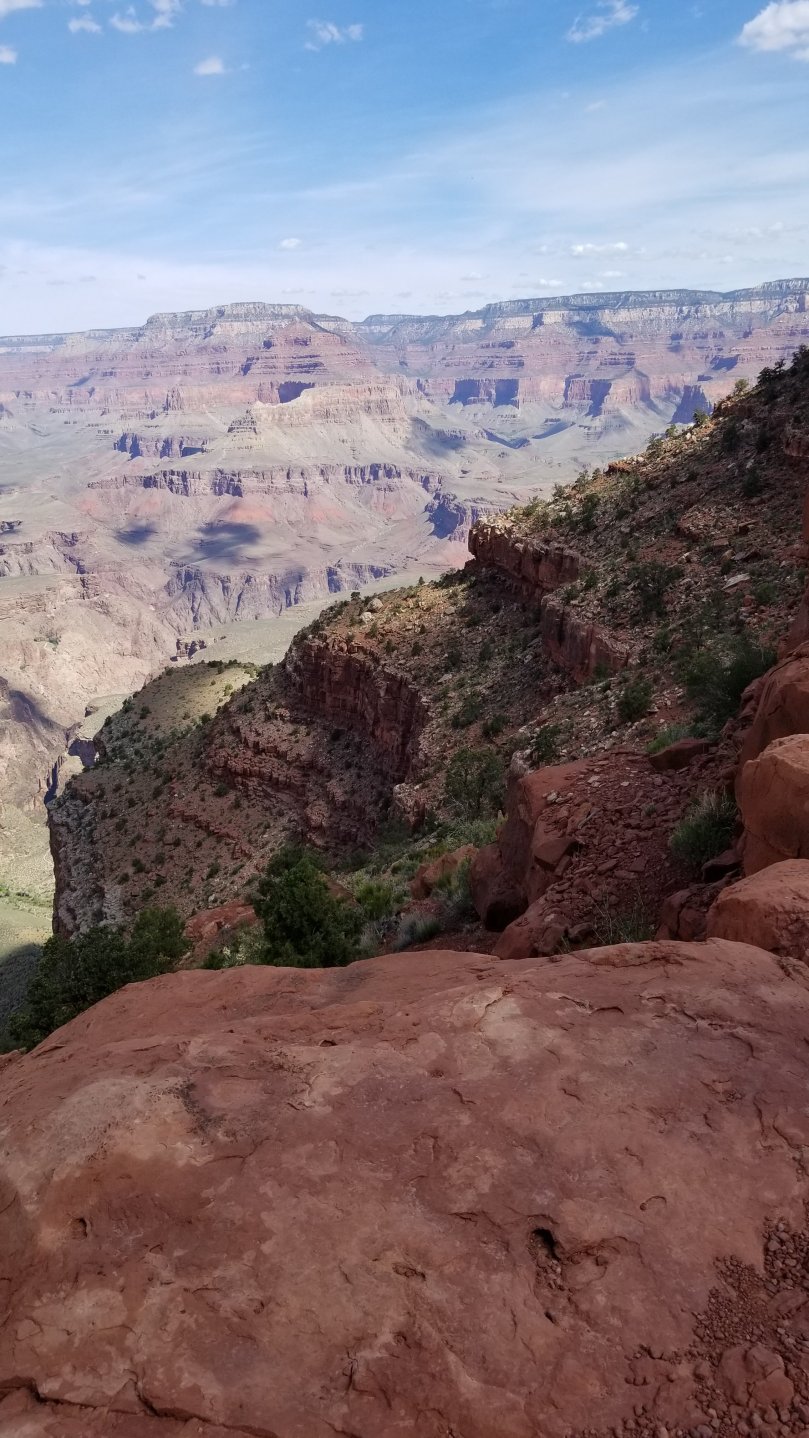
The first thing I have to say is that distances are deceiving. We so often view the canyon in a two dimensional picture, and it is beautiful even then. But it is not a two dimensional place at all. Distances are far greater than they appear. Depths are deeper. Heights are higher. So many things are hidden behind a bend, or a cliff. A single element of the canyon, visible from the rim, may still be visible four or five miles closer and it will look slightly different from every vantage point along the way.
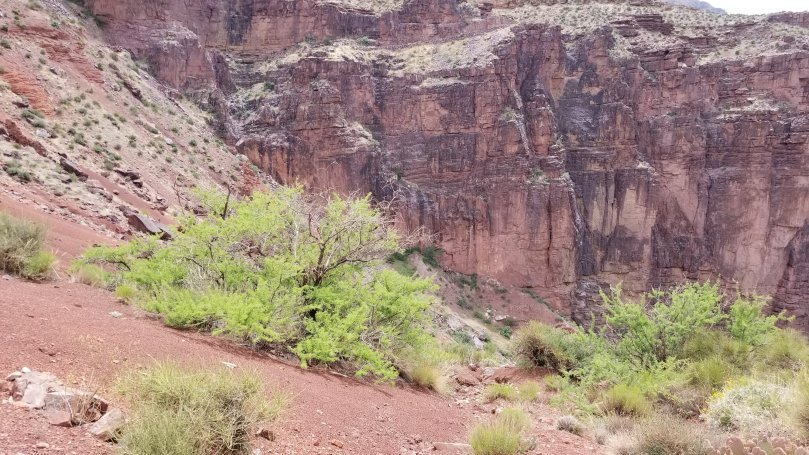
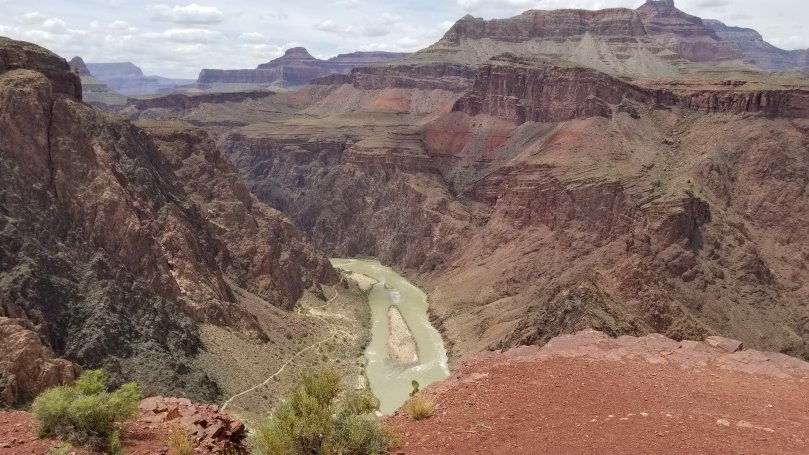
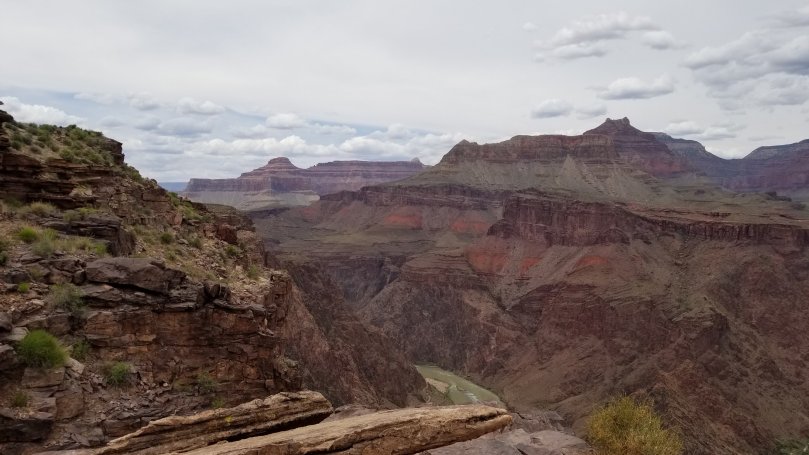
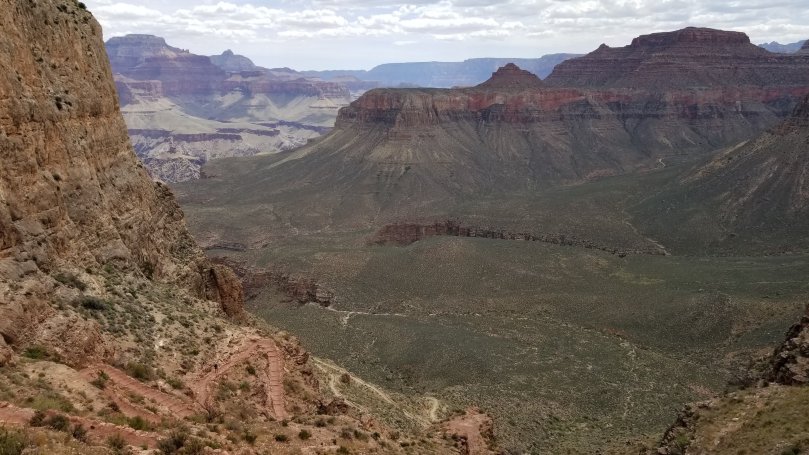
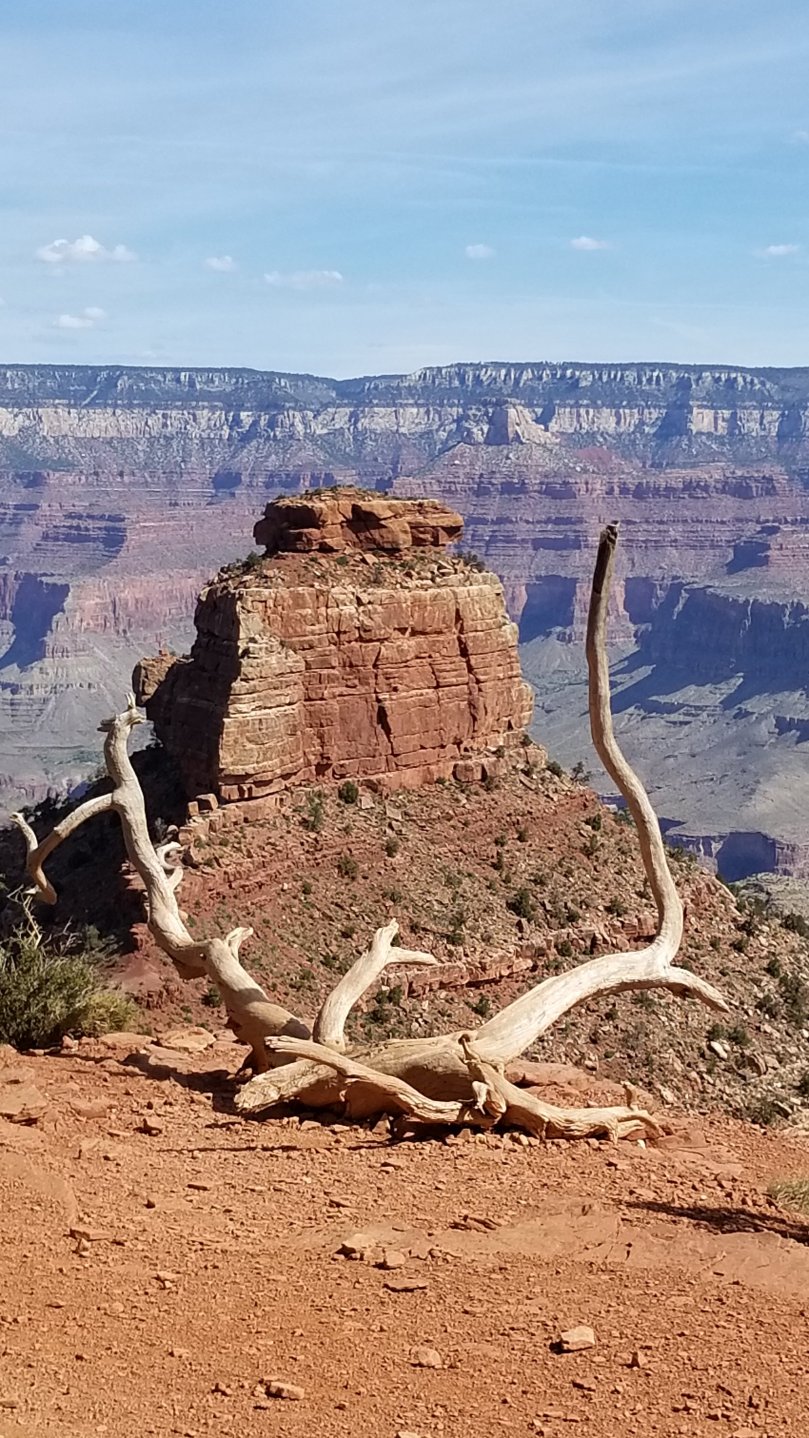
I want to share these views and vistas because they are the legendary beauty of the canyon. They did much to make the hike worthwhile and were a constant source of wonder and inspiration.
Is it hard for me to believe in a creator God, when the evidence is laid out for us to see – evidence of millions of years of deposition, of soil and rock, with fossils embedded? “Time and the river flowing” is written all over this canyon, but so is the mark of an amazing artist. I can believe in the story geology tells because I believe that God also created time. Science has not yet told me how he did that and it’s a question I hope to ask him, someday. I am thankful for what I saw. It increases my faith. Look at these, and wonder.
For the next few days I want to forget my devices and concentrate on the Grand Canyon (and staying alive). Even in the lodge on the rim internet is slow and frustrating. On the canyon floor it is pretty much non-existent. Join me again on Saturday when I will post each day’s fun, as recorded with pen and paper. I will have plenty of airport time to do it. See you then!
I took this one myself. Bright Angel Canyon with the trail far below.
I didn’t like the way travel day ended – I got a headache that was utterly unpleasant. But yes, I did like the way it ended because I was able to get a room at Maswik Lodge and crawled into a comfy bed and slept the headache away. I love my room, and I have it tonight as well.
The scenery here is quite different from my Wisconsin wetlands. There are lots of rocks, and trees that I don’t recognize. It’s a combination of mountains and dessert. One minute we are looking at tall pines and white barked trees, and the next minute we are on a flat plain with short shrubs and grasses that have not had a lot of water. We can usually see one or more mountains with sharp pointy tops covered with snow.
Flagstaff airport is small – the kind where you walk on the tarmack from your plane to the building. I don’t know how we timed it so perfectly, but my brother arrived only minutes after I did, and we were on our way.
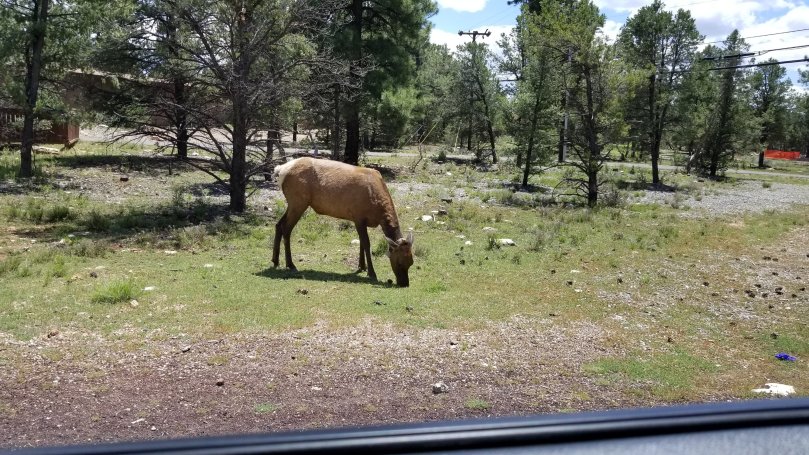
It is about 70 miles from Flagstaff to the Grand Canyon National Park.Grand Canyon Village is bigger than I remembered, probably because it has grown. There lots of twists and turns as the roads wind from one lodge to another. It is forested, and as you look out into the pines you can see elk grazing everywhere. Unlike our Wisconsin deer who like to startle and dash into the road, these animals are used to the traffic and stand within feet of cars with no alarm.
They are everywhere, and they pay us no mind.
Most of today was spent in class with our guides Michael and Nina. There are eight of us hikers and everyone is retired. I would say that several are older than I am and one man is 78! All have done quite a bit of hiking except our Elizabeth, and a couple of them have hiked in the canyon a lot.
Our guide, Mike, talking to Bob and Elizabeth. We are on our way to the mule barn with our duffels.
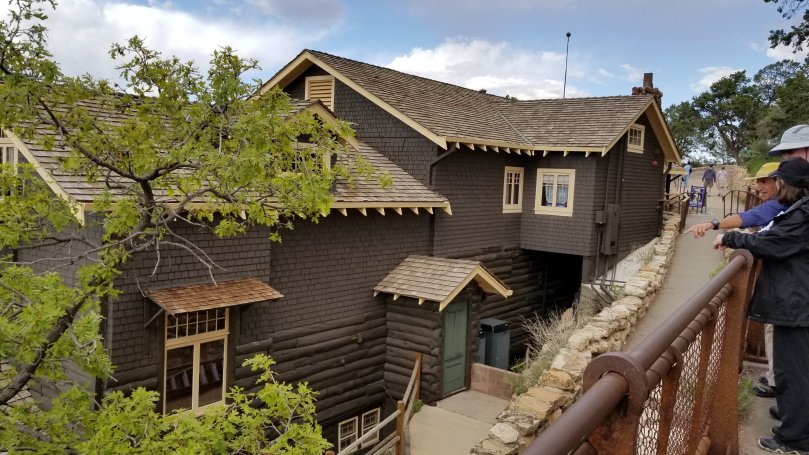
We spent the time talking about our equipment, safety on the trail. We filled our duffels for the mules and took them over to the barn. And right before we quit we walked out to look at the canyon and talk about the geology. We toured the Kolb house, where the Kolb brothers had a famous photography studio – hanging on the side of the cliff right below the rim.
We start early tomorrow on our descent. Wish you were all going with us! I have pictures but they are failing to upload – not sure why.
I don’t know who said that but I hope they’re wrong. Travel is amazing, and interesting but I wouldn’t call it fun.
I and all my devices got in the truck and made our way to Minneapolis last night. We had a short sleep in a motel, where I left the truck. Everything went so smoothly at the airport that I started wondering why. I finally realized that it’s one of the benefits of traveling solo. Don’t get me wrong – I love traveling with companions as well, but this kind of freedom has a charm all its own. I don’t have to match anyone in my likes, dislikes or pace. I can be as early or as late as I choose. I can eat or go without. I have one person to watch out for – me.
I am now safely in Arizona, sitting in the waiting area for the flight to Flagstaff. I decided to check in here with a short post because I have over four hours to wait and have to fill the time. I know it won’t be long before I will have to forget my “devices” and start experiencing this hike without them.
This is my first trip in a long time without my computer. Instead I’m using my phone for everything – it’s camera, tablet, caretaker of boarding passes, as well as communication central. What a device! And I have paired it with this tiny little bluetooth keyboard, which so far is doing a great job.
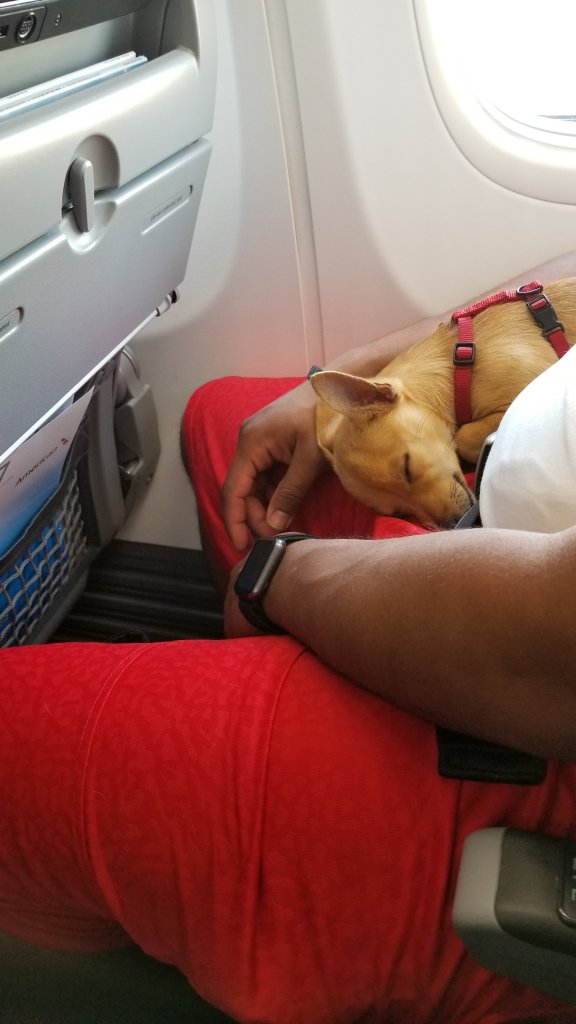
I sat next to a dog! I saw a fairly large man walking around in the gate area before the flight and noticed him because he had this tiny dog on a bright red leash. You don’t see this every day. Later, much later because I was in the last zone to board the plane, I got to my seat and there they were again. The little fella was so quite, slept all the way to Phoenix, and licked my hand when he woke up after we landed. Make me decide between sitting next to a kid or a dog, I’ll take the dog.
In addition to being a travel day, yesterday was Mother’s Day. It was so nice to spend it this year with my mom, my youngest daughter and my brother’s family. We went to church, had a wonderful family brunch that I wish I had taken a picture of but didn’t. We took walks and talked. Later, at the motel, I got a call from eldest daughter to round out the day.
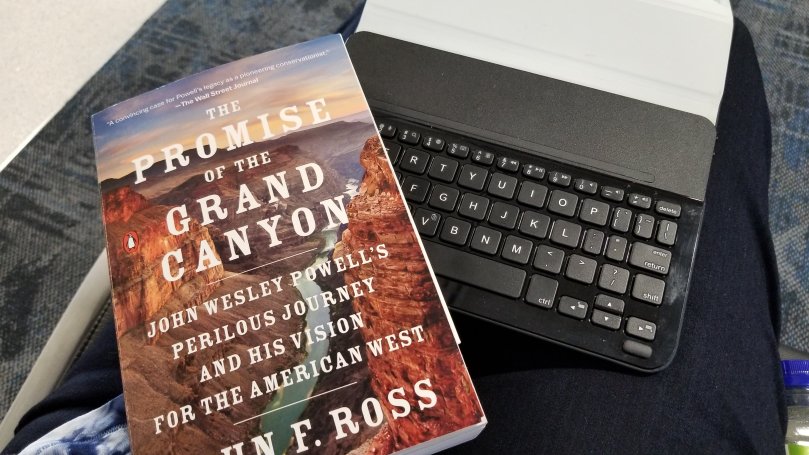
Thanks again for the book Ryan! And this is my mini-keyboard folio.
So here goes four hours of waiting. I have a book to read. Food and drink is close at hand. Fun is ahead as I look forward to meeting up with brother Bob and Elizabeth. It’s hard to believe I’m here, so far from where I started this morning, in such a different place.
A very different place than the one I left this morning. Yes, real mountains…
Now the rest of the events will unfold, sort of like the domino
that falls and starts the whole line up toppling, one after the other.
Suitcase (and daughter) finally made it.
I consider the adventure to have started yesterday when I
left for the Minneapolis airport to fetch youngest daughter to us. It was a
successful trip with the usual number of unexpected turns. Her route from Seattle
was through Dallas (everyone’s intuitive path…) so the storms there delayed the
flight 90 minutes. Then her luggage got put on another plane and we waited
another hour for that to arrive. But she made it! We were home by 11 pm.
We have Mother’s Day to celebrate with a family brunch after
church today. I have packing to finish and hopefully a relaxing walk somewhere –
it is warm and sunny and spring is springing. This evening I will drive back to
Minneapolis and hopefully get some sleep before my early flight out to
Flagstaff. It seems quite unreal that one week from this moment I will be back
here, sitting in this chair probably, having gone through it all. One week of unknown adventure and unique Grand
Canyon views (and possibly physical torture…). It will be over. How does time
do that to us?
Five days to go, then
the adventure starts. I’m worried.
It’s another rest day, with only about 4,000 steps. My legs
are feeling tired very quickly and there’s a hint of shin splints. I’m worried
that this will continue, or that I’ll do something unwise like switch my shoes
out, or forget something important, or get sick.
For some reason this is also the week when we have meetings with a lawyer to get our wills settled (a two hour trip to the city), and the week when paperwork for our house sale closing is being mailed back and forth, a physical exam for a new life insurance policy, and the week when youngest daughter is flying here to be with her dad while I’m gone. There is a lot going on. A lot to get ready for.
Yes, right around that ear, and don’t stop.
That is why I took time yesterday to run away to the empty
sun porch over at my brother’s house. It was a time to just sit, do some
journaling and thinking. It was a time for “dog therapy”. Scruffy came and sat
on my lap.
Scruffy and I have gradually gotten used to each other over
the last few months. I sometimes take him for a walk, and I’m usually along
when his mom and dad take him for a walk. I always pet him and try to make him
feel special. He didn’t always come up and want to sit on my lap, but we seem
to have bonded now. I pet him, and since
he can’t really pet me back (but I think he would if he could) he licks my
hand. I think that’s dog language for “pet me more”.
Scruffy and I have things in common. For one, we have hair the same color. We both love to go for walks and are easily distracted when we are outside. We’re both a bit aged. I could think of more, but that will do. All this to say that when we sit somewhere together and just chill, it is relaxing, for both of us, but especially for me. I think I worry about more things than Scruffy does. Dog therapy is quite effective since I take my cues from him and don’t worry about anything except whether my lap is comfortable for him to lay on. He is most definitely a lap dog.
Cricket, Ellie? Hope you’re having a good dog day!
Scruffy says hi to
Cricket and Ellie and wants them to know he enjoys their astute comments. Dogs
really have it together. Just sayin’…
Time goes so fast! The fun thing I’ve been looking forward
to for months, the hike in the Grand Canyon, is only six days away. I know from
experience that it will only be a short time and I will be looking back on it
and wondering how it could be over already.
While believing (strongly) in living “in the moment”, I also
love to plan ahead, and I enjoy remembering good things from the past. So to
alleviate my disappointment on having one adventure end, I like to have one
always cooking for the future. I’ve picked my next enjoyable, spring activity!
I’m already excited about the summer garden.
I love gardening. Almost everything about it is fun for me.
Even if nothing were to grow (this has never happened) I just enjoy being out
in the dirt, spending time in the sun, watching bugs and birds, loving on my
plants. I know plants are not people and they don’t have feelings (not actually
sure of that, but…). However, they do respond to good, thoughtful care which
makes them seem kind of like people.
And so, I like to think about what plants will be in my
garden, what kind of soil will be prepared for them, how I will keep other
plants (weeds) from competing with them, and all that kind of stuff. I like to
buy seeds and starter plants. I like to watch the garden grow from its early
stage to being full of greenery and fruitful. I like to keep the edges neat. Experimenting is allowed and there is always
something new to try.
My brother Dennis says hi.
This year there will be a new garden location. My brother has
chosen a plot in his yard, close to a water source and has it all worked up.
There were a lot of grass clumps in the topsoil so he is tilling it up every
couple of days to dry them out and hopefully kill the roots. I can already
imagine being out there laying out the rows, mulching, getting dirty.
I’ll enjoy the hike thoroughly and concentrate on it while I’m
there, but thankfully, I am a good multi-tasker and will probably have a thought
or two about the garden while I’m trying to fall asleep, on the hard ground, in
my tent… just sayin’.
One day this week I took a longer than usual walk, for training purposes. Since the first day walking at the Grand Canyon will be at least four hours of descent, I’ve been trying to think of places that would be interesting for the longer training walks. The trails around Hospital Lake fit the description. Hospital Lake, named for the Hayward Area Memorial Hospital which can be seen from nearly every vantage point around the lake, not only has ski and hiking trails but actually has a very cool bike trail designed and maintained by the Chequamagon Area Mountain Bike Association (CAMBA).
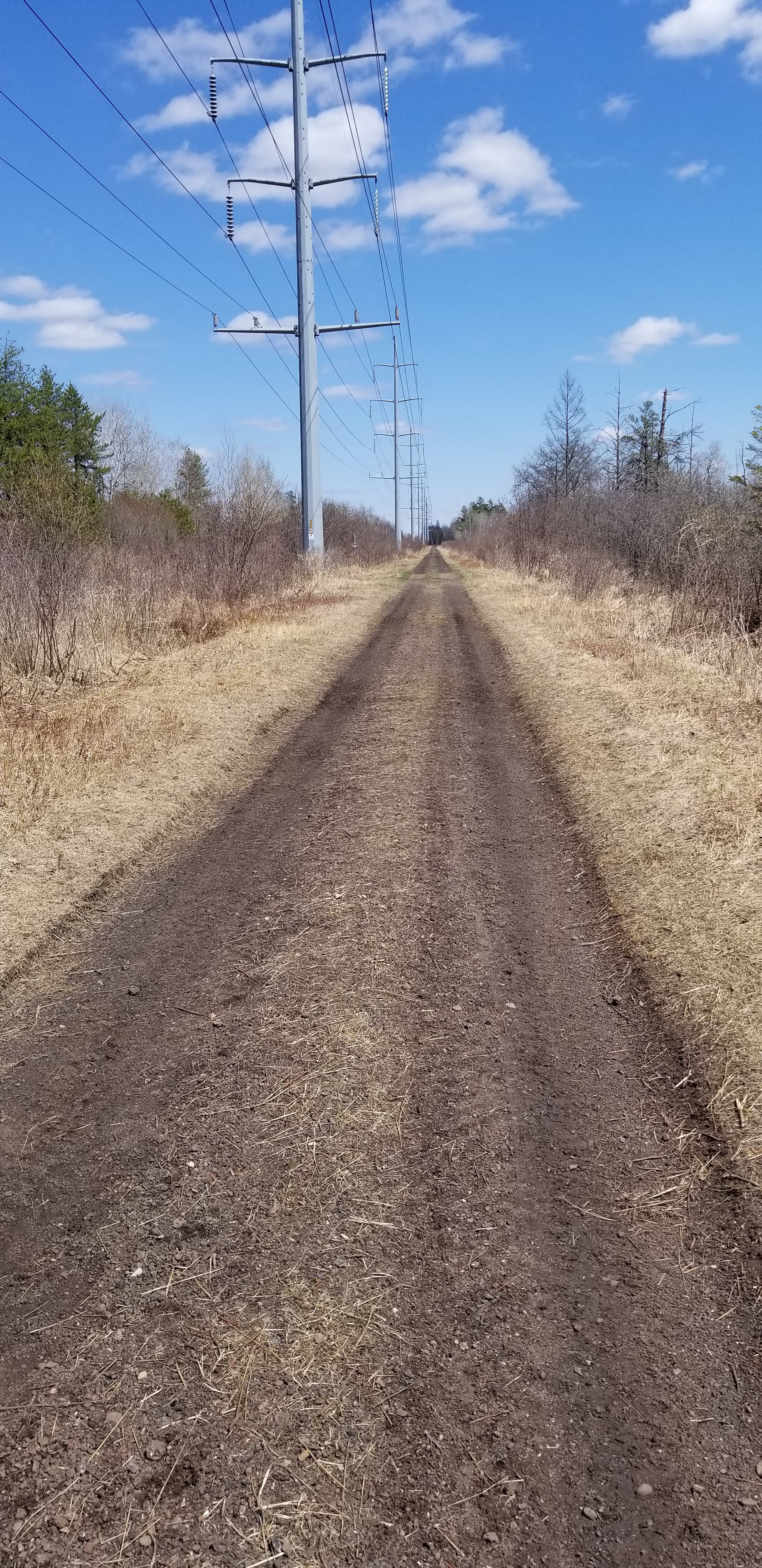
ATV trail on old railroad bed
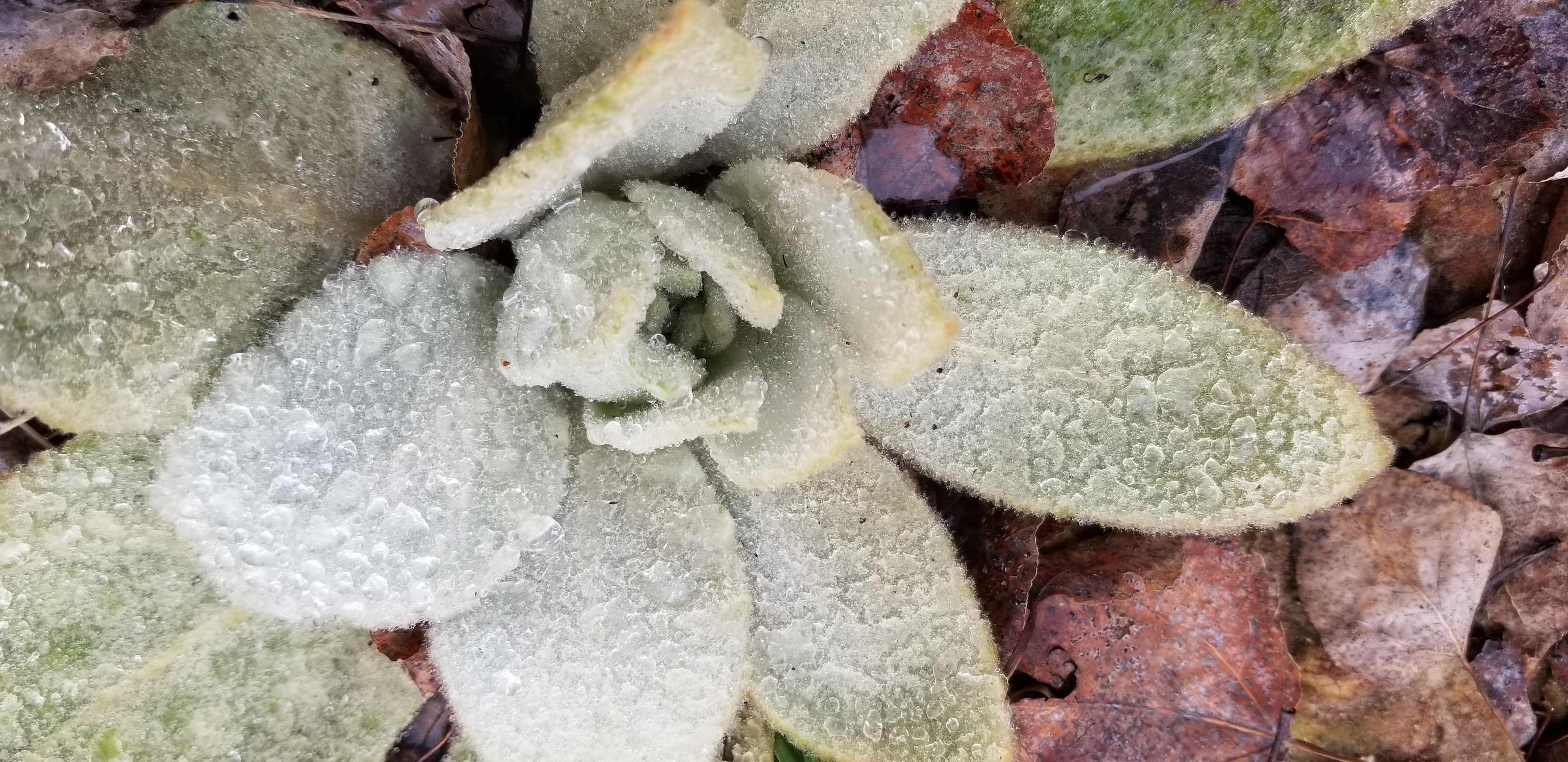
From home, I took the railroad bed ATV trail. Right away I had to take pictures of the fungi and moss. There aren’t a lot of green things growing yet so these plants get top billing. And they are so interesting they deserve it.
Love these colors and textures!Different!MulleinAnd a bit of color.
A short distance on Hospital Road, and then I ducked into the pine woods where I knew I would intersect with a trail. It’s a small enough area that is fairly familiar to me so I wasn’t concerned about getting lost. My motto is “I’m never lost if I don’t care where I’m going.” So true. And if the goal is to get in as many steps as possible…
All the trails aren’t this wide and smooth. This is one of the ski trails.
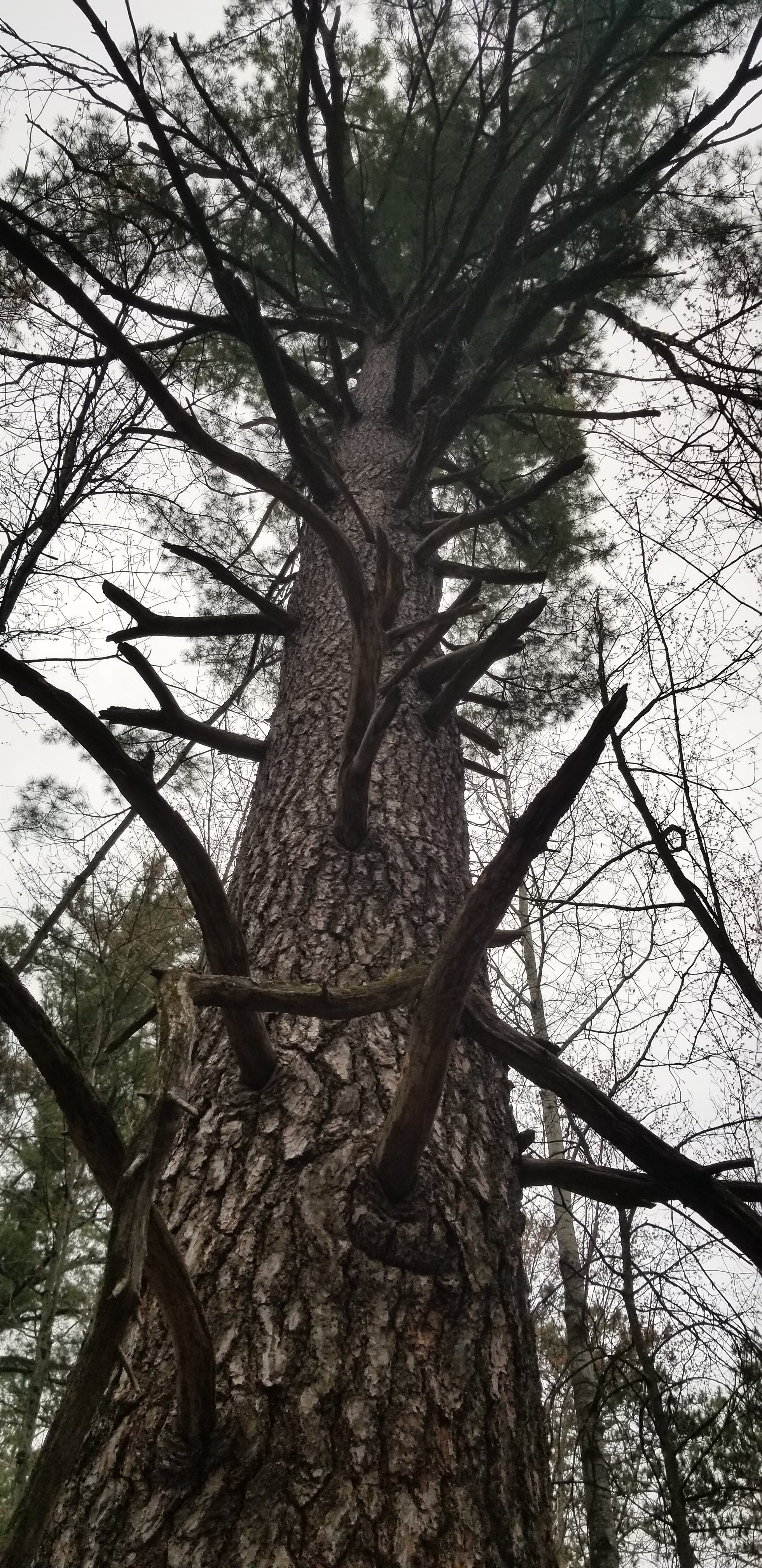
In opting for whichever trail looked most interesting, I ended up on some I had not seen before. I discovered that some new trails were being made in the woods by workers with heavy equipment – they weren’t there at the time but there was lots of evidence. Part of this forest is old growth pine – trees which always have me in awe of their size and bearing. Guardians of the forest, who have seen a lot of action.
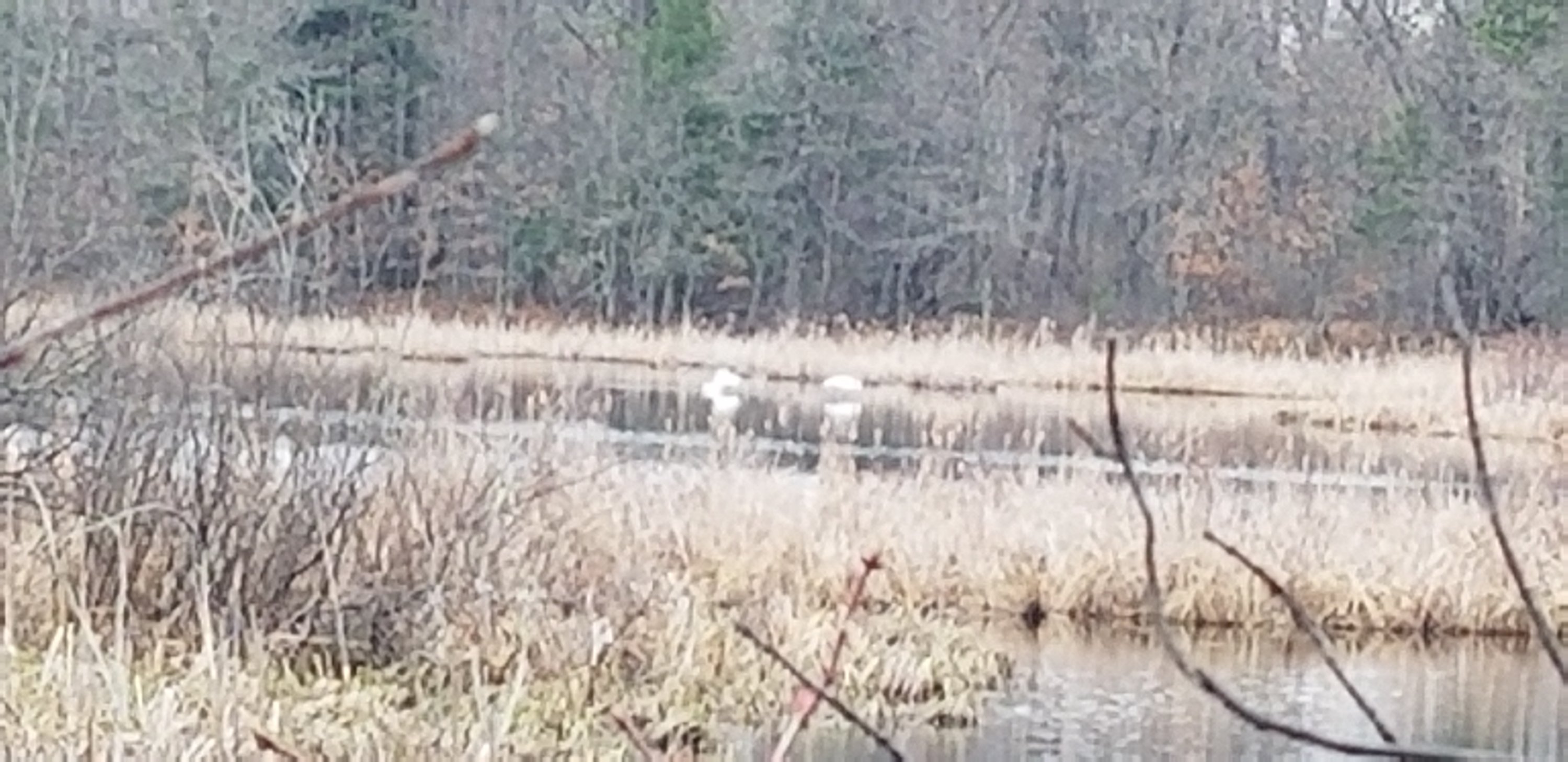
The guardian and his weapons.Swans on Hospital Lake
Reaching the lake, I got a glimpse of swans on the far edge,
too far for a good picture. I counted five and watched them for a while. On the way out I did try a couple trails that
took me in circles, and again I ended up in places I hadn’t seen before. The
area is bigger than I thought. Thirteen thousand steps, for me, is 5.84 miles
and I was beginning to feel the strain so I headed home. My sis-in-law met me
on the way back and we walked home together.
Hospital Lake – beautiful area for walking, biking or in
winter, skiing. Try it if you are ever in Hayward.
I’m going hiking in the Grand Canyon!! Countdown, 11 days!
After my first training walk in Hospital Lake Forest, I was
all charged up about walking 10,000 steps every day. It would be the least I
could do to prepare. There isn’t much I can do to replicate the altitude change,
but to walk for several hours at a time in my hiking boots, that I can do.
Thinking that it would be beneficial to train on a grade, I
decided to look for a hill in Hayward, my Northwoods hometown. It’s in a river
valley, and there are hills on both sides of the river, as well as glacier
formed terrain throughout the forests and fields – how hard could it be to find
a good place?
Since I also had an errand at the far end of Main Street, I packed my papers in a backpack along with a snack and some water. (I’m trying to carry a backpack as part of conditioning too.) I set off down an ATV track that follows an abandoned railway bed, toward the center of town. I live on the north edge of this booming metropolis of about 2,300 people. I am within sight of New Moon ski/bike shop, Pizza Hut, AmericInn, Walmart and the tip of the flag flying over Perkins.
This is the town I grew up in and always thought of as quaint, and pretty, in an old-fashioned way. But growth, most of it outside the city limits, has deposited a large electrical station at the intersection of two of the main roads. There is no disguising this huge collection of gray metal poles, insulators, wires and fencing. It clearly does not say “Welcome to lovely Hayward”. There’s not a time I go by it that I don’t wonder why they put it there in such a prominent spot.
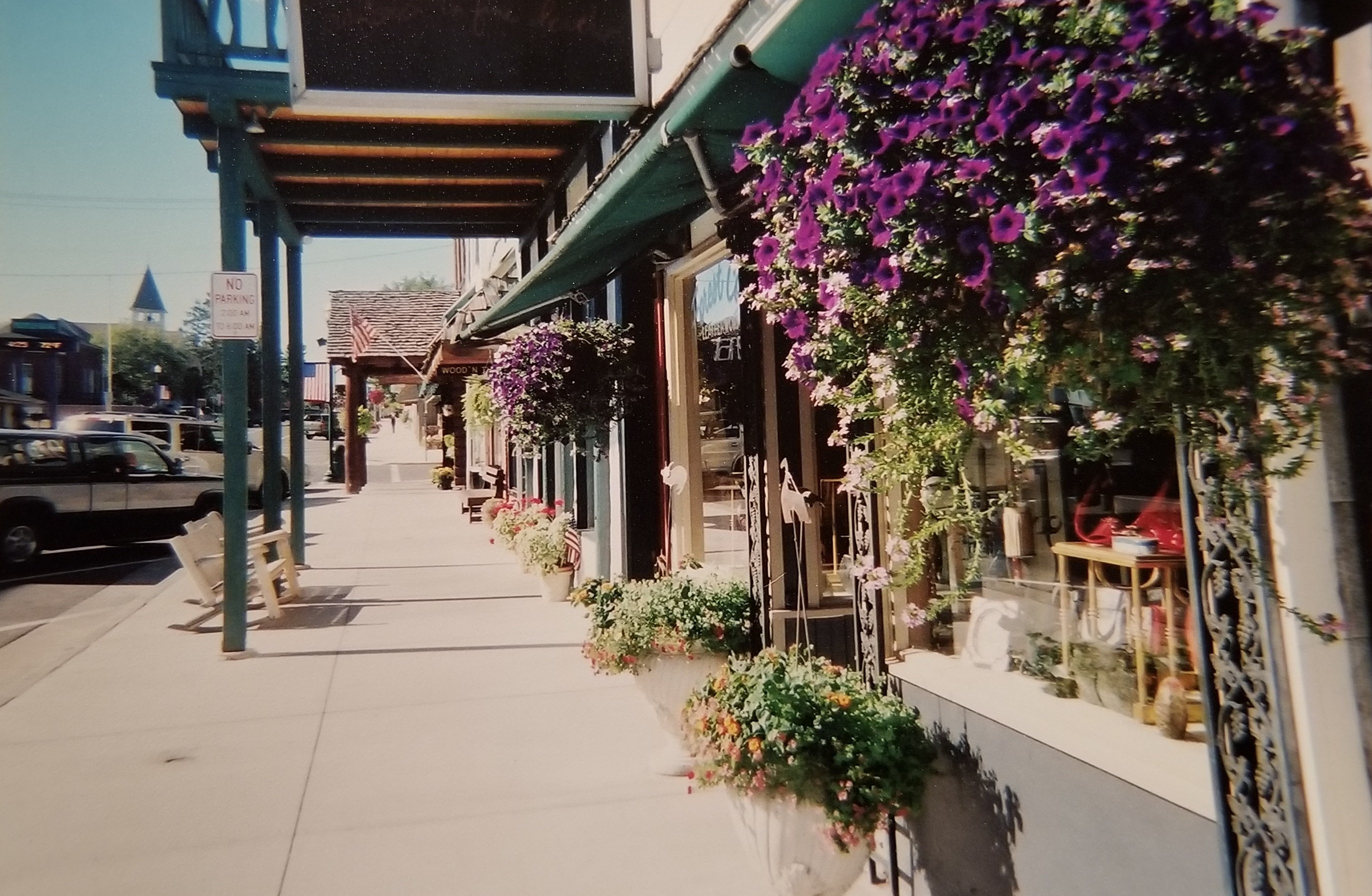
Lovely Main Street They always do flowers well.
Our Main Street however, is a popular tourist site during the summer, and has even been listed as one of the prettiest in the Midwest at Christmas time. It ascends from the river and Lake Hayward up a gradual slope, past numerous shops, the bank, the Congregational church, and finally the courthouse and the financial office where I stopped to talk for a minute.
“I’m looking for a hill to climb. Maybe County Hill?”
“Yeah, County Hill might be okay. Are you parked somewhere near here?”
“No, I need to get 10,000 steps in, so I’m walking, why not?”
No response, other than the “why would you do that?” look.
My destination was only about three miles from home, but
somehow this is considered a long distance in a place where no one walks
anywhere they don’t have to. Urban
walking is a lost art, at least in Hayward. One of my best realizations, upon
moving here, has been that everyplace I really need to go is within walking
distance, as was County Hill.
I passed houses where my high school friends had once lived, where my cousin’s family lived, the parsonage of the church (where I practically lived) and the empty lot where my elementary school had once stood. I had time to look at the condition of the houses, to see who had raked their lawn of last fall’s leaves, to see where remodeling had added rooms and a complete new look.
I’m sad to say I saw a lot of neglect – places that made me want to start pulling weeds or scrape peeling paint. Maybe this is always the way things seem when you go back home after many years. Memory is selective and I tend to think things were lovelier in the past.
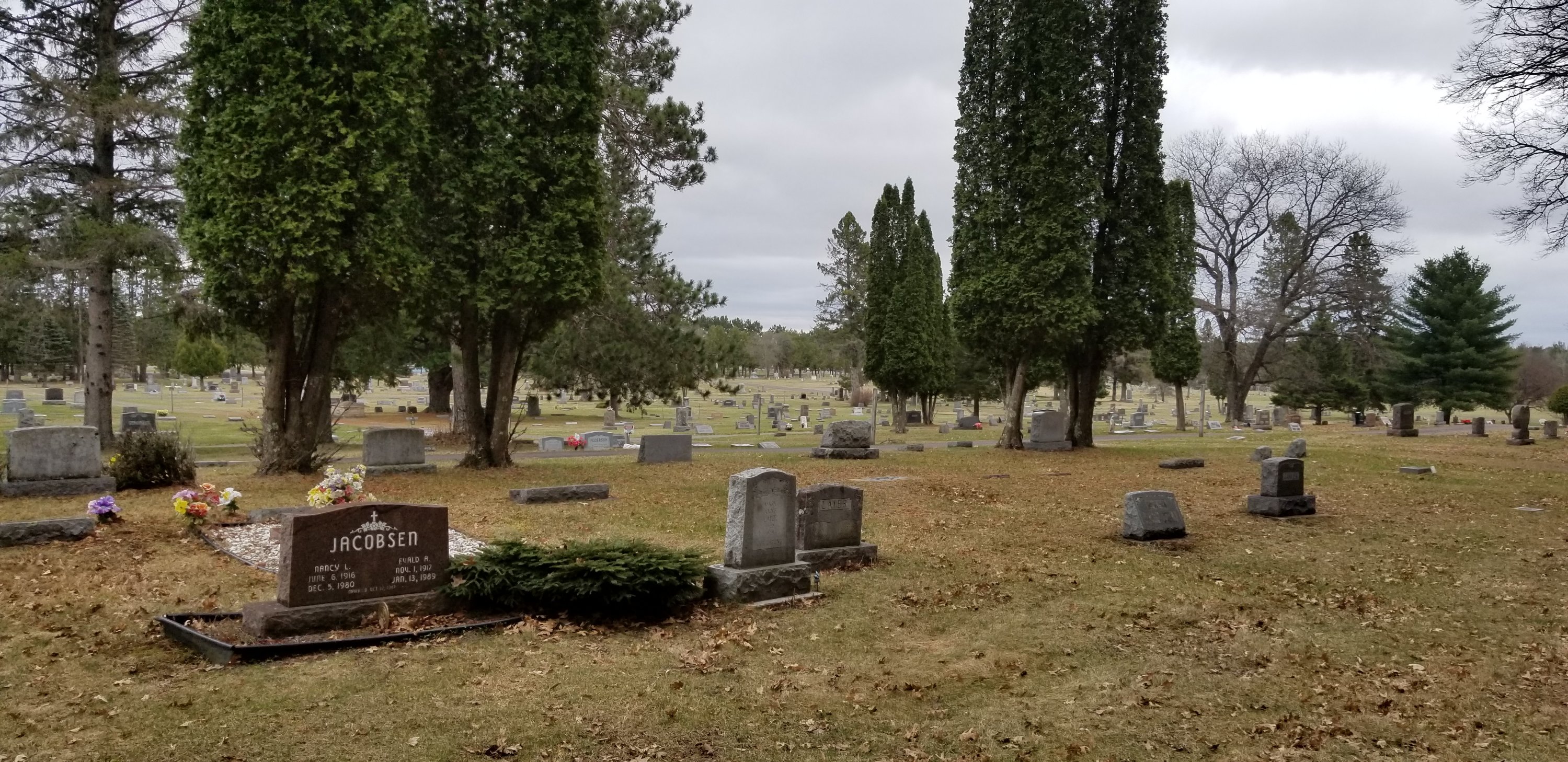
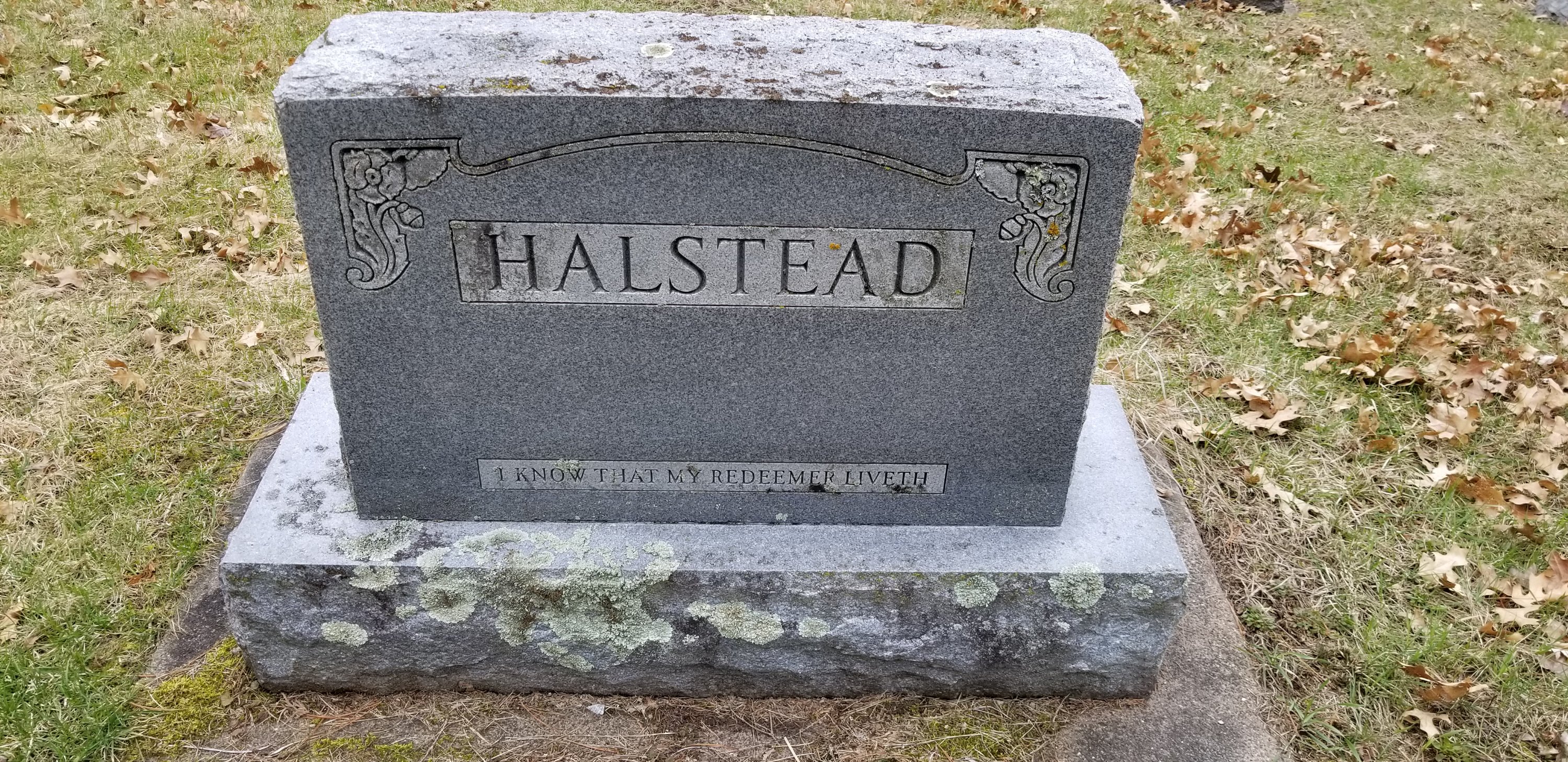
It wasn’t much of a grade. I walked up one side of the road, had my snack at the top while enjoying the view, and walked down the other side. My attention had been caught by the town cemetery at the bottom of the hill. Cemeteries have kind of a spooky fascination for me. I walked through looking at names and dates, imagining scenarios. There were many family names that I recognized from my childhood years in Hayward. I found the stone for my first-grade teacher and one of my junior high teachers – people that I had loved and been close to.
The rest of my walk was uneventful, but I was beginning to feel some soreness in the lower legs. This after about five miles, showing that my conditioning has not been sufficient yet. But my feet were fine, boots were good and I finished with 13,300 steps, meeting my goal for the second day in a row.
Training is tough, especially when I have to have at least two free hours to walk. Being a little sore is to be expected. I will give the legs some rest tomorrow, and then think of another place to see. Believe me, things look different and you see things you did not notice before when you are on foot. Try it.
Distances in the Grand Canyon are described in various ways
by those who have hiked them frequently. There are straight line miles, “as the
crow flies” miles, and the miles spent zigging and zagging, as Colin Fletcher
called it. From “The Man Who Walked
Through Time”,
“Cross-country on foot, miles are always misleading: the hours are what count. In the Canyon, miles become virtually meaningless. From start to finish of my journey I would cover, in a straight line, only forty-three. The river mileage came to one hundred and four. When I ran the map measurer from one end to the other of my proposed route, carefully following each winding contour, it registered just two hundred. But I felt sure, and Harvey Butchart greed, that I would walk at least four hundred miles as the foot slogs. And there were times when I would be lucky to travel half a mile in an hour.”
Another word, switchback, is often used to describe hiking trails and roads that go up or down steep hills. The trail will go in one direction up the hill, turn 180 degrees and continue uphill in the opposite direction, and repeat until the hill is climbed. The main purpose of this zigzag process is to protect the hill, and the trail from erosion. It is also a way of controlling the grade for ease of hiking, although it makes the distance considerably longer.
Almost every place I’ve hiked has been in hilly or mountainous terrain. Often there are switchbacks and there will also be signs to stay on the trail and not take shortcuts. Shortcuts that go straight down the hill will get worn down and become a path for rainwater to follow, producing erosion and eventually the trail will be ruined. It’s tempting at times but I’ve learned not to take those shortcuts.
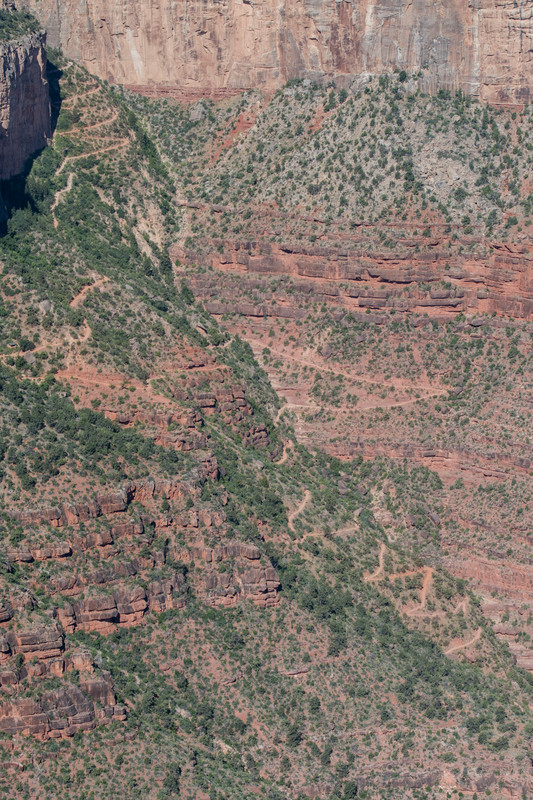
The descent into the canyon includes so much vertical distance in such a short space that there will be a lot of zigzagging, especially on the South Kaibab. The picture below is of a section of the Bright Angel Trail, the upper left corner and lower right corner have a lot of visible switchbacks. Looking at this picture makes me think this is going to be a long, grueling climb. What fun! I can’t wait. The word zigzag is interesting because of the z’s which sort of mimic the shape of a switchback.
Switchbacks on the Bright Angel Trail (most visible at top left and bottom right) photo from canstock.com by Kelly Vandellen
We are at the end of
the alphabet once again. The A to Z is a valuable writing experience for me,
but more than that, it is a joy to meet others in this online blogging
community. I am always amazed at the creativity, the sharing of comments and
encouragement, the friendship extended, and the way it is all shared through the
written word. Thank you to everyone who read and commented, and to the
organizers of the A to Z. It has become my April habit.
























 I Just Have to Say...