
A to Z Challenge: X for Exasperated

(Ex is how you spell X, so this counts.)

Today I am exasperated. It’s a degree of frustration right before one’s head explodes. It happens fairly often in my caregiving world, particularly with my husband.

It’s not that this never happened before, when he was well. We were a fairly normal couple and we had our ways of getting past the rough times and keeping peace. We were both responsible and expected to act like mentally competent adults. Now, as with any situation where a spouse has a mental deficiency of any kind, doubt enters the picture and roles may change.

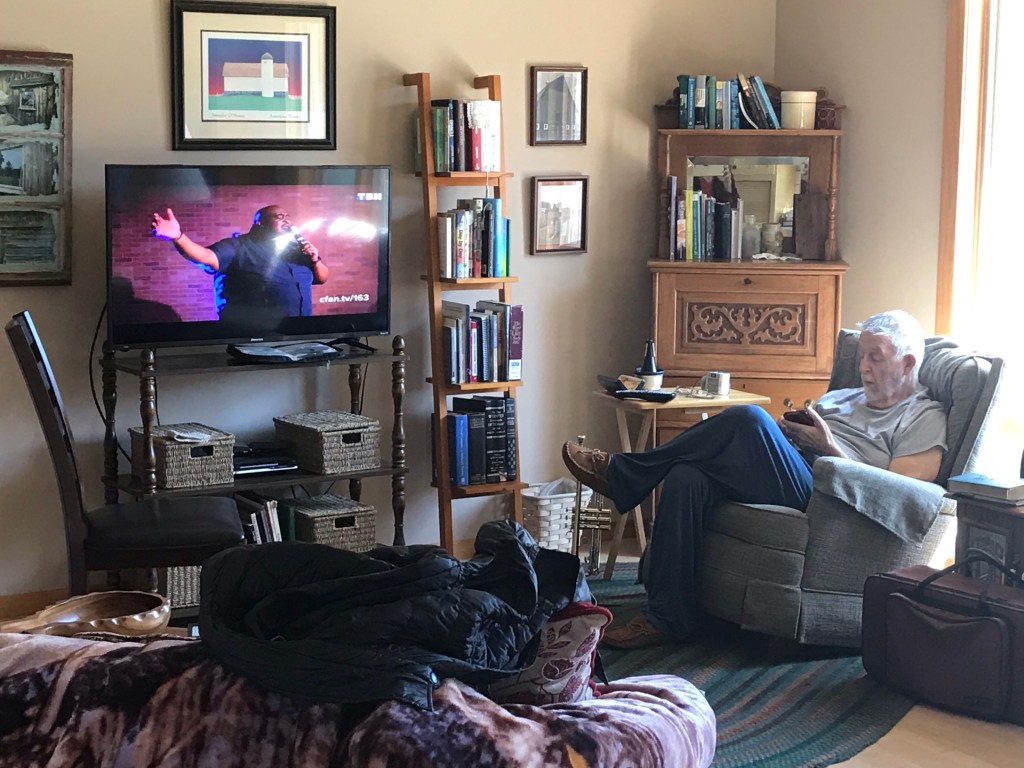
Many days I am so conscious of having to watch over our world, unaided, while my husband (my patient, is what it feels like) does what he can do, sits and watches TV or looks at his phone. When he wants to talk to me about his angst over politics or his ideas of how to conquer coronavirus, I want no part of it. I want him to do some meaningful task that would help get chores done. I want him to show concern about finances or make a “to do” list like I have to do most days. It exasperates me to have a live-in patient instead of a husband.

And at the same time I begin to feel very guilty for being angry. I am not the only one missing out on our retirement plans. He is sick and I am well, at least for the moment.

For these reasons, caregiving for a spouse, or a live-in family member is not easy emotionally. It usually starts out being a 24/7, 365 days a week job, until burn out sets in, so it’s not easy physically either. I need support and this is how I get it.

1. I have identified people that I can talk to safely, even when frustrated – ones that are regularly available to me and don’t mind if I vent.

My physically present support group that I could not do without.

2. I have joined a couple online support groups. They understand what it’s like and have encouragement/advice for all situations. They always show me I’m not alone in the way I feel.

  • Facebook group: Lewy Body Dementia Carter’s
  • Facebook group: LBDA Care Partner Support Group

3. I have a place I can go, in the house, to get away to watch a movie or read a book while the husband is occupied or napping. It’s a true multi-function “she room”.

4. I haven’t had to do this, but if needed I would hire help to cook or clean, or just be in the house for a few hours while I escape.

5. I try to spend time with my husband doing something we both can enjoy (like reading a good book) to give attention and alleviate guilt (mine).

6. I give myself grace to not be perfect, but to try again to do a good job and to love well.

A to Z Challenge: Letter W for Washing (Feet)

You will believe this more as you age, but truth is that something as simple as foot care gets really difficult when you can no longer bend over and get close to your feet. Problem feet should go to a podiatrist, but most elderly people, like my mom and my aunt, can be cared for at home quite easily. I soak their feet for a few minutes in a basin of warm soapy water (and I always hear “oh, that feels so good!”) then gently clean under the nails and clip them. I finish with a foot and lower leg rub with lotion. If you’ve ever had a pedicure, that’s basically what it is, without the polish.

Your person’s feet are pretty important and it is good practice to look at them carefully. The best time is when you are washing them. Look between toes for cracks that indicate fungal infection, which is easily treated. Check heel and ball of each foot for callus buildup and remove some of that dead skin with pumice stone. Toenails that get too long are like having little daggers on the feet. They get caught on pant legs, wear holes in socks and even cause bloody scratches on legs. That’s when I usually get requests for some foot care.

Circulation is often poor in the lower extremities which leaves feet open for pressure sores on the heel and other bony parts. I know what it’s like when I start to get a blister from shoes that rub, or when I stub a toe and rip a nail off. It hurts, but your elderly person may not even feel the pain if they have neuropathy. It is a tragedy when an injury progresses to an infection, or even worse, to gangrene. Good caregiving means catching these problems early (even better, preventing them).

There is a surprisingly spiritual side to taking care of feet, which usually rank low on the list of body parts that get cared for. It’s an act of service to wash and care for another person’s feet, as Jesus did, recorded in the Bible. It’s also kind of hard to let someone do such a common, lowly act for you, which is how Peter felt when Jesus did it for him. Maybe it’s just me, but I can’t help but think of that when I’m helping someone in that way.

Another benefit I’ve noticed, as I sit on the floor with someone’s foot in my lap (I do it that way but you can be a bit more professional if you want). My people talk to me. There’s something that happens with caring touch that makes others feel safe, and open. Maybe it’s just because they know I’m an audience that won’t be jumping up and running away any time soon. Talking is therapy. It is good and requires nothing but that I listen.

Caregiving for other’s feet has made me aware of how important my own feet are to me. I have to take care of them if I want to be mobile. Yours are important to you, so take some time and give them some care, caregiver.

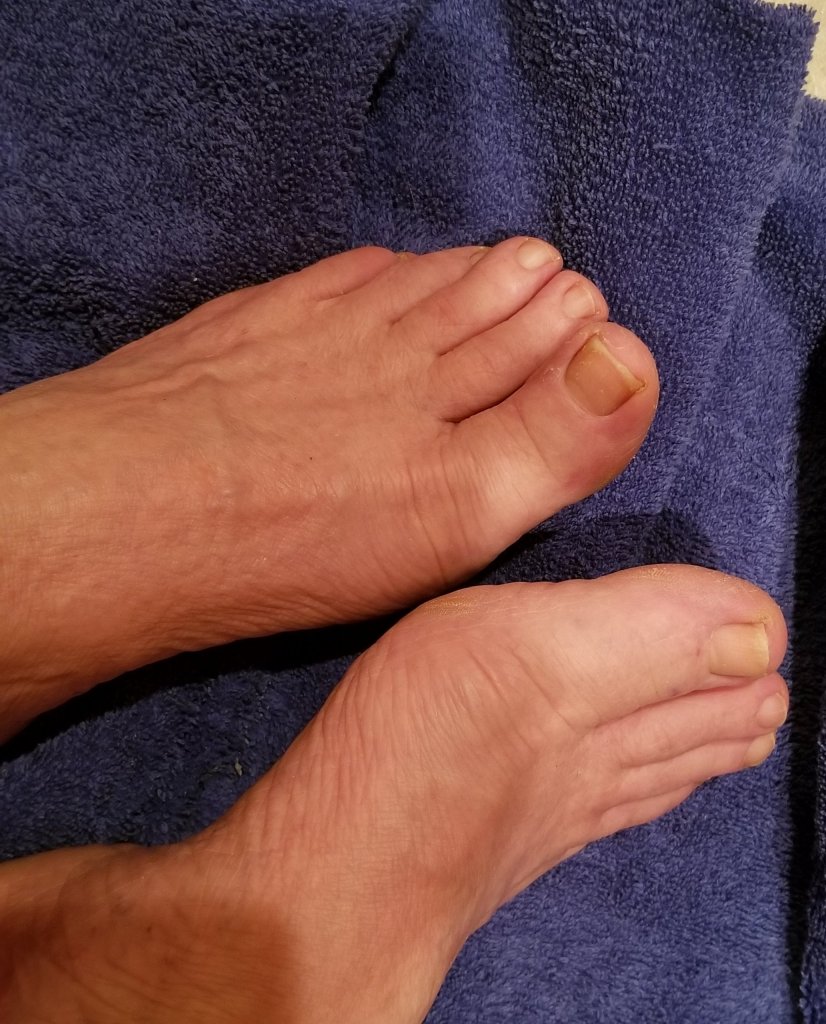
These are actually my feet and I am proud to have all my toenails grown back after losing some of them on last year’s Grand Canyon hike. It takes a long time!

A to Z Challenge: Letter V for Vagus Nerve

I wrote many of my A to Z posts back in March when coronovirus topics were just ramping up. Since then I have begun to weary of anything virus related, and so for my own comfort I am trashing my previous topic “Virus” and opting instead for something I care more about “Vagus nerve”. How odd, you may think, but I am okay with you thinking that.

This has nothing to do with my post. I had a hard time finding pictures of the vagus nerve so instead you’re seeing this favorite barn picture that I’ve wanted to post for a long time. Like it? (It’s so wonderful to have my own blog where I can do whatever I want. )

Caregiving for people with dementia is one of the hardest and most frustrating roles. It is only going to involve more people as time goes on. Here is your daily dose of statistics:

– 5% of people over 65 have dementia

– 20% of people over 80 have dementia

– 60% of those having dementia have Alzheimer’s

– 20% of those with dementia have Lewy Body Dementia

So you can see that a sizeable number of people are going to be affected both as victims of dementia and as caregivers. It’s pretty important that general knowledge about these conditions increases and that is part of my aim in sharing my caregiving life.

Research is bringing much to light about how dementia develops, its causes, and its treatment. I am amazed in particular at the early signs and symptoms that are often not recognized as such. How much could be avoided if we knew early on what our bodies were trying to tell us.

So, what about the vagus nerve, you are probably wondering? This summary article (click here) gives a good overview of this most important nerve in our bodies. It’s divided into right and left to serve different sides of the body, but spoken of as one. It is the longest nerve in the autonomic nervous system and the major parasympathetic influencer. It regulates heart rate, blood pressure, sweating, digestion, and even the mechanism of speaking. That’s a lot of essential stuff. It is the 10th cranial nerve. It starts up there where all the dementia problems start.

If there were definitive tests for dementia, ones that could detect it early, before it had devastated cognitive areas of the brain, how great would that be? We would be more concerned about chronic constipation, hard to control blood pressure, low heart rates in non athletic persons and other symptoms that get tossed into the “old age” bucket and treated with a pill.

The husband had all these problems years before his cognitive symptoms, the ones that got his attention, began. I remember the many blood pressure medications that he went through, and the multiple times he would react to them in extreme ways. He would have drops in pressure that would leave him dizzy and weak, and spikes that would alarm us. This continues now and is one of the fluctuations I’ve come to expect from LBD.

And I don’t know what his heart rate does to him but I know that having 50 or less beats per minute would make me feel strange. He tires so easily and complains of dizziness on a regular basis.

I’m not into writing about other people’s digestion or bowel habits but don’t we all know what problems can arise in these areas?!! Think honestly. There’s also the difficulty that dementia victims have in swallowing and speaking that results from impairment of the vagus nerve. There are days when my husband knows that it feels hard to swallow and he needs to be extra cautious about what he eats and how fast he eats it. I notice his weak voice and how some days it will be unexplainably stronger, making him sound like his old, normal self again.

Research is showing that up there in the brain where it all gets important is where we find protein deposits, call them plaque, Lewy bodies, or whatever. The vagus nerve is commonly affected and is responsible for many early signs.

What I say to myself about all this, and what I say to readers is that you can change what is happening in your body by lifestyle changes – simple things that take will power and determination but cost little and mean a lot over time. We cannot rely on pharmaceuticals to come up with remedies because it is not in their business interests, and they are businesses. We are people and we must investigate and do what is in our own best interest, whenever we can. We are the guardians of our own bodies. When we choose stress, poor diet, lack of sleep, and a multitude of other poor choices, we get the bad things that come with those choices. It can be sad.

Aren’t you glad I didn’t write about ventilators?

A to Z Challenge: Letter U for Unusual Behavior

Dementia does a number on the brain, creating unusual thoughts and behaviors. It helps to know ahead of time what these can be. As a caregiver of my husband who has Lewy Body Dementia, I have joined a couple online support groups. I have learned more from them and from a couple of books than I have from any of our doctors. Doctors don’t have the time to educate patients about complex possibilities that may or may not happen to them.

Hallucinations

Often one of the early symptoms of LBD is hallucination. Interestingly, the things people see are usually not scary. They see small animals, children, or people who just sit and look at them. What they see is very real and vivid to them and they may or may not be aware that the visions aren’t really there. The advice I hear most often is that it can make the person anxious if the caregiver tries to argue them out of what they think they see. It is best to acknowledge that they see something, and then distract them.

I heard an interesting possible explanation of this at an LBD conference given by Mayo Clinic. It’s like a filter is missing or damaged in the LBD brain. The missing filter results in their dreams being very real and acted out when they are asleep (REM sleep disorder) and also allows dreams to sneak through when they are awake as hallucinations. I may not have explained the connection accurately, but there may be a connection between the two conditions of REM sleep disorder and hallucination – fascinating.

Hallucinations can also occur in the later stages of Parkinson’s Disease. My aunt has mentioned that she sees animals (cat, rabbit, etc…) once in a while but she knows they are hallucinations. It’s still distressing to her. The husband has not had hallucinations, or has not told me about them if he has…

Delusions

These are beliefs or impressions that are not rational. Last summer the husband had delusions about electricity causing some of his symptoms. We went to surprising lengths to dispel his theories, which were many. (Read a bit about that here.) Nothing worked and he thought he would die quickly (and it would be my fault if I didn’t explore all possible remedies). Fortunately, that period passed and has not returned. I am grateful.

Delusions can be very distressing to all concerned, and as with hallucinations, it doesn’t work well to try to point out that the person is delusional.

Capgras Syndrome

It’s sometimes called “imposter syndrome”. People in the support groups have such stories about this. Usually the person with dementia is sure that their caregiver, or someone close to them who they recognize, has been replaced by an imposter who looks just like them. Often the caregiver deals with it by leaving the room and coming back as themselves. They report that they got rid of the imposter. It doesn’t always work. There are a lot of strange variations to this one. So blessed the husband does not have this problem!

“Show Time”

Another common occurrence. At home there can be all kinds of problems and complaints, misbehavior, and general trouble which the caregiver has to deal with and tells others about. But when the others, usually family members or doctors, are present the person with dementia goes to great lengths to be normal. They put on a pretty effective act. Of course this causes others to doubt the caregiver’s word and that is frustrating. Not being believed sometimes means not getting the help the caregiver needs. We don’t have this problem either, thankfully.

Sundowning

I’ve mentioned this before, in my R post about rest. Some of the most desperate caregivers are those who have not been able to get their patient/loved one to go to sleep for numerous nights in a row. Of course they are exhausted. They have to be hyper vigilant that their person doesn’t leave the house (think special locks on the doors), try to drive the car (without a license) or make some unthinkable mess doing something they shouldn’t be doing. We don’t have to deal with this problem either.

My husband and I are noticing that he has been greatly improved since our bad month last summer. He has been given hope that his dementia can be reversed, largely through lifestyle changes and diet. We also pray and believe that God can heal. Something seems to be working and we are thankful for every good day.

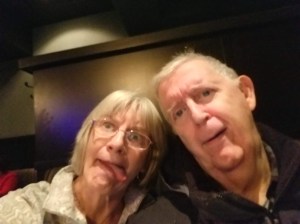
We were having fun.
The husband and I acting demented.

A to Z Challenge: Letter T for Touch

There is a magic in caring touch.

I guess it’s “old school” now, but when I was a new nurse, patients were put to bed at night with a brief back massage, if they wanted it. It did more good than sleeping pills to comfort and relax. I’ve always found this amazing, and have never forgotten how powerful it can be.

Our culture bombards us with so much erotic touch that we sometimes forget there is any other kind. Everyone, regardless of age or gender needs touch for physical and emotional well being. You hear of therapeutic touch in the neonatal ICU when family members are encouraged to come in and hold infants at risk. There are touch techniques that calm anxiety and panic. The elderly who are alone, without family, may never get touched by anyone. Our skin has nerve endings everywhere and we are in better health if these nerves are stimulated in a comforting way. Therapeutic touch can point out where we are hiding our tension, pain and stiffness, and make those entities lessen, even disappear.

I recently had a cast taken off my left hand and the occupational therapist massaged the surgical scar beneath it. I’m not used to being disabled in any way so this focused attention to touching my hand and arm felt a little weird, but really good. I learned to self massage, but it’s not quite the same as having someone else do it. Therapeutic touch leaves me sure that, at least for that moment, I am the center of someone’s attention. How often do we get that feeling? One of the reasons medical massage is so popular these days is that it meets those emotional and physical needs.

If you are a caretaker, think about those times when you might be able to use therapeutic touch for the benefit of your client or loved one. It might take a while to build confidence if this is not your custom, but you may find that something as simple as a hug, a hand on the shoulder, or a pat on the back can do wonders.

Teepa Snow gives an interesting demonstration of how to calm an anxious dementia patient by using therapeutic touch. I haven’t had to use this yet but I’m tempted to try it on the next anxious person I meet, dementia or not. Check it out.

Click here for video demonstration.

A to Z Challenge: Letter S for Senior Living

Years ago (before baby boomers started getting old) the elderly either aged at home or they went to the “nursing home”. That’s what we called it then, and it was the place you went right before you died. No one wanted to go there.

I don’t remember exactly when assisted living became a common thing, but I remember at one point my mom saying that she didn’t think it would be so bad to stay in a facility like that. I was surprised that she sounded so positive about it, but then, that’s the way she is. She’s never wanted to be a burden to her children.

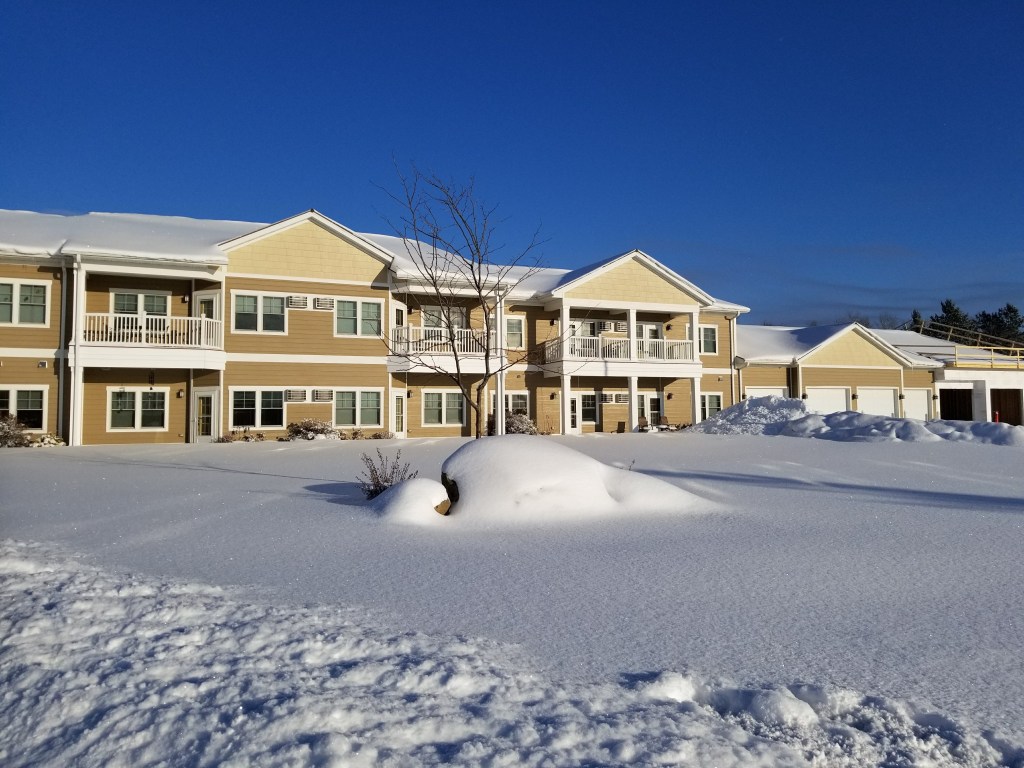
Water’s Edge – 1 and 2 bedroom apartments with garages if needed

She had her name put on the waiting list for an assisted living apartment at Water’s Edge, a complex attached to our local small hospital. A couple of winters ago, her name was next on the list and she was contacted. I happened to be visiting at the time. She decided that since she had help, she would try it out for a few months and see what it was like. We moved her in. I got to stay with her for a week.

Moving day, car loaded, excitement, work…

Senior living, for those who can afford it, has become something quite different from the “nursing home” of olden days. There is every level of care available, at different price points. Many people are totally independent and are just paying for the apartment, knowing that it is in a secure building and that they can easily transition to more care should they need to. Others appreciate being able to have meals prepared for them, socialization and exercise options, and regular check-ins with nursing personnel.

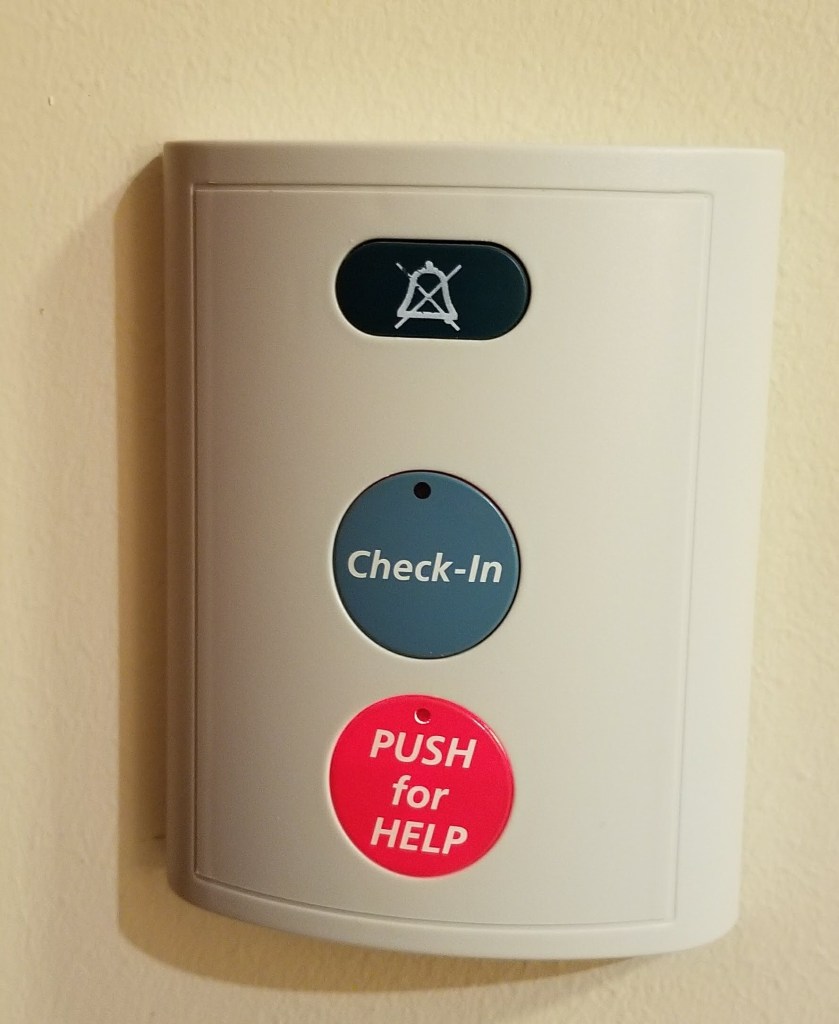
One of these inside each apartment. If you didn’t check-in with them each morning, they would send someone down to check on you.

It was an interesting experience for both Mom and I, and I am glad that we were able to familiarize ourselves with the concept of assisted living. The stigma and fear of it has evaporated. After a couple months, that got her through the worst of the winter, Mom decided she did not need even their minimal level of assistance, so she moved back to her condo.

Mom signing out, staff likes to know where you’re going and if you’ve returned. That’s kind of nice, kind of necessary.

I am wanting to tell anyone who is a caregiver, that it is okay to consider an assisted living facility for your loved one (your person) when their care is more than you can handle. And if you can move there with them, don’t wait until you’ve burned out doing everything yourself. Go there. Some of them are very nice and very practical places to live. Check them out and see what your choices would be before you are in desperate need. You will be glad you did.

Water’s Edge, where Mom stayed, is probably typical of many assisted living situations. Many of them are associated with hospitals and offer increased nursing care, rehab care, memory care, and other specialized services that might be needed. I lived close to another one in Florida and they also hosted events and concerts that were well attended by residents. They really do try to offer all the things that people like to have (yup, there is Bingo).

The price tag may seem high to some, but do not forget that they often take care of cable TV and internet, electricity and other services, all in one bill. If you like their menus, you won’t have to grocery shop for yourself as much. There will be no lawn to mow, and no house maintenance costs. There may be a free gym with programs and equipment provided. And what value do you give peace of mind? They normally have someone on staff who can answer financial questions, and help you with insurance arrangements, or find government programs that might be available.

Many people, like Mom, just prefer to stay in their own home as long as they possibly can, with minimal help. I am glad Mom has that option, and I am glad to be her helper. But, should she need more help than I can provide I know she will be okay with senior living.

Have you ever visited an assisted living facility or care center? What did you think of it?

A to Z Challenge: R for Rest, REM Sleep Disorder and Respite

Caregivers struggle to get their rest. Often those they care for also struggle to get good rest. But sleep is essential for healing, and for maintaining circadian rhythms that work in the body’s favor. Times of rest are when the body repairs itself physically and mentally. Everything goes better when all are sleeping well. But there are some enemies of good rest. Here are a few I know about.

It used to drive me insane. I traveled with a client who made me go around our motel room pinning the drapes shut with clothes pins, putting tape on the LED lights on any appliance that had them, covering up the clock, and putting towels at the bottom of the door to keep out the hall light. She insisted she could not sleep when there was any light in the room. In my mind, I was telling her my solution – shut your eyes and the light goes away.

Turns out she was right. We are programmed to become sleepy when it’s dark. We need to get light exposure during the day. It actually plays a part in keeping us alert and awake. But as evening comes, a hormone our body produces called melatonin, increases and we get tired. But even ordinary indoor lighting can interfere with our melatonin production. LED lighting is probably the worst kind and that is why having a lot of evening screen time – TV, computer, and cell phone is counterproductive. Ideally, you and your person should try to get out during the day, keep lights low in the evening, and avoid screen time the last few hours before going to bed.

Our short winter days make it hard for us to get light exposure. We have a light box to help with that and keep it next to the treadmill. Kind of like a walk in the sun?

One of the most common problems I read about in the caregiver support chats is the condition called “sundowning”. People with Alzheimer’s or other dementias might have the experience of getting more anxious and upset in the late afternoon or evening. It’s a kind of confusion that keeps them thinking that they should be up when you think they should be asleep. It can be exhausting for everyone involved. Having good routines with activity during the day (less napping), relaxing time before going to bed, not eating too late in the day and possibly boosting melatonin levels with a supplement, can all help.

It’s also just common sense to not try to get the whole day’s fluid intake in the evening (when you finally remember…) because frequent bath room trips do not make for good sleep.

For many years before his diagnosis of Lewy Body Dementia, my husband had vivid dreams. He would talk, shout, run, peddle his bike and fight with kicks and punches during his nightmares, scaring himself and me. We didn’t sleep very well and we have stories about that. We learned that this was called REM (rapid eye movement) Sleep Disorder, and it is one of the symptoms leading to the diagnosis of LBD. I was fascinated to learn that most of us are somewhat paralyzed when we sleep, which is why we don’t act everything out. Not so with this kind of dementia. Again, supplementing with melatonin before bedtime has helped Dennis to avoid most of this and sleep quietly.

Caregivers, there is another important R word that you should know about. If you are at your wit’s end, exhausted and nothing is getting better, you might need respite care for your loved one. Respite is a short period of rest or relief from your difficult situation. Sometimes it can be as simple as asking a relative or friend to help for a night so you can get some sleep. Respite care is also a common feature of hospice care, so inquire if you need this kind of help. Your person depends on you to stay well and take care of yourself.

I am reminded of the scary statistic coming out of one caregiver study – death rate of caregivers was 63% higher than that of the control group. After six years of the study 70% of the caregivers had died before their person and had to be replaced. Stress can do that to you. I’m hoping to stay well and be here for my people until they don’t need me anymore. Just sayin’…

A to Z Challenge: Letter Q for Quiet

It’s quiet here in my room. I have the luxury of a room to myself these days. Mom had us move out of her condo last summer and the result was that the husband got his own sleeping room and I got the master suite. It is my living room, my office, my music room (my keyboard), my craft room (sewing machine and serger and cloth stash), my dressing room with a walk in storage closet, oh, and my bedroom with a king size bed. I practically live in here because it is quiet.

The rest of the house is open plan, kitchen, dining and great room, and the television is there. It is on most of our waking hours, and the volume is turned up because the husband has a hearing problem. It is the “not quiet” place in the house. When I go out to work in the kitchen I always have to ask him to turn it down. He starts talking to me whenever I appear, in a voice so soft that it cannot compete with the TV.

Who says men can’t multi-task. Two screens at once is common.

He does have hearing aids, and they do help, but they are not perfect. When he takes them out his world gets much more quiet. The loudest thing he hears is his own voice. It’s nearly impossible to have a normal conversation with him if he’s not wearing them. There is a lot of “what did you say?” and “I can’t hear you!” going on. I wish I could remember some of the things we’ve thought we said to each other. It’s funny how much some words sound alike.

Let’s face it. Hardly any of us are going to leave this world with perfect hearing, and most of the people who need caring for have some deficit in this area. We start noticing it in crowded restaurants, and it gets worse from there.

What a disadvantage this is for those in our care! My aunt and uncle are “safe at home” in a somewhat isolated country area. Their most frequent communication is by phone. When they have discussions with their financial advisor, or one of their doctors, they are worried that they might not be hearing correctly. They often have asked me to go with them to appointments before we were sheltering in place, but now they sometimes ask me to be on phone calls with them. Being that extra pair of ears is important.

My uncle doesn’t have hearing aids, and probably will never get them. He’s pretty good at conversations if he can look me in the face and do a little lip reading and assess the context. I’ve discovered that hearing aids have a stigma attached that many elders cannot get past. They also magnify sounds in a somewhat unbalanced way no matter how high tech and expensive they are. And they malfunction. I am often buying batteries, looking for batteries and fixing the husband’s hearing aids. It’s one of those pieces of equipment that call for the McGyver in me.

For those who have not yet experienced these, they are hearing aid batteries. Tiny things.

Right now the husband has picked up his trumpet, which he hopes to be able to play again – maybe even start a small band when he gets better. It’s sound/noise that he loves. The TV is his window on the world and about the only interesting thing he does. He needs the noise. I need quiet. It’s restorative for me, and I don’t feel guilty retreating to my sanctuary (well, maybe a little bit, sometimes…).

A to Z Challenge: Letter P for Parkinsonisms

The logical P word for caregiving would have been “patience”, and it’s true that you need that, but there’s not much more to say about it, except that it requires some understanding. So here is another “p” word that we have been dealing with at home that makes patience more important.

Parkinsonism

It’s an umbrella term for a group of neurological symptoms that can have different causes. It’s not the same as Parkinson’s Disease (PD) but people who have PD have most of these symptoms. So do many people with Lewy Body Dementia (LBD), and there are over a dozen other conditions which cause parkinsonisms. The husband has a few of these symptoms and they are the most discouraging for him because they are so visible and he doesn’t see them improving much with his therapy. They are all movement problems. Here they are:

• Altered gait

• Tremor at rest

• Slowness

• Stiffness

• Balance problems

My aunt, who has Parkinson’s Disease, has all these movement problems as well. They are caused by a lack of a neurotransmitter called dopamine. She is able to take a drug called Levodopa to replace the dopamine and it does lessen her difficulties. But drugs like this can increase other undesirable symptoms, like hallucinations, in Lewy Body Dementia, so it hasn’t been recommended for the husband.

These parkinsonisms were some of the earliest symptoms that caught our attention several years ago. I could hear my husband walking around the house long before I could see him. He would shuffle, not lifting his feet, and take tiny steps. We teased him for walking like a pregnant lady.

Another characteristic of his walk is that he doesn’t swing his arms at all. There is a noticeable rigidity. And last week, for the first time, he mentioned that he got walking and was leaning forward and felt that he might not be able to stop easily. These are typical parkinsonian characteristics.

We used to walk often in a nearby mobile home park in Florida. That was before the difficulties began.

Last year, he had several falls and became wary of cracks in sidewalks, door jambs, stairs and any kind of uneven ground. He didn’t like to walk on the lawn, or in the woods anymore. The slightest bump or dip made him feel unbalanced.

Getting in and out of chairs became more difficult. He and my aunt used to have conversations about how the day was going and how many tries before they were able to stand up from their recliners. Now it amazes me how long it takes him to get in and out of vehicles, or even to sit down at the dining table.

And the tremor. It started in his right hand, and commonly it is one side that is affected first. I think it scared him because it started last summer and that was when he was sure stray electricity in the house was causing it. He was aware something was happening but wasn’t sure why. He is able to quiet the tremor with conscious effort or with meaningful movement, but at rest, when he’s not thinking about it specifically, his hand is always shaking. It has begun in his left hand as well.

Parkinsonisms affect how we as caregivers look at our loved one or client. They make them appear older and feeble which is distressing to them and to us. They also make the word “patience” a necessary skill as we learn to wait, to empathize, and to assist when necessary.

A to Z Challenge: Letter O for Organization

First, I will say that O is not my favorite letter.

Organization, in the caregiver’s world, is absolutely critical. Nothing goes right without it and I can’t emphasize that enough, although I’m going to try.

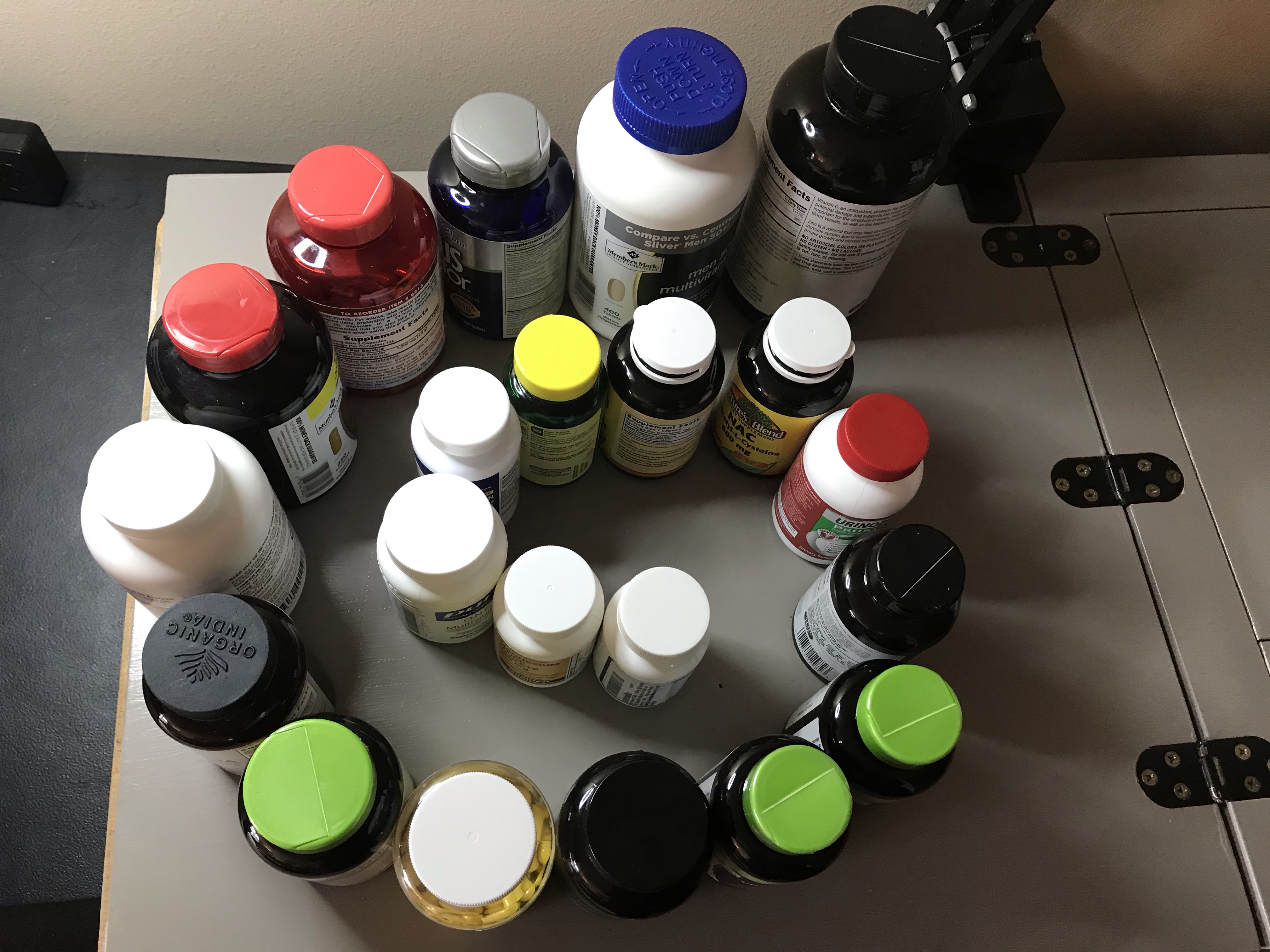
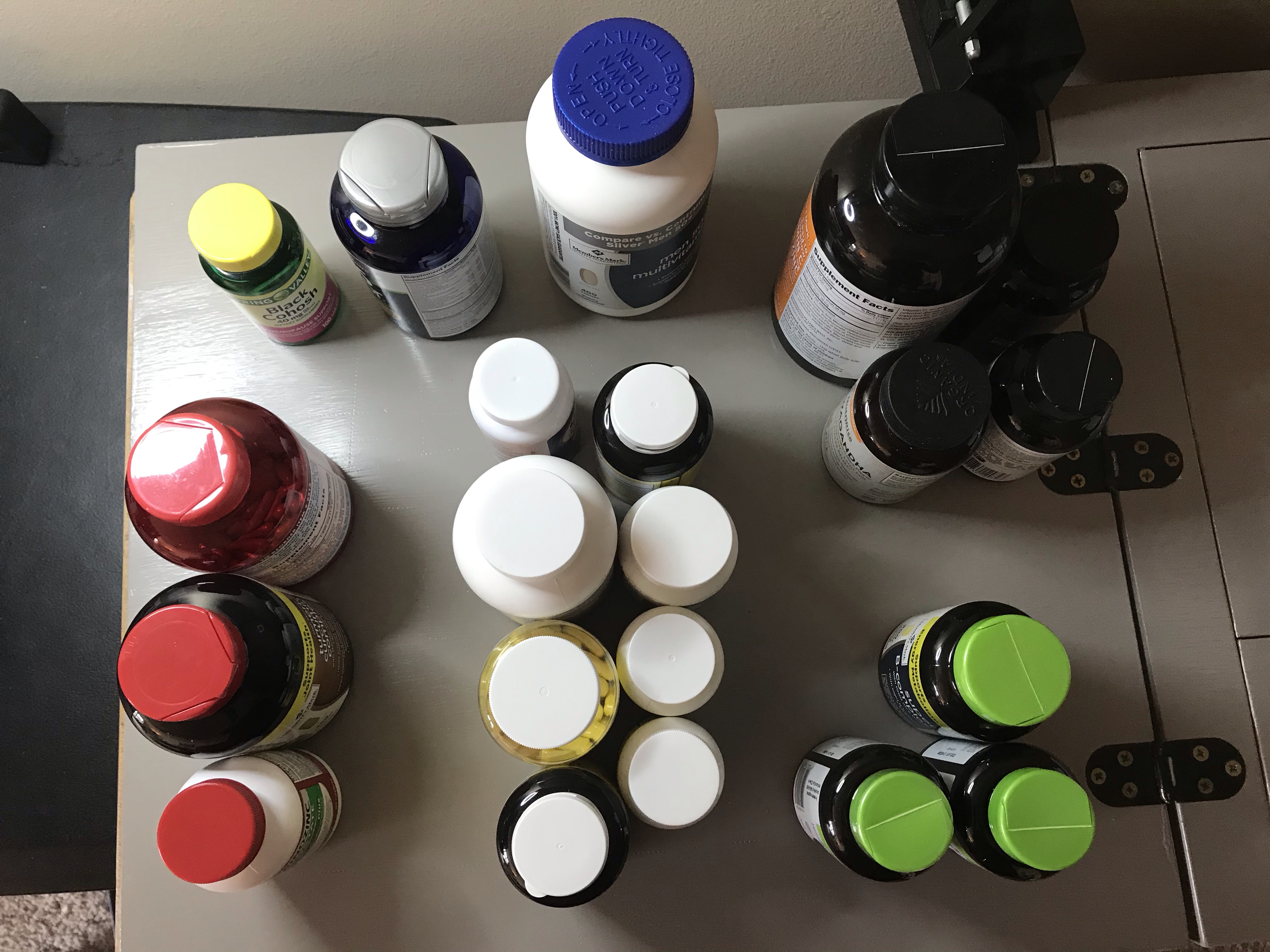
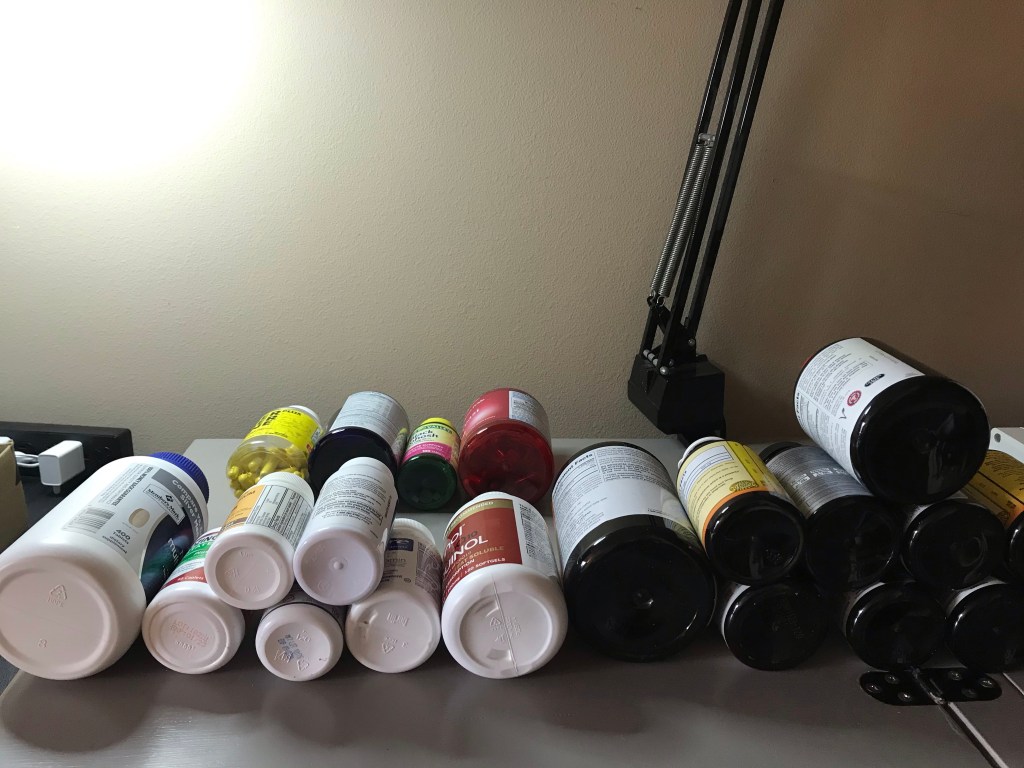
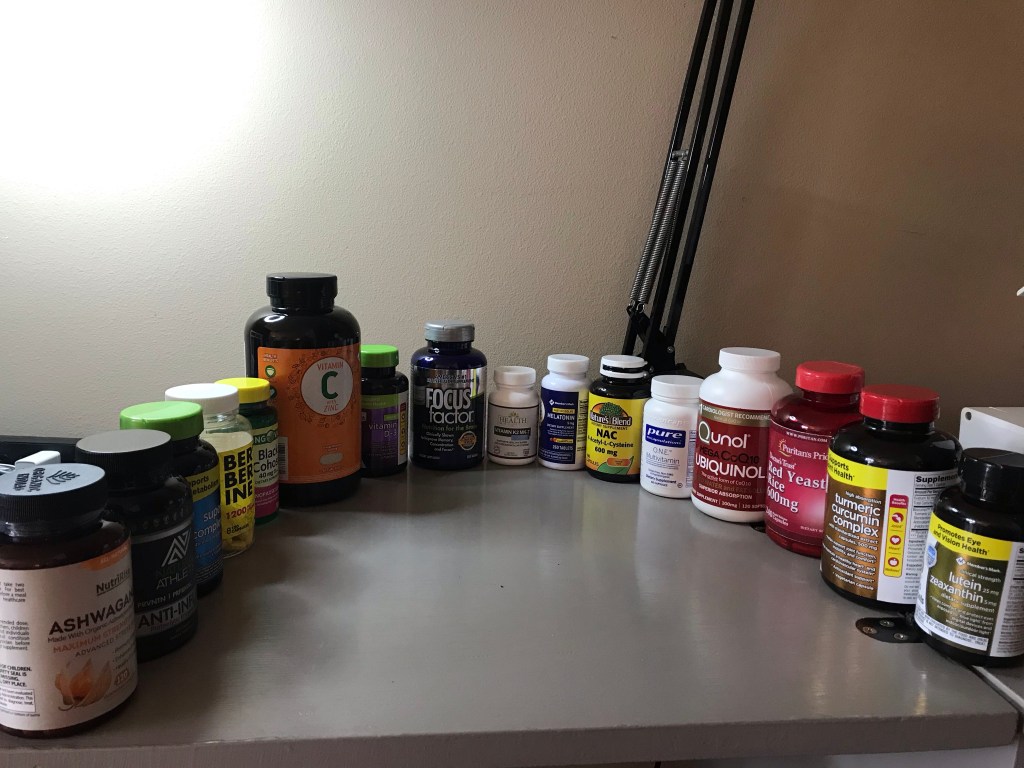
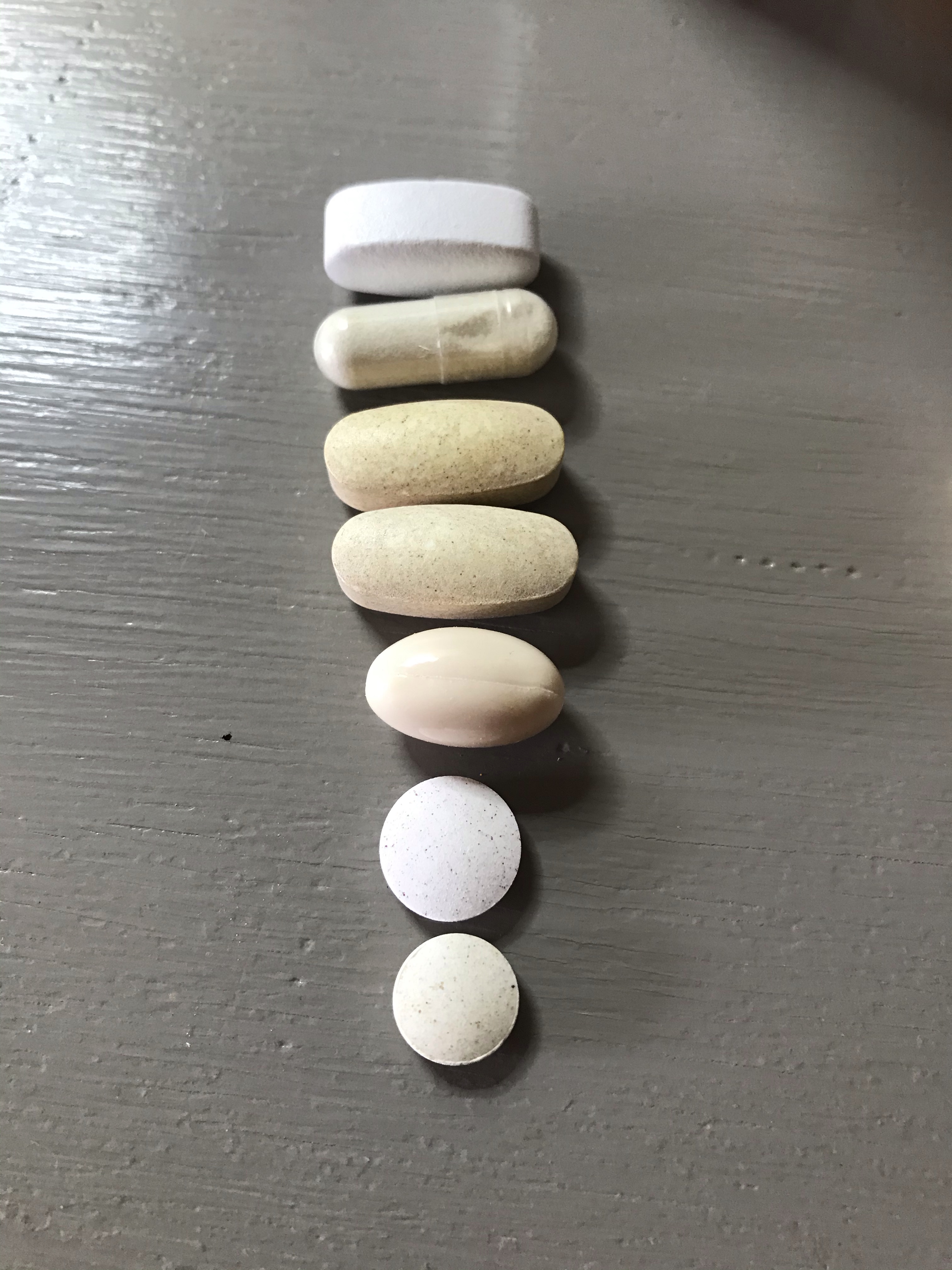
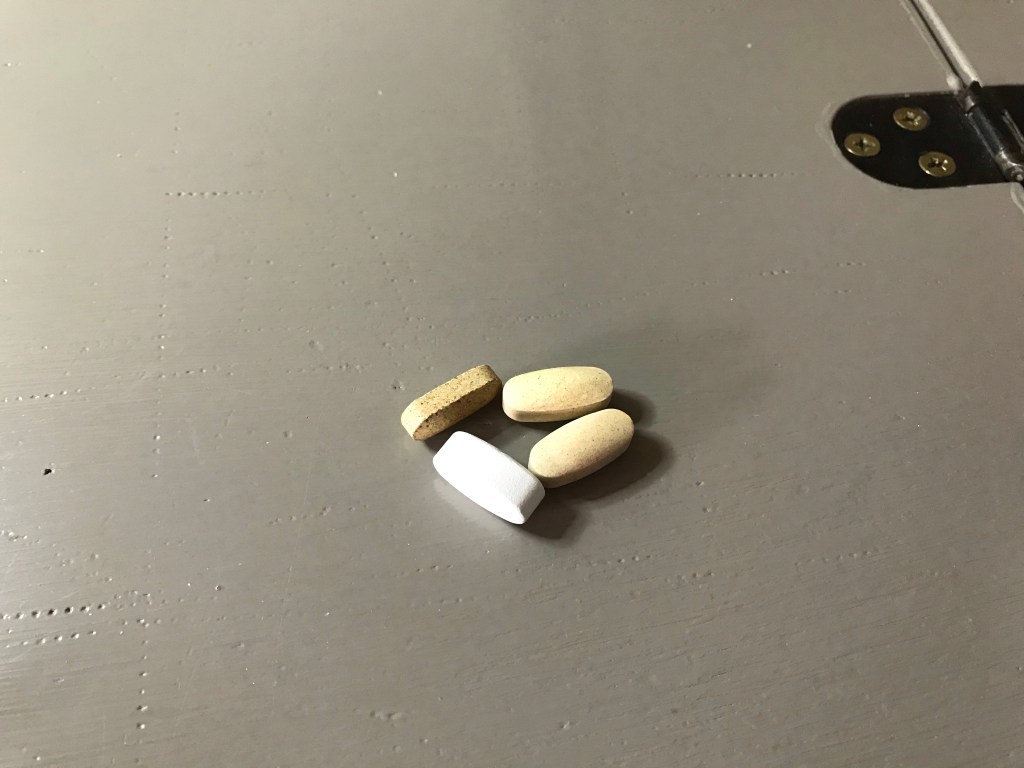
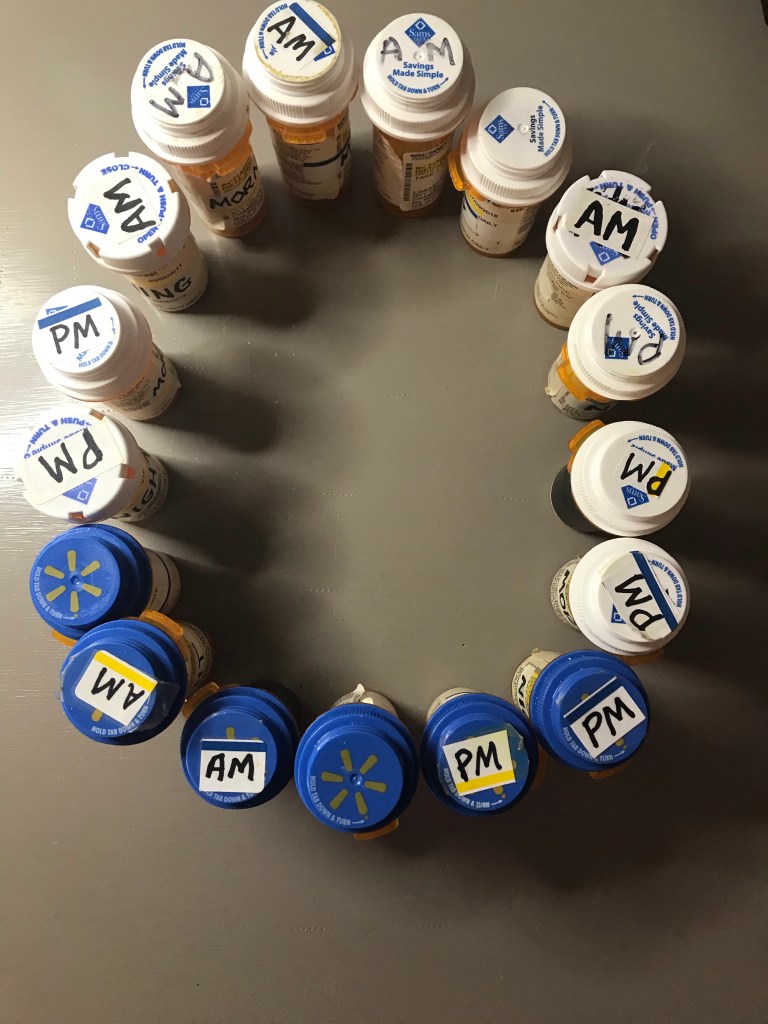
Take, for instance, the organization of pills, medicines, and supplements. The husband is an avid proponent of any pill with a promise, and they all have a promise. I don’t blame him, so if he wants another vitamin and we can afford it, I buy it for him. But my least favorite job is keeping all his pills organized where he can find them, or even where I can find them. So I’m going to share with you some ways of organizing that you may find helpful.

You can organize by bottle size

Bottle cap color, useful when you can only view them from the top.

Or by bottle color, if you have to view them from the bottom.

I’m not sure how this would ever be useful. So be it.

And people who get a fixation on alphabetizing everything can do this.

I think they try to do this at the pharmacy. It doesn’t work. I’ve spent hours looking for things.

To go a little deeper, pills can be organized according to when they are taken, morning or evening, or whatever time of the day you like to take them.

How easy is this!?

I am familiar with all the husband’s pills to the point of having feelings for individual ones. Some I disdain, some I admire. In the process of handling them I organize them in categories according to size

According to color

According to how easily I think they can be swallowed

Way too big, sharp edges

And according to whether they roll around and have to be picked up off the floor.

These bad boys will not stay put.

I hope someone finds this helpful because there are times when we caregivers need any help we can get. There are times when playing with pills may be our only emotional outlet, and I say go with it.

I am a caregiver. Welcome to my world.

Brought to you by the letter O