#AtoZChallenge: My Favorite Things D

D for Diamonds


“Diamonds are a girl’s best friend.” Leo Rubin

“Diamonds are best plain set.” Rolle

“The diamond has been always esteemed the rarest stone, and the most precious of all: among the ancients it was called the stone of reconciliation.” Lewis Vertoman

“It’s hard to be a diamond in a rhinestone world.” Dolly Parton

“Diamonds are forever.” Ian Fleming

“Diamonds are trumps in the game of hearts.” Robert Elliott Gonzales

“I never hated a man enough to give him diamonds back.” ZsaZsa Gabor

“No pressure, no diamonds.” Thomas Carlyle

“A girl never cares who casts the first stone at her – as long as it’s a diamond.” Evan Esar

“The diamond is the hardest stone – to get.” Evan Esar

“A diamond on a dunghill is a precious diamond still.” American Proverb

“…the hardest known substance yet has the simplest chemical composition, consisting of crystallized carbon, the chemical element that is fundamental to all life.” Marijan Dundek

“Diamonds cut diamonds.” Tamil

“A diamond with a flaw is worth more than a pebble without imperfections.” Chinese Proverb
 20170405_150115-1

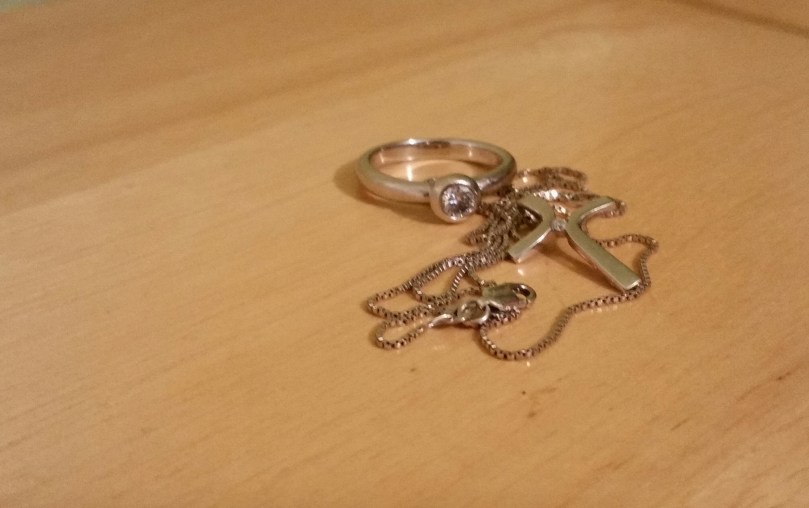
I have two diamonds. I can’t really say that either of them are my best friends as they have always been rather impersonal. I do count them among my favorite things. They both happen to be gifts from my husband.

The first one was in an engagement ring, and I guess it was what “pushed me over the edge” into a marriage commitment. It wasn’t particularly large but it was very high quality – no visible imperfections, with dazzling white sparkle. It spoke to me. It said that he who bought it was willing to risk his future by promising to spend it with me.

Over the years, whenever I would take it to the jeweler, I would hear how the prongs had worn down and I was lucky the stone hadn’t fallen out. The setting was rebuilt a couple of times. Later, working as a nurse forced me to put it aside, as the prongs would catch on things and could scratch my patients. As my hands aged I found that the ring no longer fit over my arthritic knuckles. A few years ago, I got lonely for it and made the decision to have it redone in a setting that would not wear down and would not catch on things. The quote about a diamond being best plain set resonates with me. I love its plainness and I wear it all the time.

I also love the quote about diamonds being stones of reconciliation. My diamond reminds me that I have committed to the work of continual reconciliation to the person I married. This is the second most important thing in life to me, and it’s not easy, which is why diamonds have to be hard, I guess.

The second diamond is set in the center of a cross. Crosses were instruments of death and they were cruel, awful symbols. I am often uncomfortable seeing them as jewelry. But the diamond in the center reminds me, again, of a commitment. It is about the love of my creator for me, the only thing that could make a cross beautiful. It symbolizes a complicated, mysterious way of living and looking at the world. It has become the first most important thing to me.

All diamond quotes taken from http://www.notable-quotes.com
#AtoZChallenge: My Favorite Things C

C for Cows

IMG1355589827
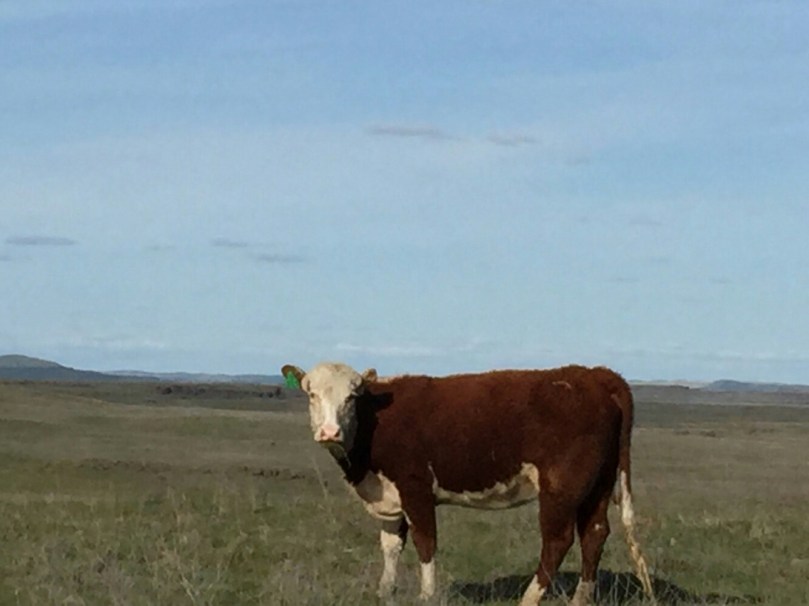
They are curious and will always look at you, which is good for pictures. Photo credit: Esther Armstrong

Back in the old days…

Often in the late afternoon, when it was time to do the milking, I was sent out to find the cows. Sometimes they would be waiting to be let into the barn (depending on how uncomfortable they were, needing to have their udders relieved). But since they had many acres of grassland on which to feed, they were at other times, nowhere to be seen. I would head off, running or on bike, in the direction they had last been seen, opening gates as I went. The cows tend to follow each other in a line, wearing a path about a foot wide, dotted with what we descriptively called cow pies. Being able to yell in a voice that carried, was also helpful. Our cows answered to “Cum boss!” and we always made the “boss” long and loud like a fog horn.

Once I found them, and got their attention, they would stop grazing and start toward the barn. Slowly I would urge them – we were not to make them run. Cows must think, because the thought of going to the barn would sometimes cause them to let down their milk. Nothing looks more counterproductive, not to mention painful, than to see a running cow with a swollen udder flapping between her legs, spraying milk this way and that as she trots. All in all, they liked coming to the barn where they knew they would get food, water and relief.

Our cows were all named, and they all had their own places in the barn. The barn was always prepared beforehand, with stanchions opened and turned the right way, and hay or silage laid out on the floor in the manger area. The automatic watering cups were checked to make sure they were clean and working and full. The smart cows would walk sedately to their place, stick their heads in the stanchion and begin to eat, waiting for us to come and close them in. The smarter cows would quickly stick their heads in a place other than their own, eat a few mouthfuls and then scoot into their place. They aren’t dumb when it comes to food.

Cows are large, warm, smooth haired with long pink tongues and breath that smells like hay, most of the time. They are very curious and will come running to investigate new things that appear in the field.  After being held in the barn over our cold Wisconsin winter, they would be let out in the spring and race around kicking up their heels, which was quite comical because cows are not the most graceful animals. They just aren’t.

Today I was taken back in time, as I once again went looking for the cows. I had a file on my pc, and wanted my favorite cow pictures for this post, because, yes, I had enough of them to have favorites. The cow file was nowhere to be found. This digital age has given them too many pastures in which to hide, except for these few stragglers who have finally heard me yelling “cum boss!”

20170403_143234-1-1.jpg
These were the only cows I could find. They knew I was taking their picture and would have been on me in a second…

So, who has ever accidentally landed in a cow pie?

#AtoZChallenge: A Few of My Favorite Things B

For this year’s A to Z Challenge I’m being Julie Andrews and going on about my favorite things. I suppose there are people young enough to have no clue who Julie Andrews is or when she did this. Seriously, you need to watch “The Sound of Music”. It’s part of classic movie knowledge. Remembering your favorite things will keep you from being afraid, and who doesn’t need some of that these days…

Barns

I am seriously in love with old barns, wherever I find them. I love their muted colors. I love their changing shapes as they age, sag, and fall. I love the stories that are hidden in their walls, stories of people working, of animals taking shelter, stories of changing culture and times past.  When driving through the Midwest particularly, I have been known to brake suddenly and pull off the road to get a photo of a ghost of a barn so picturesque that I could not pass it.

One time visiting my parents in northern Wisconsin, my dad wanted to show me a barn he thought I would like. He didn’t know who it belonged to but it looked abandoned. And indeed, it was. Dad stood by the gate as I trespassed  investigated the barn inside and out with my camera.  The memory of that time will always be burned into my memory, with the help of those photos.

Dad waits
Dad, keeping watch while the photographer was busy
Old Barns
This was an unusual barn with angles I couldn’t figure out.
Old Barns
Hinges, latches, distressed wood beauty
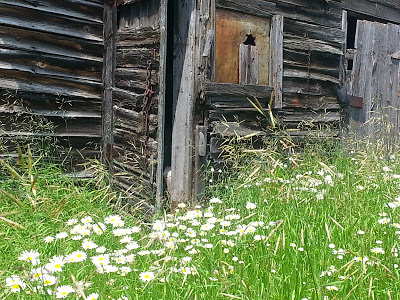
Barn and daisies
Countless views in this field of daisies
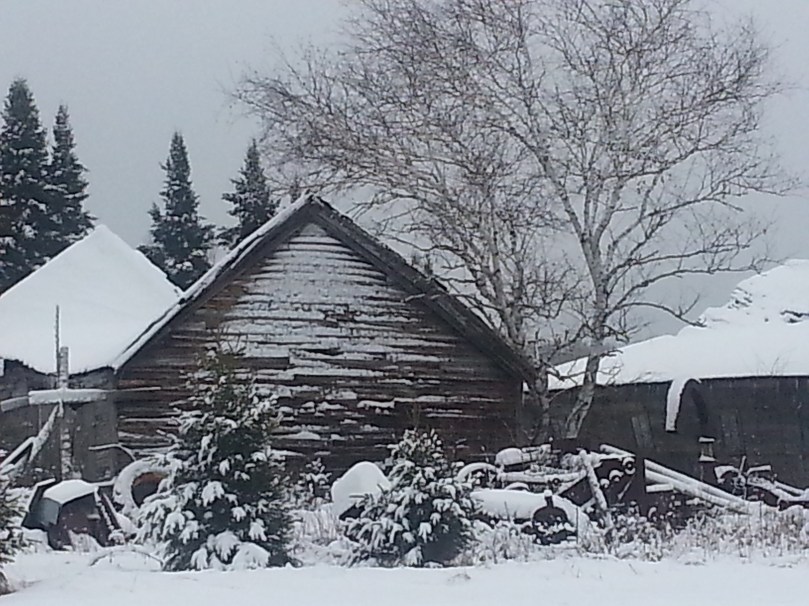
20141129_100100
And just as beautiful in other seasons. I couldn’t resist going back.

I think the fascination comes from my own childhood, growing up on a working farm, and gradually seeing the barn I knew well change roles. It contained the hayloft that was at once both the perfect playground and the source of my scariest dreams. It was the dairy barn where I learned to milk cows and hunt for new kittens. Later it was the storage place for furniture and machinery no longer in use. One section of it became the hen house for our flocks of chickens. As the leaks began and it leaned a bit, it was propped up with braces and attempts were made to put metal on the steep sloping roof. And then one night, in a storm, it went down completely. We weren’t ready for that and it was shocking.

20170403_121719-1
One storm, and it was a pile of rubble…

One of my favorite barns is still in our family. It belonged to my grandfather, and is now a landmark in the greenspace surrounding my brother’s small housing development. Photographers sometimes pay to take pictures there.

CIMG1243
The patchwork tin roof, where my grandfather regularly risked his life fixing leaks.
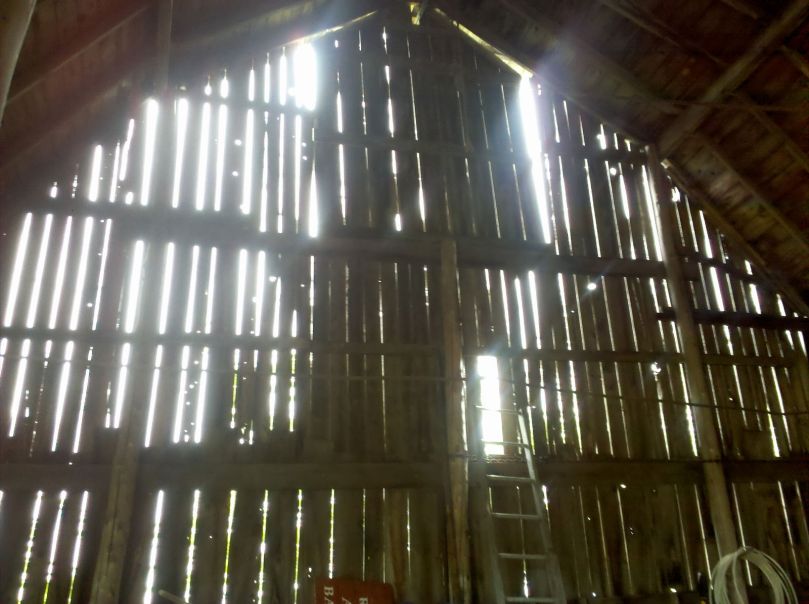
IMG_20110627_102317
My favorite view from inside the barn

Barns stand for a way of life that is becoming less common. People used to build their barn before they built their house because it was a priority. Now they are more likely to be adornments on the “gentleman farms” of the wealthy. I am afraid they will become extinct. And that is why I take pictures of these beautiful reminders of the past.

What part of the past do you like to photograph, to keep alive?

*All photos are property of Shirley Dietz. May be used with permission.


#AtoZChallenge: My Favorite Things A

For this year’s A to Z Challenge I’m being Julie Andrews and going on about my favorite things. I suppose there are people young enough to have no clue who Julie Andrews is or when she did this. Seriously, you need to watch “The Sound of Music”. It’s part of classic movie knowledge. Remembering your favorite things will keep you from being afraid, and who doesn’t need some of that these days…

20170401_132002-1

A is for my favorite chill busters, afghans. I like the word, to begin with, because it’s just a crazy combination of consonants that I always have to think about before I spell it. I even make it crazier sometimes by spelling it with more consonants – aphghans. I can do that, right?

Here is why these particular knitted or crocheted coverings are favorites for me. They are made by hands that I love (mine or others) and they are making use of scraps instead of wasting them.

My first afghan was a high school graduation gift from my Aunt Helen. She made countless numbers of afghans, quilts and doilies for people and always had something she was working on. She didn’t waste yarn, and she didn’t waste time. I took this afghan off to college with me and everywhere else since then. It is the multi-colored one in the picture with this post. It is still in great shape, and because of all the colors it has something to add to almost any décor. It is bordered in green which is my favorite color. Auntie Helen is no longer alive, but I have this beautiful thing from her that helps me remember her. Partly through her influence I have also loved to knit and crochet and I have hopes of being as productive as she was.

This afghan is an example of how a physical thing can represent more than just the physical. It can stand for values like thriftiness and hard work. It can be a gift of time and effort, showing love.

What gift have you received that has become special to you in this way?

#atozchallenge: Very Late Z

I’ve been sick, really.

I don’t remember if I did this when I was a child or if others did it to me, but, the memory is there of orange peel being squeezed in my face and of feeling the light, stinging spray of citric acid -my first introduction to citrus zest.

Zest is a great word meaning to enjoy something keenly, with relish, and also a pleasant flavor or exciting quality – that is why it is applied to the outer peel of citrus fruits.  The white part beneath, called the pith, is often bitter but the outer peel or flavedo is full of flavor and is used in many ways.

You might find it in orange marmalade, lemon flavored baked goods. I like to keep a lemon in my freezer for recipes calling for lemon zest.  A fine grater or special zesting tool can be used to cut the peel. It is often used as a garnish too because of its bright color and full flavor.

Another use, and one of my favorites, is in citrus essential oils. Here is your trivia for the day; when cold pressed, it requires 3,000 lemons to produce a kilo of lemon essential oil.  The chemical constituents in this oil, the list is too long to include, have anticancer, antidepressant, antiseptic, antifungal, antioxidant, antiviral, astringent, invigorating, refreshing and tonic properties.  All of which might make you think that we should be eating the peeling, not just the lemon. It works for me to put a few drops of the oil in my glass of water.

The next time a server in a restaurant asks you if you would like a slice of lemon in your water or other drink, you might have a good reason to say “yes, please”. Just sayin’…


#atozchallenge: Late Y

My food choice for Y is yogurt. I have been eating a lot of it lately since doing a round of antibiotic.  It is made with a lot of active bacterial cultures (good ones) that are naturally found in our intestines and which are a vital part of a healthy immune system and digestive system. Because it is more economical I have developed my own way of making yogurt at home. Here is how I do it.

I start with a gallon of 2% milk.  Any milk will do but the fat content will make a difference in your finished product.

On the stovetop I heat the milk to 190-200 degrees F.. I have a thermometer which clips to the side of the pan and I watch it closely. The milk needs to be stirred so it doesn’t burn on the bottom of the pan. I don’t let the milk boil.

20160503_150233.jpg
Heat it slowly, watch and stir (in other words, don’t leave the kitchen or you will have a real mess…)

As soon as the temperature is reached I put the pan in the sink with ice water to cool it down quickly. The thermometer is still on the side of the pan and when it reaches 90-100 degrees F. it is cool enough.

20160503_153111.jpg
Those are ice cubes, not little fish. The cooling is fast.

Add 3 tablespoons or more of yogurt that you have bought as your starter. It can be any brand that states it has live, active cultures present.  Choose a starter that you like because your yogurt will be similar. Stir the starter into your gallon of prepared milk.

I like to transfer the milk to a heavy bowl (I use the removable bowl from my crock pot) that will hold heat well. Cover it and place in a consistently warm place for 7-8 hours.  Suggestions for the place: your oven if it has a light that you can turn on. The light bulb will produce enough heat if you keep the oven door closed. OR if you have a water heater in a closet put a towel on it and set the pot on the towel OR put a heating pad set on low on your counter and the pot on top of that with a towel over the whole thing to keep the heat in.

20160503_154710.jpg
Do not turn on the oven! Just the light.

After 8 hours, the yogurt should have curdled. I like to separate the curd from the whey (which makes Greek yogurt) by taking a large colander which I line with cheesecloth and setting in a container to catch the whey. Pour the yogurt into the colander, wrap the cheese cloth corners over the top, place a plate over it and put something heavy on it to press out the whey and put it in the fridg. Let it set for several hours. The longer you let it drain, the thicker it will be. You can always stir some of the whey back in if it gets thicker wanted.

Enjoy your homemade, unsweetened yogurt with fruit, cereal, or as a spread like cream cheese.  It has a milky, soft flavor with just a little tang.

20160504_124058.jpg

#atozchallenge: Late X

The challenge is over today.  My last three posts didn’t make it up in April. Visiting with daughter Julie who is an equine vet, makes life very busy. I am learning that it is a blessing to be able to focus on one thing at a time and really be present in the moment. Unfortunately X, Y and Z were not part of the moment.  So here they are now…

X is for xylitol.  Xylitol is a chemical called a sugar alcohol (the “ol” suffix gives that away).  It is a substance found naturally in many plants. It has lately become a popular choice of sweetener because it does not affect blood sugar the way other sugars do, and it has some anti-viral and anti-bacterial properties that are beneficial in cases of ear infections and tooth decay.

Xylitol is extracted from plants through a process which results in a hydrogenated sugar.  The plants most often used are corn cobs.  The process involves a heavy metal as a catalyst, which is removed later. It is a highly processed substance and there isn’t a lot of information yet on what happens to those who make it a regular part of their diet.  It is known that tolerances differ but that at some level people will experience intestinal discomfort – gas, bloating, diarrhea.

After reading about xylitol, the pros and cons, I am concluding that anytime we try to process something and mass produce it we are stepping into potentially dangerous waters.  Why can’t we just eat food that grows, in the form that is simplest or with cooking that anyone can do at home without a lot of additives? Food is designed to be good for us.  Don’t mess with it.  Just sayin’…

#atozchallenge: Water

20160428_071233.jpgI am so grateful for water. I was thinking about that while washing dishes the other night.  We use water to carry the dirt away from everything we wash – our dishes, our clothes, our cars, our pets, our bodies, everything.  If that were the only benefit of water, that alone would be enough.

The complexity of what water does inside our bodies is another mind boggling subject.  We are composed of 50 – 75% water and all our basic functions depend on having enough of it inside the cells, outside the cells, in the bloodstream. Every biochemical reaction in our bodies takes place in water and we can’t produce it ourselves, nor store adequate amounts of it.  We have to take it in, or we die rather quickly.

And so we have a planet to live on that is watered with a beautiful closed system of purification and re-use of water, that has vast amounts of water stored underground, and seas and oceans, lakes and streams almost everywhere.  It is a perfect match for our needs. That being said, some of us have to work a lot harder for water than others.  Some of us never have to consider how precious our water is and are wasteful of it, taking it for granted.

I’m not going to get real technical about water. I just want everyone to have a chance to think about water and how marvelous it is, in all its forms from rain to snow to steam.  The beautiful clouds in the sky, the inspiring waterfalls that we flock to view, the cool lake that we jump into to cool off, the sprinkler that brings relief to our grass and plants and trees.  Water is, well, kind of miraculous really.  Just sayin’…

#atozchallenge: Vanilla

20160426_224614-1.jpg

Black and white, chocolate and vanilla.  Classics in the world of flavors and although vanilla has some B complex vitamins and several important minerals, it usually gets left in the shadow of all the hype about chocolate.  It’s actually a flavoring found in most desserts, baked goods  and many drinks. It’s also expensive, coming in second behind saffron.  Here’s why…

It’s a bean grown by the only fruit bearing orchid around.  It grows in tropical climates, the flower blooms for only one day and when commercially farmed, has to be pollinated by hand.  The pods turn from green to yellow before being picked. They are left in the sun to dry and wrapped to “sweat” for up to 20 days. Follow this with 4-6 more months of air drying and a bit of fermentation before you get the thin, dark bean in the picture above.  The beans inside the pod are scraped out in powder form.   All this is pretty labor intensive from the sound of it.

You can buy the pods in health food stores.  The extract, formed by dripping alcohol over the beans is found in most groceries.   Vanilla sugar is the last form and many people make it themselves – just cut the beans or even just the pods in thirds and place them in sugar to infuse.

I wanted to picture my favorite vanilla concoction but I went to the freezer and it was gone.  I love, love, love vanilla ice cream with the specks of vanilla bean.  So I’m left with this picture, not nearly as mouth watering.  Ice cream will be on the grocery list this week, just sayin’…

20160426_224918.jpg

#atozchallenge: Unleavened Bread

Long ago, a large tribe of people who had become enslaved in a land they had originally gone to for protection, were forced to leave in a hurry. It takes time for natural yeasts to develop in bread and they didn’t have that time. Their traveling bread was unleavened and it became one of the symbols by which this hasty departure was remembered. You can read a brief recount of this story in the Bible, book of Exodus, chapter 12, verses 31 -42.

This is one incidence of unleavened bread that is historically significant, but since unleavened bread is simply any bread product made without a leavening agent (yeast, baking soda, baking powder for instance) you can find many examples of it worldwide that are in common use.  Tortillas are unleavened bread common in Central America. Roti and chapati are unleavened breads common in India and Southeast Asia.  Most of these breads are flat in form but not all flatbreads are unleavened.

Interestingly this week is the Jewish Feast of Unleavened Bread which many Christians also acknowledge.  I know what it is like to celebrate this holiday and am sharing with you one of my favorite recipes.  It is a delicious sweet bread with a delightful almond flavor.

Almond Unleavened Bread

Mix: 4 eggs (beaten) with 1 cup of sugar and 1 cup of flour

Add: 3/4 cup melted butter or oil

Add in increments: 2 more cups of flour, 1/2 teaspoon vanilla and 1 teaspoon almond extract, and finally 1/2 cup of unsalted, slivered almonds.  Place this thick batter in a greased loaf pan and bake at 350 degrees for 30 minutes until bread is slightly browned on top.  Cool and slice in 1/2 inch slices.  Toast if desired.DSC07700