Geology has never been a compelling subject in my world. I
would just as soon leave it to those who find it fascinating – like my niece
Jamie who is a geologist. But I have to say that the Grand Canyon is a very
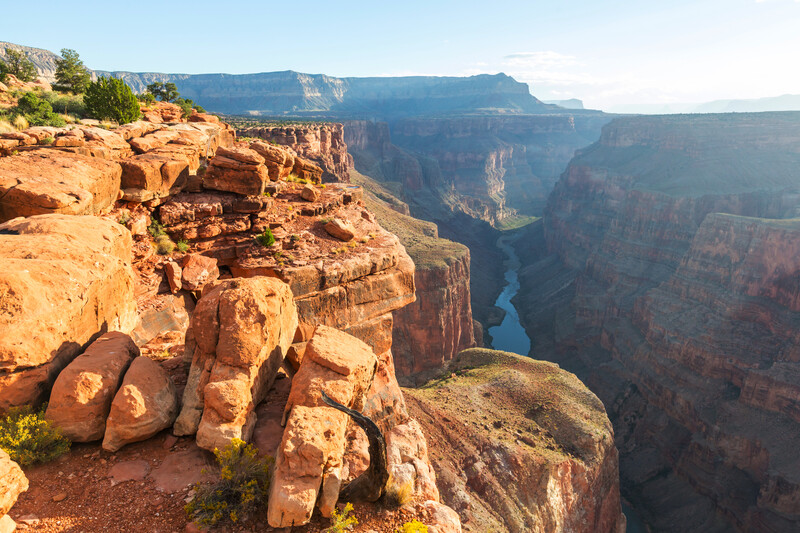
unusual, actually singular, place when it comes to geology. The rock layers are
found in chronological order, the youngest on top with evidence of past marine
life, and the oldest, Vishnu schist, on the bottom with no evidence of life in
it. Every kind of formation you can imagine can be found there: mesas, buttes,
temples, platforms, castles, terraces, massive walls, amphitheatres, canyons,
ridges…
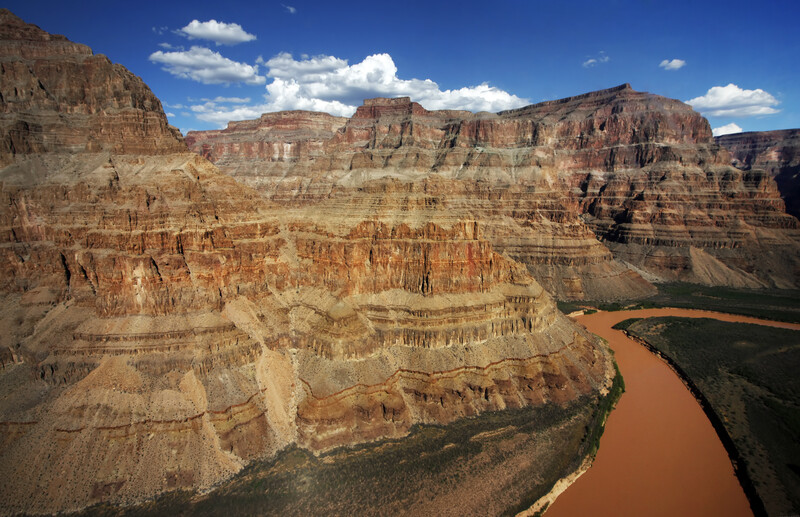
As the Colorado River cut down through the earth it exposed
layer after layer of deposited soil and rock. Because the layers were of
different kinds of rock, they are different colors, different hardness and
different levels of stability. The scenes in the canyon are like looking at a
record of time, laid open on the walls of the canyons. The layers match on both
sides of the river which proves that it was the process of erosion over time
that caused the chasm. The plateaus on either side of the river were once
continuous.
Science estimates it has taken 1.2 billion years to erode
through all those layers and countless numbers of people, scientists, geologists
have been left speechless looking at the grand scale of it all.
That’s all for L. Short and sweet, but lots of pictures.
I have just been looking at the Grand Canyon on Google
Earth. From a distance I could not tell what I was seeing. It was the crooked
line of a river made broad by lighter borders unevenly stretching out on either
side. Zooming in closer I suddenly saw height and depth. The dark areas were
shadow of high cliffs. The light areas were less steep slopes with sparse
vegetation. The trails were white lines zig zagging down the descents and they
went on and on, seemingly forever, as I followed the route our hike will take.
Google Earth is a unique way of seeing the Canyon –
vertically, looking straight down. Although it doesn’t compare to actually
being there, it gives a dramatic view of how large and complicated the
formations are. Look at it if you can.
I always have a hard time understanding the lay of land from
written descriptions but I’m going to try to describe this larger area, and
show you where Kaibab fits in. Stick with me here.
A high, mountainous plateau goes from east to west across
the northern edge of Arizona. It is bisected by the Colorado as it winds it’s
way southwest. It’s hard to believe that the river made such a wide, dramatic
gash through the plateau that slopes toward the south. On the north side of the
river, from east to west, lie the Kaibab, the Kanab, the Uinkaret and the
Shivwits Plateaus. On the south side of the river there is the Coconino Plateau
and the Hualapai Plateau. Hundreds of
tributaries run down into the Colorado, cutting their own canyons as they go,
especially from the north side.
The Kaibab Plateau “is
covered with a beautiful forest, and in the forest charming parks are found….
The plateau has four months of the sweetest summer man has ever known.” John Wesley Powell
As far as the word Kaibab itself, well, there doesn’t seem
to be a known meaning of it on the internet. It is probably a Paiute Native
American word and it’s attached to many things in the Grand Canyon area. There
is the Kaibab National Forest, which is home to a herd of large antlered deer
(well fed and well managed), there is the Kaibab squirrel which is nearly
extinct but still holding on, there is the large Kaibab Plateau north of the
canyon and, of course, the Kaibab Trail with its South and North branches. Our
descent will be on the South Kaibab Trail, and that is for another post.
Don’t forget to check out the Grand Canyon on Google Earth.
It’s amazing!
Although I haven’t taken this Grand Canyon hike yet, I have
had to figure out how to get there. I did this quite some time ago to make sure
that my reservations were in place. For
me, the hike itself was quite an investment and I didn’t want to risk not being
there at the right time.
Driving by land is an obvious good choice. My brother and
his wife who live about three hours from me, in Wisconsin, are driving and have
room in their vehicle for all our equipment.
I am flying out and meeting them before the hike and will be traveling
light. Since there are many great places to visit between Wisconsin and
Arizona, including many national parks, my brother will be taking his time and
may do some other shorter hikes on the way.
Flying into the Grand Canyon area usually means going to one
of the nearby cities with an airport – Flagstaff, Phoenix or Las Vegas.
Although there is a small airport in Grand Canyon Village, service there
is limited to private and charter
flights. From the cities, car rental is the advisable travel means. My
brother’s approach will be from the east which meant that Flagstaff was the
most logical choice for me. It is, more or less, on his way to the canyon. We
will meet in Flagstaff and drive to Grand Canyon Village the day before our
trip starts.
Did I make it easy enough to see where the cities with airports are?
Our first day of the hike requires us to be present at 10
am, so we have arranged lodging in Grand Canyon Village on the South Rim within
the National Park. It is a small village and has limited year-round lodging.
There are a dozen or more hotels including Bright Angel Lodge, El Tovar Hotel,
Kachina Lodge, Thunderbird Lodge, the Motor Lodge and Yavapai Lodge. These
hotels have been hosting visitors since the park became a tourist destination
and several of them are quite famous. El Tovar is right on the Rim and built
like a European castle! Lodging is also
available on the North Rim and at Phantom Ranch inside the canyon, which I will
mention in a future post.
My brother was able to get a hotel room, but I was not.
Instead, I have reservations at Mather Campground in Grand Canyon Village. I
will be tenting the night of our arrival, the first night of the hike before
the descent, the two nights at Phantom Ranch, and the night after we return to
the South Rim. Hopefully, I can survive five nights of sleeping on the ground.
My airport nearest my home is 240 miles away in Minneapolis
so I have transportation complications on that end as well. I will probably
travel there the night before the flight and do a park and fly stay at a motel.
Living in the wild of northern Wisconsin has its aggravations…
There is so much more that I could say about getting to the various destinations in the Grand Canyon. I didn’t even mention much about the North Rim or the West Rim. It’s a big place.
Indians or Native Peoples of the Grand Canyon area
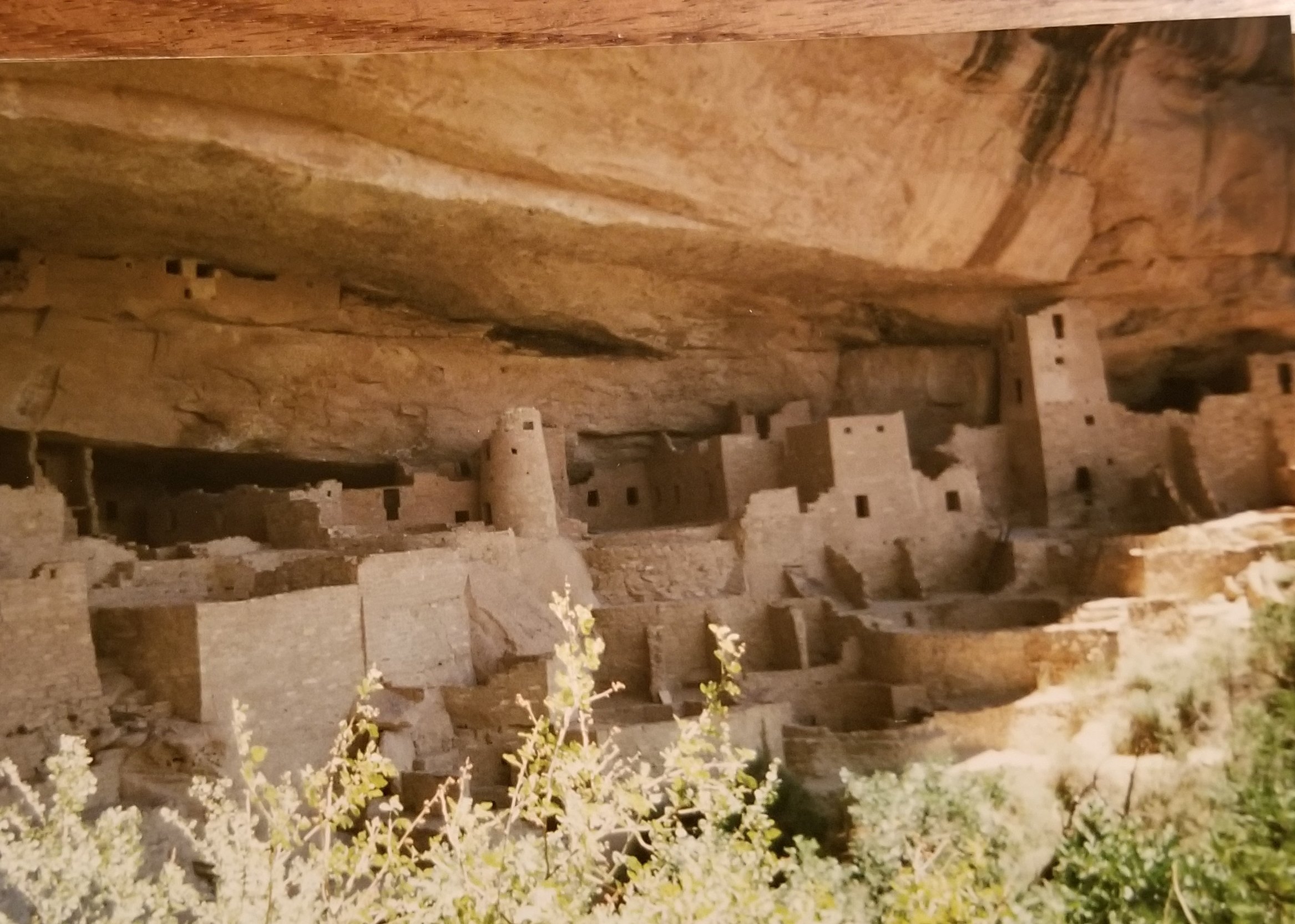
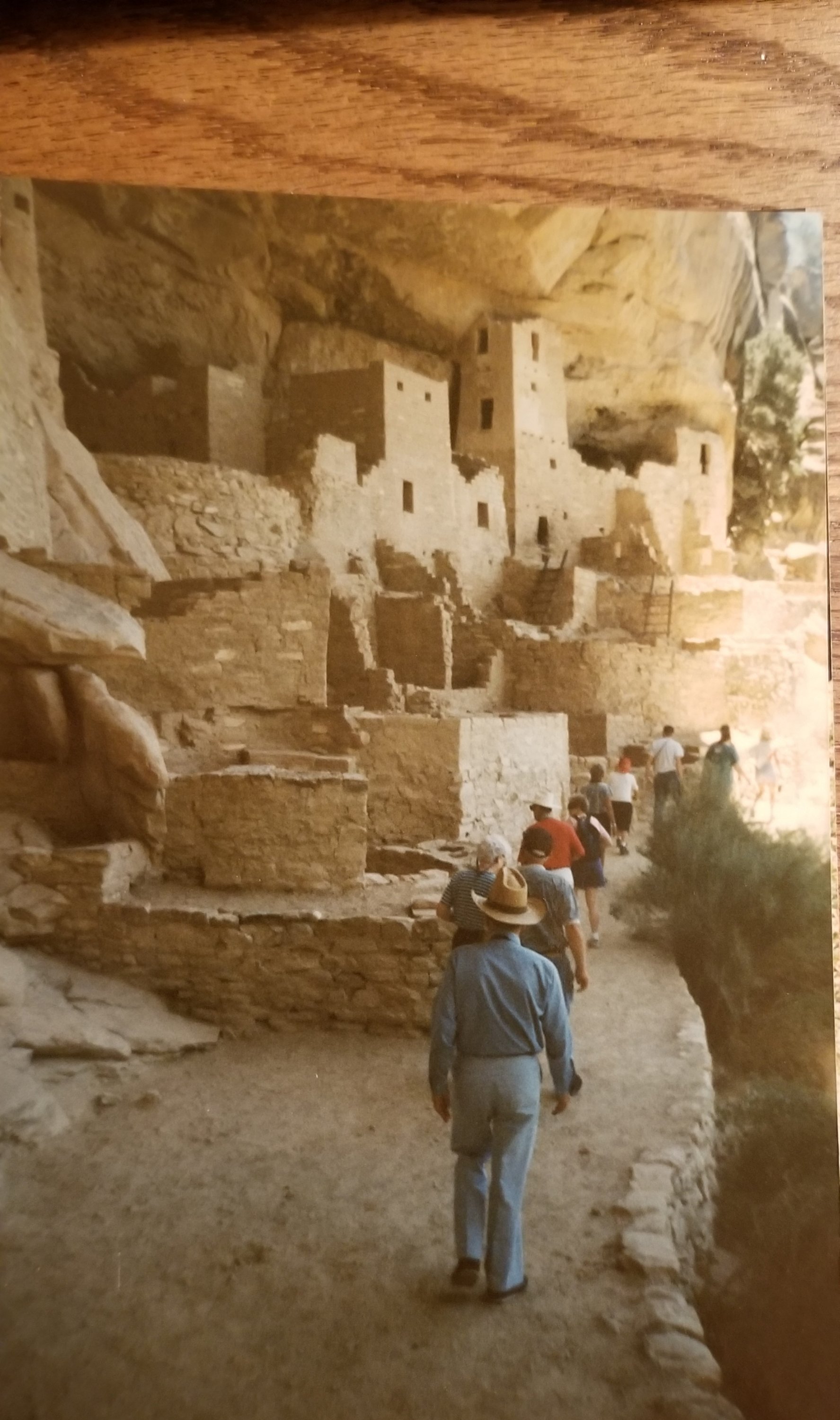
My first visit to a pueblo was several years ago at Mesa Verde in Arizona. Pueblos are multi-room dwellings made of clay and the ones at Mesa Verde were built in the clefts of a canyon wall. The native people who lived there were most likely Anasazi, who left the area in the 1300’s A.D. during years of drought. They vanished, leaving behind these remarkable dwellings. They were named Anasazi, or Ancient Ones by the Navajo people north of the canyon. It is an amazing place to visit.
There were different tribes of the pueblo peoples who
inhabited the Grand Canyon, most of whom were semi-nomadic farmers and hunter
gatherers. They traveled back and forth from rim to lower canyon to rim,
depending on the season. Many of their trails are still present and used by
visitors. Indian Gardens is a campground on the Bright Angel Trail but was once
an area farmed by the Havasupai tribe.
Presently, one place to experience Native American culture
is on the Havasupai Reservation in Havasu Canyon. That is one part of the
canyon that my brother has not visited yet and still hopes to. We tried to get
reservations to visit there last year but could not. The Havasupai have their
own tourist bureaus and quotas of visitors. I love what their name means –
“people of the blue-green water”. They
and the Walapai tribe (“people of the pine tree”) live in the western region of
the South Rim.
The Grand Canyon Skywalk, on what is called the West Rim of
the canyon, is actually on the Hualapai Reservation and outside of Grand Canyon
National Park. It is an amazing cantilever bridge, out from the cliff in a
horseshoe shape, and 4000 feet above the canyon floor. Add to that a glass walkway and you have a
real tourist attraction. I have seen
pictures of people who became paralyzed with anxiety as they looked down and had
to be carried off the walkway.
There is a lot of controversy within the Hualapai tribe and
outside of the tribe concerning this bridge. There are people on the
environmentalist side who aren’t sure it’s a good way to preserve the canyon.
There are others on the practical side who feel the bridge is a way to raise
money for serious needs of the tribe. It’s complicated.
The Hopi people live in the eastern section of the South Rim,
and to the southeast are the Zuni tribes. North of the canyon is the Paiute
Reservation in the west and the Navajo Reservation in the east. The Navajo were
latecomers to the region and lived in the canyon itself only in the 1860’s when
being pursued by the U.S. Cavalry. In addition to farming and herding, many of
the tribes are craftsmen/women in cloth weaving, basketry, pottery and jewelry
making. You’ve probably heard of Navajo
blankets and rugs, right?
Do you remember any of your birthdays? How you celebrated? A
special gift you received? Someone who surprised you with a visit or a greeting
of some kind?
I try to have something memorable happen on my birthday most every year, and I’m willing to come up with it and do it alone if no one is available. This year I didn’t have to do it alone. My mom and I did something together. We got sick.
Food poisoning, but we can’t figure out what it was for sure. I spent the day barely able to move without passing out. In spite of being very dehydrated, neither of us wanted to risk putting food or drink into our unstable stomachs. I spent the day crawling from the bed to the recliner and back again. I cancelled the one appointment for the day – the gym – since there was no energy available for training. In short, it was not the memorable event I had in mind. I get a rain check, right?
Today is better. We are both on our feet a little more, but
still glad not to have a lot to do today. It is amazing how dependent we are on
vital elements, like water. Take away ten pounds of water weight, and I’m
barely able to function. It definitely
reminds me of my episode of dehydration on the Appalachian Trail and the recent
D post I wrote on dehydration.
It all makes me think of how we are designed, with enough
flexibility to cover the usual ups and downs of life. Most of the time we don’t
have to think about how much we’ve eaten or not eaten, or whether we’ve had
enough to drink. Food and beverage are available to us on a pretty regular
basis, leaving us free to worry about lesser things.
But there are places in this world where it is not so. What must it feel like to live in a body that
is little more than skin and bones, where there is no food or water to be had? It happens in our own country, where being
homeless or in poverty can make it so difficult to be fed with something
nutritious. I was overcome with
weakness, loss of motivation, pain and the need to rest somewhere safe. I can’t imagine being out on the street in a
city, or out in a desert village in Africa and trying to survive under those
conditions.
I am grateful that I was at home yesterday, recovering slowly as I watched birthday greetings come in on Facebook. I got a delivery of flowers, several cards and a book I had ordered in the mail, a visit from my brother and his kind delivery of some Pedialyte. I have reasons to remember this birthday, just sayin’…
A number of years ago I trained for and participated in a 60 mile walk over three days. From the first days of training there was emphasis on what we were to wear on our feet. Your shoes will make or break your walk, they told us.
One of our training meetings was held at a retail outlet for a major athletic shoe company. I won my first pair of expensive, properly fitted hiking shoes. To be honest, I didn’t understand what people were talking about when they said their perfectly good appearing shoes had worn out. I wore all my shoes until the soles came off or holes appeared.
That hike taught me how important foot protection is when
walking long distances. I had some major blisters. Some people lost their
toenails, and others had to drop out of the walk with other foot problems. I
made it to the end, but it was challenging.
I have two pair of hiking shoes now, low ones and ankle high
ones. I’ve had them for over a year and both pair are pretty well broken in. I know how they feel and how they perform. I’m
not sure which pair I will take to the Grand Canyon, but it will probably be
the ankle boots, both for protection and stability.
Keene and Kuru – I probably should have used these for letter K
The steep grade on the descent requires shoes with plenty of
room in the toe. With every step I’ll be sliding forward slightly and I don’t
want my toes rubbing against the toe of the shoe. I’ve seen the recommendation
of finding a shoe that’s comfortable and then buying one half size larger. I
didn’t do that with my ankle boots, but I’m hoping with the extra lacing up
over my ankle that my foot won’t slide much, if at all. These boots also have a
thick sole, water resistant qualities and some breathability. Sometimes I wear
them for everyday wear just because they are very comfortable.
I’ve also invested in thin, wool hiking socks that don’t bag
or bunch up. They are padded and wick moisture away from my feet. (Cotton
absorbs moisture, stretches out, and can chafe, so no cotton.) Guidelines for
the hike suggest a thin, polypropylene sock as a liner underneath the wool sock
but I haven’t found those yet. The most irritating sock problem is that pair
that slides down, step by step, and disappears into my shoe. I’m testing all
socks to make sure that doesn’t happen.
Another foot saving precaution I’m going to take is to carry certain items in my first aid kit. I’m taking moleskin to cover any blister that appears. I’m taking a product called Body Glide which is great to prevent chafing anywhere it occurs.
Generally, I am appreciative of guidelines for adventures
like this. Guides are people who have been there, done that. Guidelines are
their words given to me to make my trip easier and safer. There is nothing
about that to not like.
For this hike, I downloaded several pages of guidelines. I feel like winter has contributed nothing to my level of physical fitness, so the guidelines on training for the physical demands of the hike were… well, daunting at least, terrifying at most. The tips start out with language like this
“The physical demands of hiking Grand Canyon are in stark contrast to those found in mountain
climbing or hiking on relatively flat terrain. The first portion of your trip
will be a knee-jarring descent. The
climb out will come when your legs are
most tired. The atmosphere will become increasingly thin as you near the
top (the average South Rim elevation is 7,000 ft.), making it considerably more difficult to breathe.”
(I highlighted the scary parts.)
Following this part where they got my attention, were
schedules for cardio training, muscular strength training and body/joint
flexibility training, the likes of which I have followed NEVER. And that was
just a “suitable” workout schedule for general fitness.
This was the next schedule for the month leading up to the
hike where a “tougher” training was recommended:
Day one: 1.5 hours cardiovascular workout, 30 to 40 minutes lower body strength training
Day two: 30 minutes cardio warm up, 30 to 40 minutes upper body training
Day three: repeat day one
Day four: repeat day two
Day five: repeat day one
Day six: Day hike at least four hours in duration. Try to simulate the Canyon’s trails by hiking on steep hills wearing hiking boots and back pack.
Day seven: Rest
I don’t know. I just don’t know.
And the summation was in bold type: Remember-the fitter you are the more fun you will have and the more you will learn.
I’m pretty sure this guy missed the guideline about staying away from the edges of scary cliffs.
The food guidelines are a subject for another post so I’ll
skip them now. Protecting the park itself is important though, so I will
mention some of the National Park regulations of interest:
Carry out your trash. Burning, burying or
leaving trash or toilet paper is prohibited.
Wood or charcoal fires of any type are
prohibited. Sterno or fossil fuel backpack stoves are permitted.
Use of biodegradable or any other type of soap
in creeks or camping within 100 feet of any water source (except at designated
sites) is prohibited.
Feeding, touching, teasing, or intentionally
disturbing wildlife is prohibited.
Throwing or rolling rocks or other items down
hillsides or mountainsides, into valleys or canyons, or inside caves is
prohibited.
Leaving a trail or walkway to shortcut between
portions of the same trail or walkway, or to shortcut to an adjacent trail is
strictly prohibited.
Possessing, destroying, injuring, defacing,
removing, digging, or disturbing from its natural state any plants, rocks,
animals, mineral, cultural or archeological resources, natural features, or
signs is prohibited. Walking on, entering, traversing, or climbing an
archeological resource is prohibited.
Traps and nets are prohibited. A valid fishing
license is required for all fishing.
Because of their sensitive and sometimes
dangerous nature, entry and/or exploration of any caves or mines must be
approved in advance through Grand Canyon N.P.
I can imagine how all these rules became necessary, and what
a job it must have been (much like parenting) to figure out all the words that
would have to be used to cover all the excuses people would make.
The thought of carrying out used toilet paper is not
pleasant but then neither is the thought of seeing someone else’s used toilet
paper stuck on a cactus or sticking out from under a rock. I can see their
point. Good to know. I can keep these rules. Just sayin’, how hard can it be?
I remember when I was in my teen years, sitting in church, and feeling great discomfort as the pastor asked if anyone wanted to give their “testimony”. I should have a testimony, I thought. Other people have testimonies, and they sound so glowing and spiritual. I would scramble to think of something to say and hope that the time allotted would be done before I got myself together to volunteer. And then I wouldn’t think about it again, until the next uncomfortable time, when I would also not be ready again. So went my first uncomfortable church experiences.
Since then, I am happy to report, I’ve discovered a new way
to deal with discomfort in church (other than staying away from church – not the
best solution). This is partly due to training I’ve had in Bible Study
Fellowship, where they taught me to think about my own spiritual experiences,
beliefs, and even feelings ahead of time.
We have a somewhat “churchy” language when we call it a testimony, but
it really is an explanation of what I experience, believe and feel about my
relationship with God. And how odd was
it that I had never realized I could think about those things ahead of time?
The last two weeks in
church, the pastor has offered an opportunity to practice being vocal about our
relationship with God. Last week he asked
for examples of God’s faithfulness during the week. This week he asked what
thanks we had for God. Such general
questions are great nudges for us to practice speaking about things that are
important to us. Church gives us opportunities and a safe place to practice in
order that we grow and improve. Speaking these things gets easier the more we do
it.
In this day of TED talks and podcasts, people are all over
the place, talking about what is important to them. Not everyone is meant to be
a public speaker, but it looks to me like God gave most of us mouths and the
ability to speak. He is faithful to us, blesses us with things to be thankful
for. Every week he makes it possible for us to be back in church in front of a
friendly, compassionate audience of friends and neighbors. I should be the
first on my feet. That’s why I am.
Being first up is my philosophy of the last few years. It
really cuts down on anxiety, vacillating on whether to speak or not, those moments
of racing pulse and stage fright. I don’t always know exactly what I’m going to
say, and sometimes I say something a bit strange and wish I’d said it
differently. But overall, the practice has been worth it. The Bible says that when we are brought
before authorities to answer for our faith, that God will give us words to say.
Somehow, I don’t think it’s saying that should be the first time we’ve ever
opened our mouths.
I’m just sayin’ this because I know others have this same discomfort at times and I want to encourage, if this is you. Think of something to thank God for each day, and be ready to say it. It’s really that easy.
I’m including a post about Colin Fletcher, yes, because his
last name begins with F, but also because he was somewhat famous for hiking. In
spite of being interested in hiking for quite some time, I had never heard of
Mr. Fletcher, so I was surprised and intrigued to find out that he’s considered
the grandfather of backpacking. He was one of the first persons who thought
long and hard about where he was hiking, how to get there and what to take
along. His book “The Complete Walker”, a sort of hiker’s bible, has sold over
500,000 copies and is still in print. So, as a result of studying up on him, I
now have a new reading list that I can’t wait to get into! See it at the end of
this post.
Fletcher was born in Wales, educated in England and did time in the military in World War II. He also spent time teaching in a Mountain Warfare Training Camp and living in Africa, surveying and helping to build roads. He did some prospecting in Canada, which led to a move to San Francisco in 1956. He hiked the nearby mountains. By this time, exploring and getting out alone into the wilderness was in his blood.
This is funny. His first extended backpacking trip in 1963 was from Mexico to Oregon, all along the eastern coast of California. He did what he called “contemplative walking”. According to the NYT obituary, he took this hike to think over whether or not to marry his girlfriend. He did end up marrying her but it only lasted a few weeks. He probably should have taken a longer hike and contemplated more.
Daughter Julia and I are out for a “contemplative walk”.
He wrote his first book about this experience and called it “The Thousand Mile Summer”.
His second book, “The Man Who Walked Through Time” was written about his hike from one end of the Grand Canyon National Park to the other. He was the first to do the complete length in one hike. The park at that time didn’t include the entire canyon but it was 200 miles in length. Apparently, with all the zigzags and explorations, he walked closer to 400 miles.
Not many have done this hike even today. It is incredibly difficult to cross the many deep tributary canyons. In an interview with NPR, Chip Rawlins, who co-authored the latest edition of Fletcher’s book “The Complete Walker”, said that Fletcher had devised a sort of life vest that would float him across some of the rivers he had to cross. One of Rawlins friends, a river guide, said Fletcher must have been “nuts”. Here is a quote from “The Man Who Walked Through Time”:
“I saw that by going down into that huge fissure in the face of the earth deep into the space and the silence and the solitude, I might come as close as we can at present to moving back and down through the smooth and apparently impenetrable face of time.”
The Man Who Walked Through Time, by Colin Fletcher
Colin Fletcher also traveled the complete length of the
Colorado River, from source to sea, when he was 69 years old. His book “The
River” is said to have his reflections on growing older. It sounds like all of his books, in addition
to having detailed guidelines on wilderness backpacking (solo), have a lot of
philosophical musings. A bonus, all of the reviews say his writing is witty and
enjoyable as well. I can’t wait to read these books!
The Thousand Mile Summer (1964)
The Man Who Walked Through Time (1968)
The Complete Walker (2002 edition)
River: One Man’s Journey Down the Colorado, Source to Sea
(1997)
I am not going to give a lot of statistics on elevation in this post. What is significant about elevation, as you would expect, is that this is a very deep canyon. Viewed from the rim, the Colorado River at the bottom looks like a tiny ribbon when, in fact, it is quite wide in all the places that you can see it.
Standing at various lookouts on the rim during my first brief trip, I remember feeling that rush looking out over the cliffs. You almost can’t help but think of what it would be like to fall, or jump. The drops are so extreme. ( I was saddened to hear the news last week of a tourist who fell to his death. Taking pictures can be hazardous. )
The rims vary from 6000 to 8500 feet above sea level. The
drop down to the river at the bottom of the canyon varies from 3500 to 6000
feet. Our gain/loss of elevation on Day 2 and Day 4 of the hike will be about
5,000 feet. That is enough difference in elevation to produce a climate change.
It is often much cooler up on the rim and quite warm to very hot at the bottom.
That might make it tricky to pack the right clothing. In
May, when I am going, it should not be oppressively hot at the bottom and
hopefully, it won’t be snowing up on the rim.
This is what I can expect for May weather:
South Rim (where we start) Max 70 degrees, Min 39 degrees,
Precip 0.66 inches
Inner Gorge (lowest point) Max 92 degrees, Min 63 degrees,
Precip 0.36 inches
One very curious fact – the plateaus on both sides of the
canyon are higher than the elevation upriver. Why did the path of the river run
from low to high elevation when it first began cutting the Grand Canyon? Of
course, it didn’t. There are several theories about why it appears this way.
None of them are certain. Geology is sometimes very strange and although it has
stories to tell, we don’t understand them all.
I will end with a picture of one of the bridges that we will cross at the bottom of the canyon – a bridge that still seems scary high, even though it is dwarfed by the walls of the canyon.
It’s difficult to see but there is a mule train crossing the Black Bridge to Phantom Ranch. This footbridge has a solid floor to keep the animals from looking down and freaking out.