Going Off Grid

For the next few days I want to forget my devices and concentrate on the Grand Canyon (and staying alive). Even in the lodge on the rim internet is slow and frustrating. On the canyon floor it is pretty much non-existent. Join me again on Saturday when I will post each day’s fun, as recorded with pen and paper. I will have plenty of airport time to do it. See you then!

Arriving at the Canyon

I took this one myself. Bright Angel Canyon with the trail far below.

I didn’t like the way travel day ended – I got a headache that was utterly unpleasant. But yes, I did like the way it ended because I was able to get a room at Maswik Lodge and crawled into a comfy bed and slept the headache away. I love my room, and I have it tonight as well.

The scenery here is quite different from my Wisconsin wetlands. There are lots of rocks, and trees that I don’t recognize. It’s a combination of mountains and dessert. One minute we are looking at tall pines and white barked trees, and the next minute we are on a flat plain with short shrubs and grasses that have not had a lot of water. We can usually see one or more mountains with sharp pointy tops covered with snow.

Flagstaff airport is small – the kind where you walk on the tarmack from your plane to the building. I don’t know how we timed it so perfectly, but my brother arrived only minutes after I did, and we were on our way.

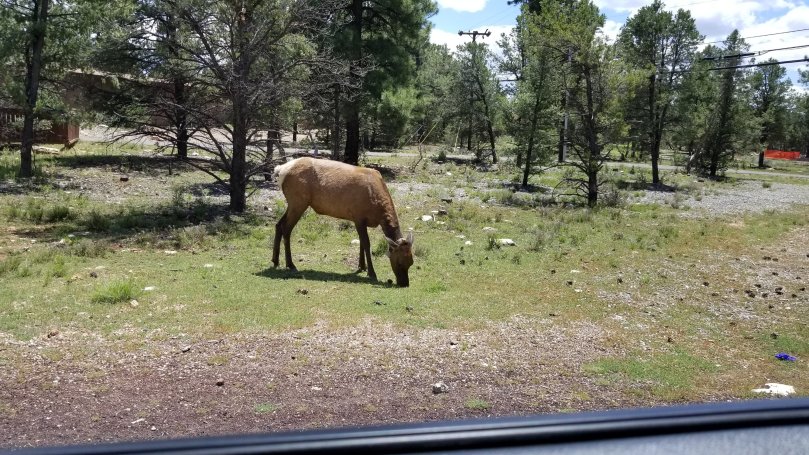
It is about 70 miles from Flagstaff to the Grand Canyon National Park.Grand Canyon Village is bigger than I remembered, probably because it has grown. There lots of twists and turns as the roads wind from one lodge to another. It is forested, and as you look out into the pines you can see elk grazing everywhere. Unlike our Wisconsin deer who like to startle and dash into the road, these animals are used to the traffic and stand within feet of cars with no alarm.

They are everywhere, and they pay us no mind.

Most of today was spent in class with our guides Michael and Nina. There are eight of us hikers and everyone is retired. I would say that several are older than I am and one man is 78! All have done quite a bit of hiking except our Elizabeth, and a couple of them have hiked in the canyon a lot.

Our guide, Mike, talking to Bob and Elizabeth. We are on our way to the mule barn with our duffels.

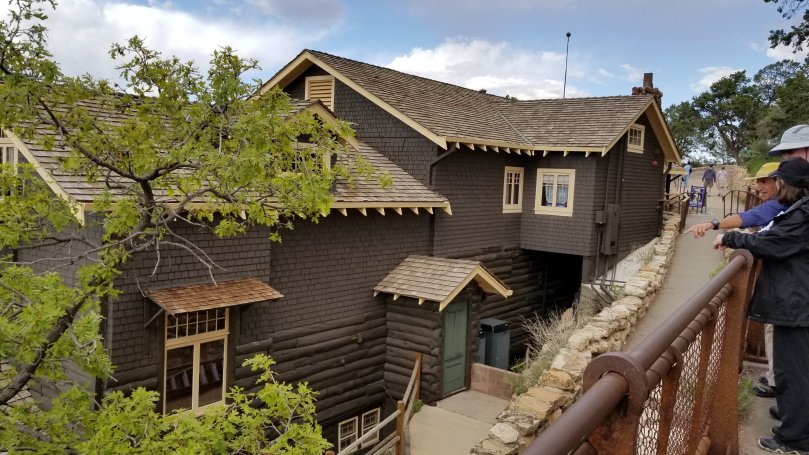
We spent the time talking about our equipment, safety on the trail. We filled our duffels for the mules and took them over to the barn. And right before we quit we walked out to look at the canyon and talk about the geology. We toured the Kolb house, where the Kolb brothers had a famous photography studio – hanging on the side of the cliff right below the rim.

We start early tomorrow on our descent. Wish you were all going with us! I have pictures but they are failing to upload – not sure why.

Getting there is half the fun…

I don’t know who said that but I hope they’re wrong. Travel is amazing, and interesting but I wouldn’t call it fun.

I and all my devices got in the truck and made our way to Minneapolis last night. We had a short sleep in a motel, where I left the truck. Everything went so smoothly at the airport that I started wondering why. I finally realized that it’s one of the benefits of traveling solo. Don’t get me wrong – I love traveling with companions as well, but this kind of freedom has a charm all its own. I don’t have to match anyone in my likes, dislikes or pace. I can be as early or as late as I choose. I can eat or go without. I have one person to watch out for – me.

I am now safely in Arizona, sitting in the waiting area for the flight to Flagstaff. I decided to check in here with a short post because I have over four hours to wait and have to fill the time. I know it won’t be long before I will have to forget my “devices” and start experiencing this hike without them.

This is my first trip in a long time without my computer. Instead I’m using my phone for everything – it’s camera, tablet, caretaker of boarding passes, as well as communication central. What a device! And I have paired it with this tiny little bluetooth keyboard, which so far is doing a great job.

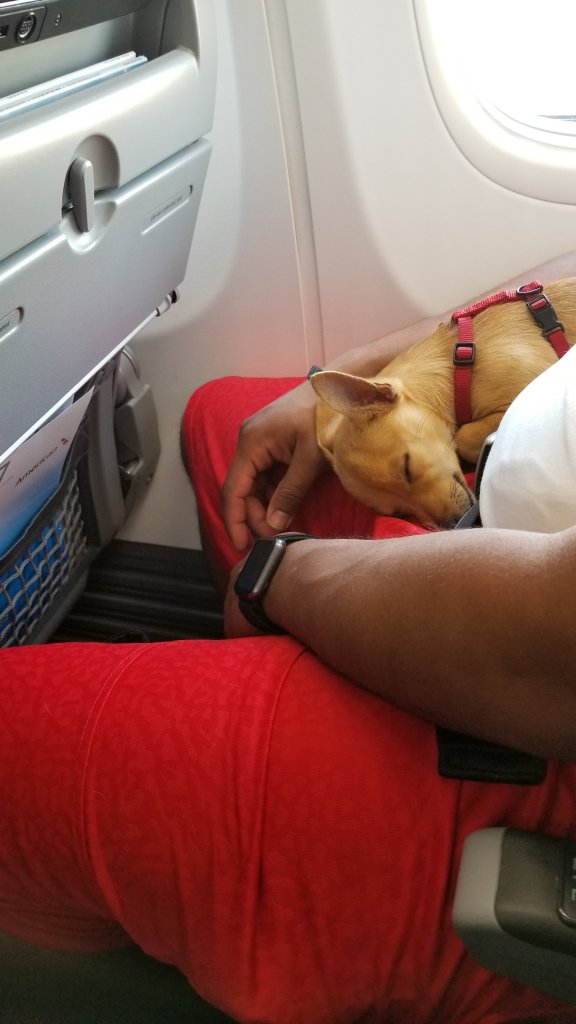
I sat next to a dog! I saw a fairly large man walking around in the gate area before the flight and noticed him because he had this tiny dog on a bright red leash. You don’t see this every day. Later, much later because I was in the last zone to board the plane, I got to my seat and there they were again. The little fella was so quite, slept all the way to Phoenix, and licked my hand when he woke up after we landed. Make me decide between sitting next to a kid or a dog, I’ll take the dog.

In addition to being a travel day, yesterday was Mother’s Day. It was so nice to spend it this year with my mom, my youngest daughter and my brother’s family. We went to church, had a wonderful family brunch that I wish I had taken a picture of but didn’t. We took walks and talked. Later, at the motel, I got a call from eldest daughter to round out the day.

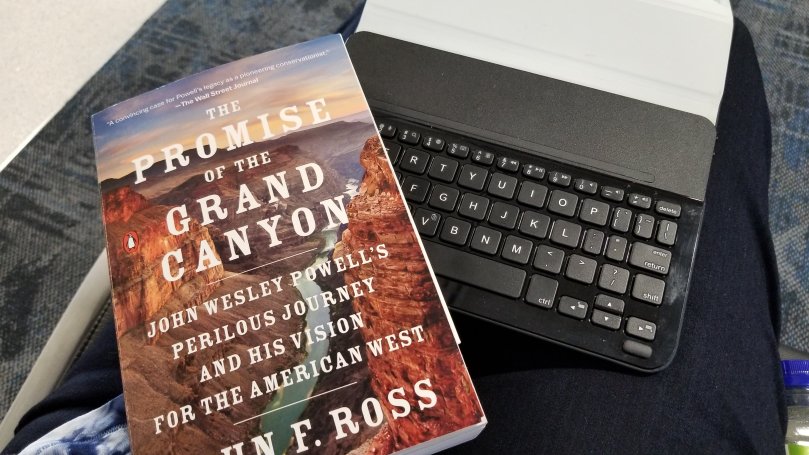
Thanks again for the book Ryan! And this is my mini-keyboard folio.

So here goes four hours of waiting. I have a book to read. Food and drink is close at hand. Fun is ahead as I look forward to meeting up with brother Bob and Elizabeth. It’s hard to believe I’m here, so far from where I started this morning, in such a different place.

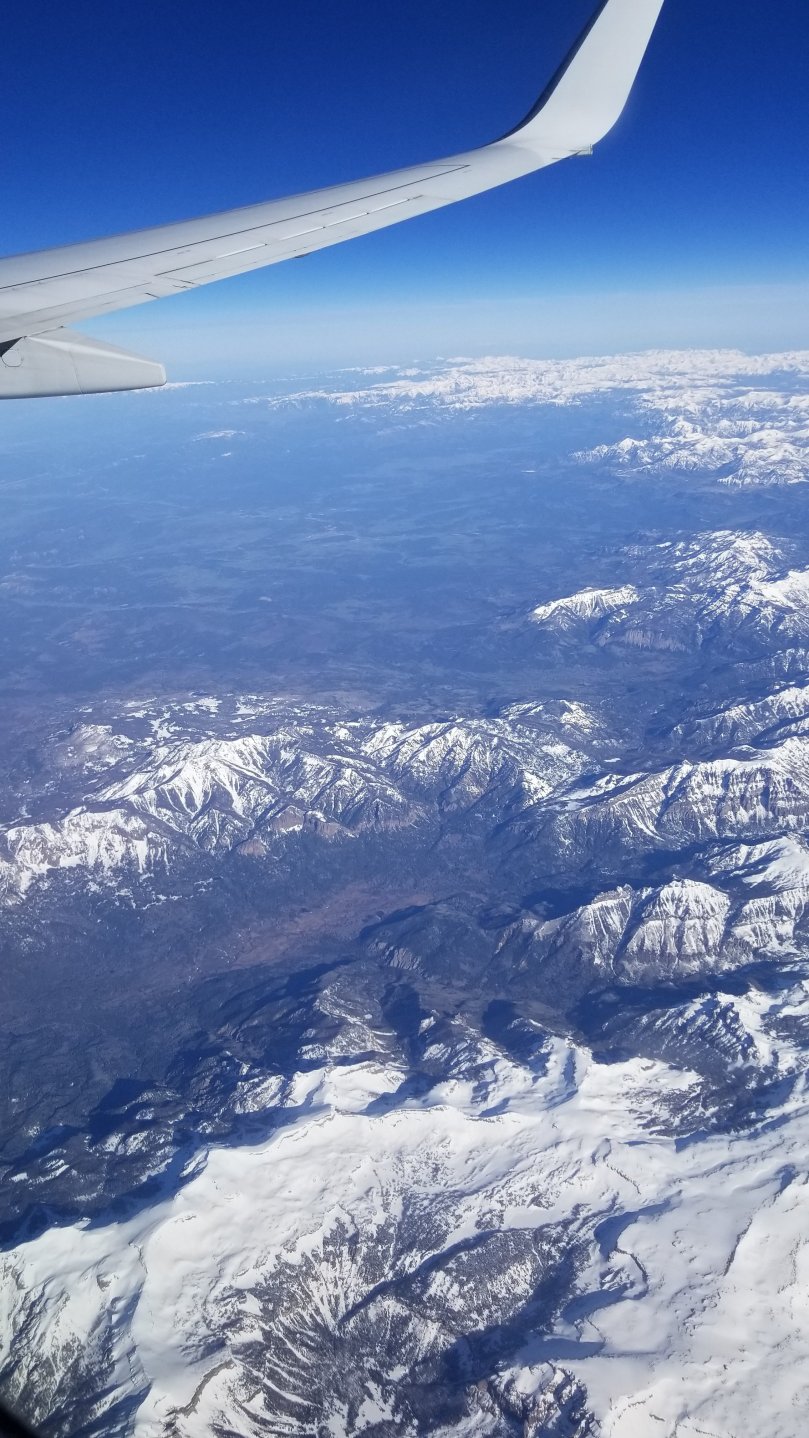
A very different place than the one I left this morning. Yes, real mountains…

Walking Through my Hometown

I’m going hiking in the Grand Canyon!! Countdown, 11 days!

After my first training walk in Hospital Lake Forest, I was all charged up about walking 10,000 steps every day. It would be the least I could do to prepare. There isn’t much I can do to replicate the altitude change, but to walk for several hours at a time in my hiking boots, that I can do.

Thinking that it would be beneficial to train on a grade, I decided to look for a hill in Hayward, my Northwoods hometown. It’s in a river valley, and there are hills on both sides of the river, as well as glacier formed terrain throughout the forests and fields – how hard could it be to find a good place?

Since I also had an errand at the far end of Main Street, I packed my papers in a backpack along with a snack and some water. (I’m trying to carry a backpack as part of conditioning too.)  I set off down an ATV track that follows an abandoned railway bed, toward the center of town.  I live on the north edge of this booming metropolis of about 2,300 people. I am within sight of New Moon ski/bike shop, Pizza Hut, AmericInn, Walmart and the tip of the flag flying over Perkins.

This is the town I grew up in and always thought of as quaint, and pretty, in an old-fashioned way. But growth, most of it outside the city limits, has deposited a large electrical station at the intersection of two of the main roads. There is no disguising this huge collection of gray metal poles, insulators, wires and fencing.  It clearly does not say “Welcome to lovely Hayward”. There’s not a time I go by it that I don’t wonder why they put it there in such a prominent spot.

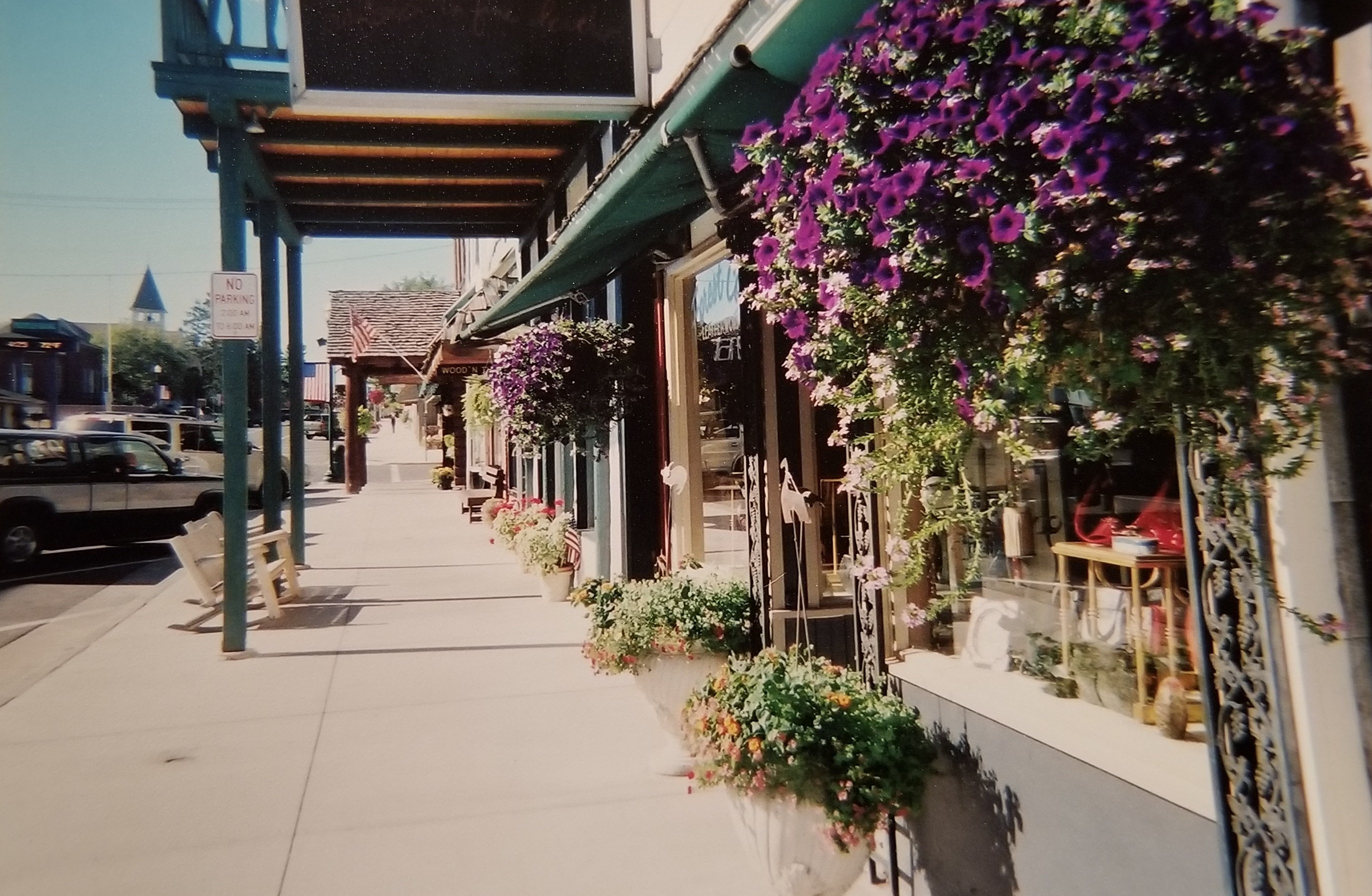
Lovely Main Street
They always do flowers well.

Our Main Street however, is a popular tourist site during the summer, and has even been listed as one of the prettiest in the Midwest at Christmas time.  It ascends from the river and Lake Hayward up a gradual slope, past numerous shops, the bank, the Congregational church, and finally the courthouse and the financial office where I stopped to talk for a minute.

“I’m looking for a hill to climb. Maybe County Hill?”

“Yeah, County Hill might be okay.  Are you parked somewhere near here?”

“No, I need to get 10,000 steps in, so I’m walking, why not?”

No response, other than the “why would you do that?” look.

My destination was only about three miles from home, but somehow this is considered a long distance in a place where no one walks anywhere they don’t have to.  Urban walking is a lost art, at least in Hayward. One of my best realizations, upon moving here, has been that everyplace I really need to go is within walking distance, as was County Hill.

I passed houses where my high school friends had once lived, where my cousin’s family lived, the parsonage of the church (where I practically lived) and the empty lot where my elementary school had once stood. I had time to look at the condition of the houses, to see who had raked their lawn of last fall’s leaves, to see where remodeling had added rooms and a complete new look.

I’m sad to say I saw a lot of neglect – places that made me want to start pulling weeds or scrape peeling paint. Maybe this is always the way things seem when you go back home after many years. Memory is selective and I tend to think things were lovelier in the past.

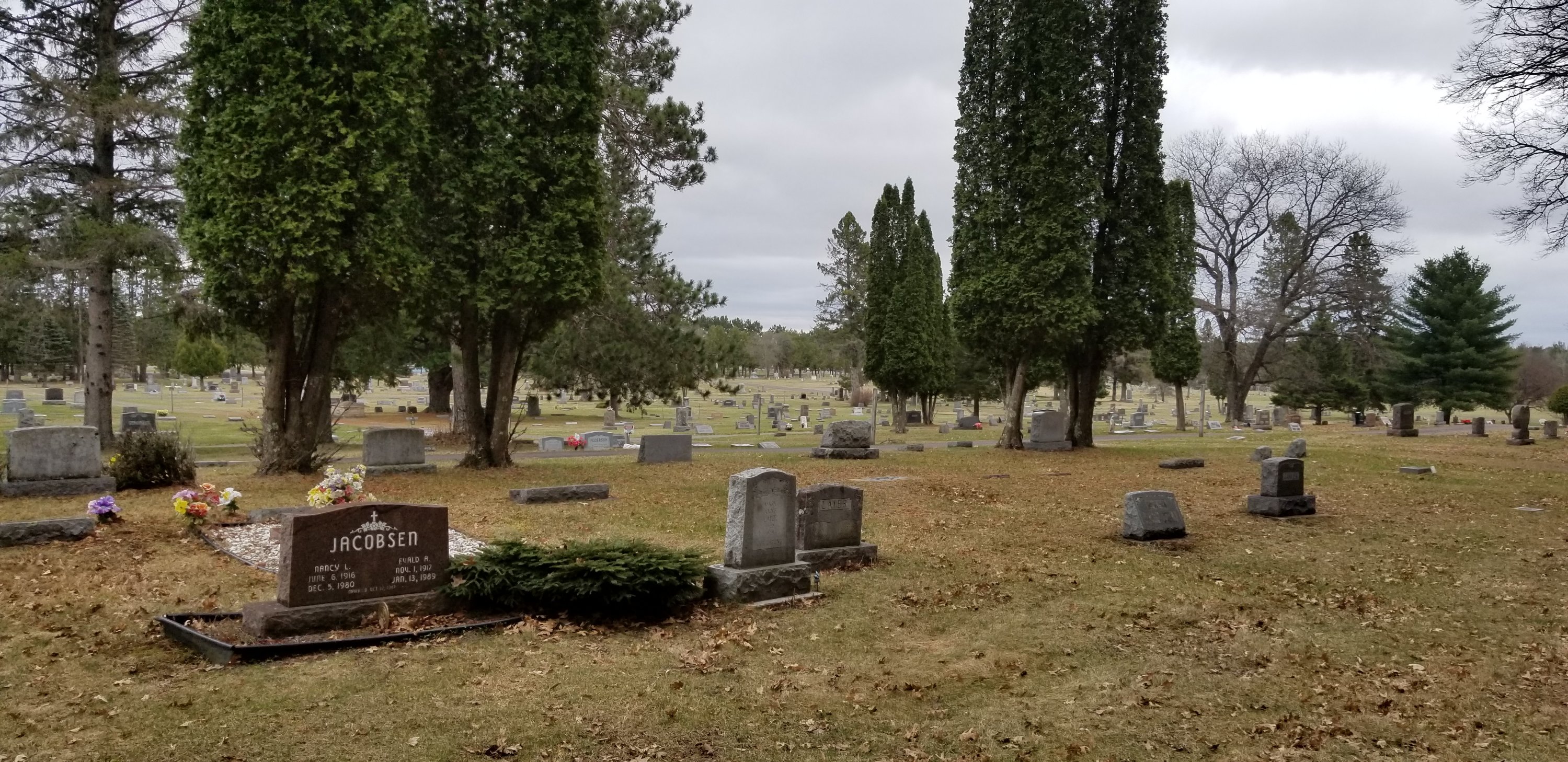
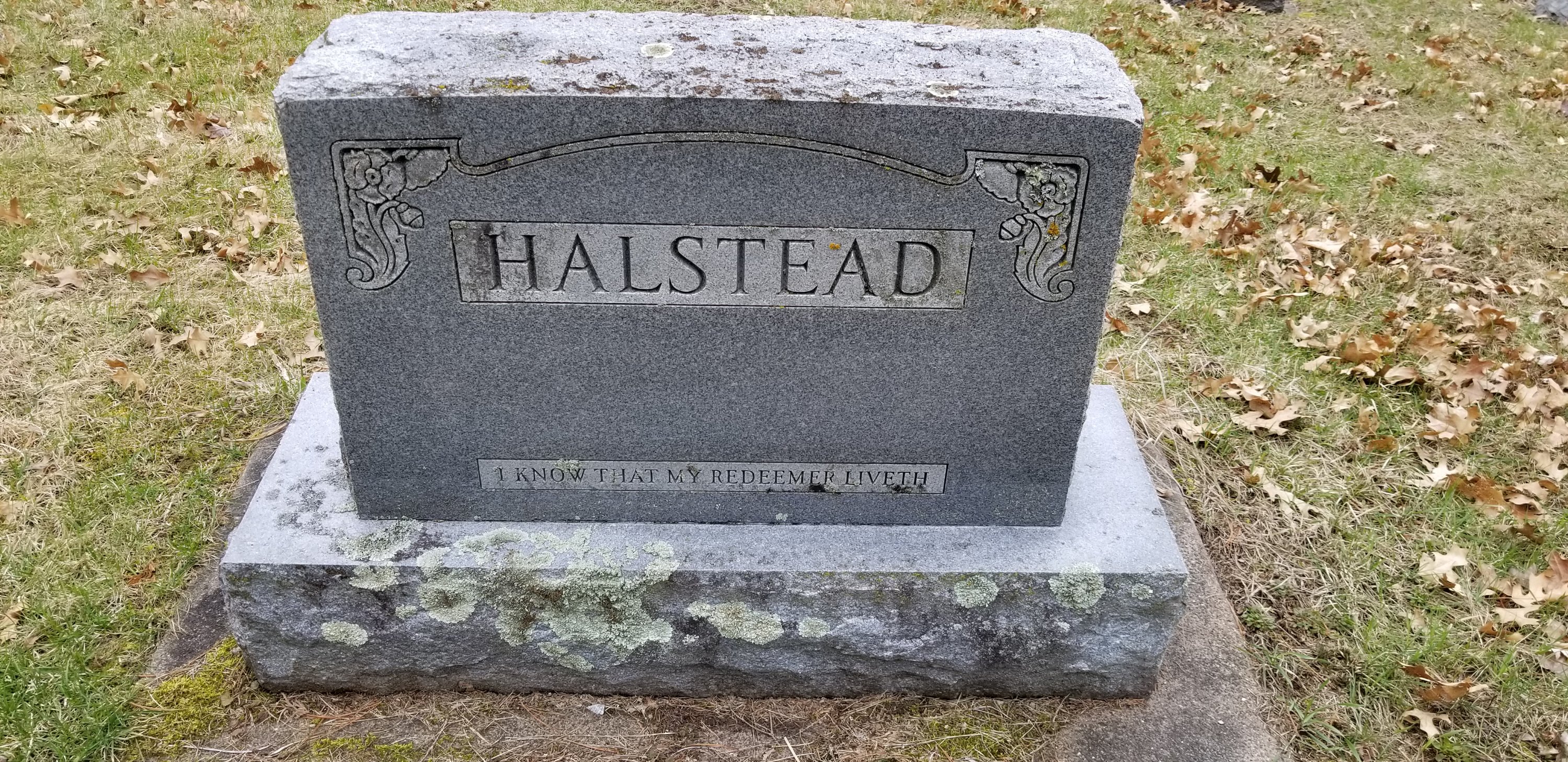
It wasn’t much of a grade. I walked up one side of the road, had my snack at the top while enjoying the view, and walked down the other side. My attention had been caught by the town cemetery at the bottom of the hill. Cemeteries have kind of a spooky fascination for me. I walked through looking at names and dates, imagining scenarios. There were many family names that I recognized from my childhood years in Hayward.  I found the stone for my first-grade teacher and one of my junior high teachers – people that I had loved and been close to. 

The rest of my walk was uneventful, but I was beginning to feel some soreness in the lower legs. This after about five miles, showing that my conditioning has not been sufficient yet. But my feet were fine, boots were good and I finished with 13,300 steps, meeting my goal for the second day in a row.

Training is tough, especially when I have to have at least two free hours to walk. Being a little sore is to be expected. I will give the legs some rest tomorrow, and then think of another place to see. Believe me, things look different and you see things you did not notice before when you are on foot. Try it.

Ever Changing

I have written much about the wetland property where I now live in Wisconsin, where I take frequent walks and do my communing with nature and peace of mind. Well, today there was a major change.

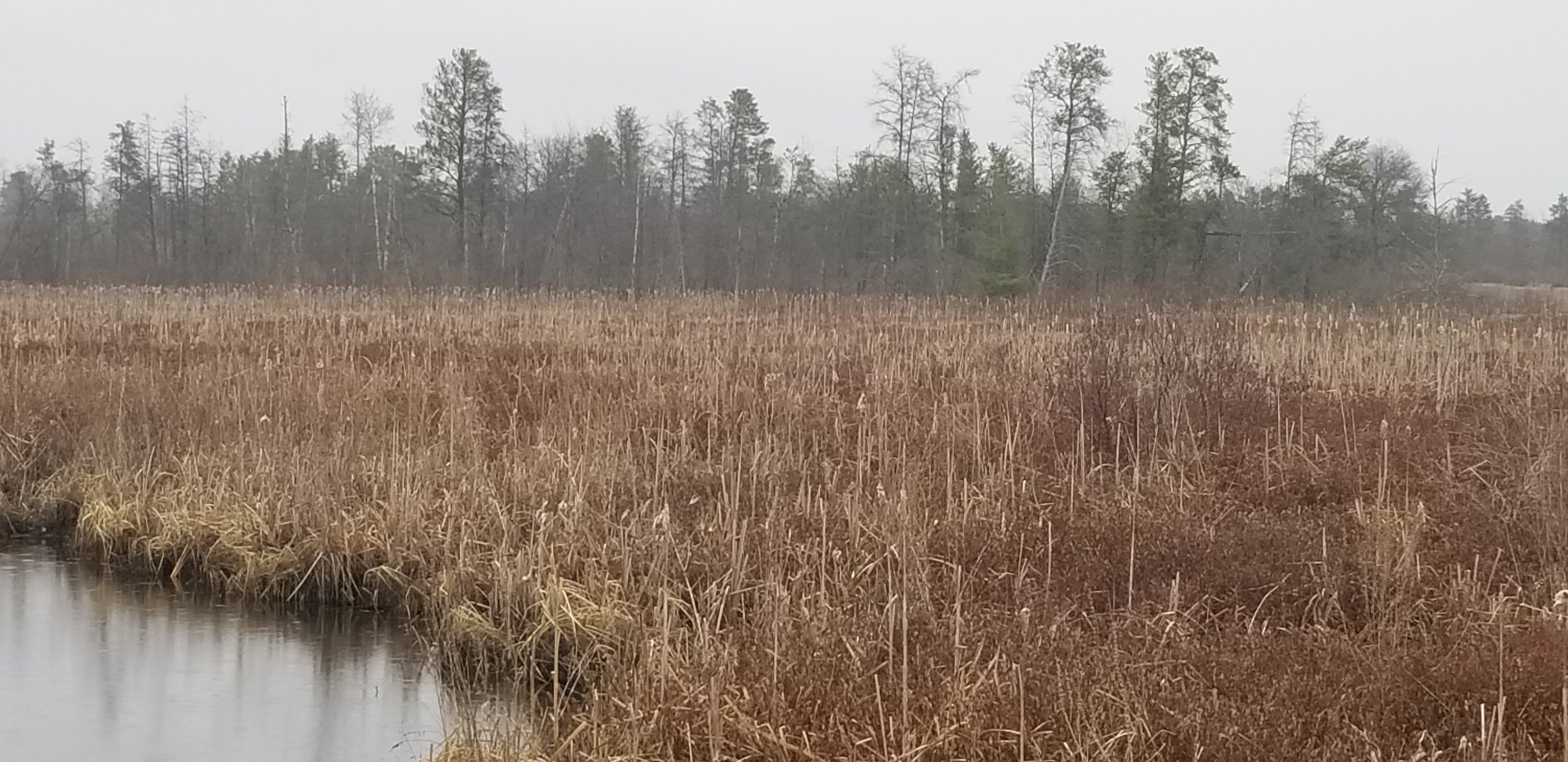
The marsh

One of the more prominent areas of our wetland is a huge marsh. It is bordered by higher ground and is composed mainly of cattails, water plants and sometimes water shrubs of some kind. There are usually waterways around the edges and sometimes small bays and extensions. The beaver lodge is in one of the waterways, close to the edge of the marsh.

The snow melt and the recent rains have raised the water level considerably. In some places water has started to cover our paths, and submerge our footbridges. The dams that the beaver have constructed are now completely underwater and I can’t see them. But the most amazing thing is that the marsh migrated last night.

Neighbor’s house and her new open waterway.

My brother got a call from a neighbor on the other side of the marsh. She told him that she suddenly had a beach where the marsh had been – open water. I had to go out and see what had happened. Evidently, wind and rain had done the job of loosening the marsh from the soil underneath and the whole thing moved north and west. The open waterway to the beaver lodge is now closed – it’s the path I took over the ice this winter when I checked on them. And other waterways that were wide, separating us from the marsh, are now narrowed to five or six feet.

The marsh now comes within five or six feet in an area that used to be open.

I wonder how many animals and birds had to re-orient themselves this morning. Nature is ever changing, sometimes delightful, sometimes catastrophic, but changing always.

Xeriscape of the Canyon

Xeriscape: a landscaping method that employs drought resistant plants and special techniques to conserve water.  I love plants! Can’t forget to do a little research on plants…

I’m thinking that someone did a pretty good xeriscape job in the Grand Canyon. Looking at the chart below with rainfall averages for the South Rim, North Rim and the Inner Gorge, I see only one month, August, with significant precipitation. The highest number for any month is 2.85 inches. The Grand Canyon is mostly desert.

I am so glad we are not going to the Inner Gorge in July or August (the numbers with the little stars by them – see note about 120 degree temps!!!)

In spite of that, and because of the climate changes with elevation, it is amazingly rich in plant life and almost all are drought resistant. Here’s a list:

  • 1, 737 known species of vascular plants
  • 167 species of fungi
  • 64 species of moss
  • 195 species of lichen

There are 12 plants that are only found in the Grand Canyon (endemic), and only 10% of the plants in the Canyon are exotic (from somewhere else and probably invasive). Those are pretty special statistics.

There is such a variety of eco systems in the canyon. As you can imagine, along the river where there are seeps and springs and tributaries joining the Colorado, there will be willows, acacia, rare plants and hanging gardens. At higher elevations there is desert scrub, then pinyon pine and juniper, then at about 6,500 feet above sea level the Ponderosa pine forests start. On the north rim there are some mountain meadows and subalpine grasslands.

I’m glad I don’t have to forage for food while I’m visiting the canyon, but how good is it to know that there are things there that can be eaten? I found a website telling me that the top three plants that could save me from starvation are the banana yucca, the currant bush, and the cereus cactus. Maybe you should know about them too – you never know where you’re going to find yourself. Click the link. https://grandcanyonhelicoptertour.net/top-3-edible-plants-of-the-grand-canyon/

I would have a tough time creating a xeriscape that would have the natural features and beauty of the Grand Canyon (unless I had a couple billion years to work on it) but I am expecting to enjoy and photograph it – a favorite pastime. Hoping to add some stunning pics to this post after the hike.

Venomous Critters

Guess what? The Grand Canyon is inhabited and it pays to know something about possile encounters with some of those residents – rattlesnakes, Gila monsters, scorpions, centipedes, and spiders.  Hardly anyone is bothered by them and they should not/will not keep me from visiting the canyon. Children, elderly, the sick and alcoholics are most affected by venom, and a lot also depends on the amount of venom injected. Here are some critter facts and advice:

Rattlesnakes; wear protective clothing and footwear, only put your hands and feet in places where you can see clearly, use a flashlight at night. If you hear a rattle freeze, locate and move away. Treatment depends on how soon medical attention is available – you can do more harm than good by cutting and trying to remove venom. Out of 6-7000 bites each year only 10 die. If help is available soon just keep quiet, with the affected part lower than heart, and stay calm (few die).

Rear fanged snakes – compared in seriousness to a bee sting. They are very small snakes.

Gila monster – one of two poisonous lizards in the world. They are rare in the canyon (3 recorded observations in the western canyon) normally slow and unaggressive, but if disturbed will hiss savagely and quickly lunge. They have a neurotoxic venom. Death is possible but unlikely for a healthy adult. Essential to pry lizard’s jaws loose as soon as possible. (ha, like I wouldn’t have thought of that…)

Spiders – Black widow, big abdomen with red hourglass. To avoid being bitten, keep your hands out of cool, dark, undisturbed places. The bite is painful and potentially lethal but death from this bite is rare in healthy adults. Children are more in danger. Keep quiet, apply ice, no other useful measures.

Tarantula – painful bite but no more dangerous than bee sting. Don’t kill them. They have a web lined burrow and come out to hunt mostly at night. (Females can live 20 years!) (If you don’t kill them!)

Scorpions – more than six species found in canyon and only one is potentially lethal to humans. Others cause pain and redness at bite but nothing else. The bark scorpion or slender scorpion is the dangerous one. Uniform yellow straw colored ½ to 3 inches long, no more than 1/8 inch wide in body. Tail and pincers are noticeably slender, tail has oblong segments, small barb or tooth at base of stinger. Venom is neurotoxic and causes numbness and tingling which advances up body – this is a medical emergency. Watch where you place your bare hands and feet, shake out shoes and clothing. Don’t leave bedding on the ground and shake it out at night.

For pictures of a rattlesnake and scorpion click here. https://www.mygrandcanyonpark.com/things-to-do/dangerous-wildlife 

Bees, wasps, velvet ants, blood sucking, kissing (or assassin) bug, all produce only local pain and swelling.

Cactus spines are a real possibility – don’t touch or brush up against them. Pain and possible infection if not removed. I’m taking tweezers.

South Kaibab Trail

We are on the homestretch of the A to Z this week with only eight letters to go. As in hiking, this final stretch is going to be challenging since I no longer have posts written ahead and am getting tired (and would rather enjoy spring outside than do writing inside). It feels like uphill all the way…

The South Kaibab Trail is the one my hike will start on – they call it a corridor trail, meaning that it is one of two or three that is regularly patrolled and maintained. It is part of the Arizona Trail system going all the way from Mexico to Utah.

After our first day of having our gear checked over and learning about the area we will walk through, I’m guessing we will meet early at Bright Angel Lodge and take the first shuttle bus of the day to the trailhead. It’s a ways away from Grand Canyon Village and there is no parking there for private vehicles. We will start our descent of 4,700 feet over the next seven miles. We will meet mules and other hikers on the trail. There are a couple restrooms on the way, but no water sources until we reach the bottom of the canyon. About the only shade will be from the canyon walls. The grade will be as steep as 22% at the final section and there will be many switchbacks. Doesn’t that sound like fun? But wait, it’s worth it.

There just aren’t a lot of ways to go down these amazing cliffs.  The South Kaibab was supposedly built to foil Cameron who had started charging $1 per person to use the Bright Angel Trail. It is steeper and shorter but has some of the most amazing views available.

  • One of them is .9 miles on the way and is called Ooh-Aah Point, because that is what most people say when they get there. I’m going to try to say something more original. It’s a good distance for a casual day hike.
  • Next is Cedar Ridge at 1.5 miles, another good point for day hikers to turn around.
  • Followed by Skeleton Point at 3 miles, where there is reportedly a 360 degree view of the canyon, and the first view of the river.
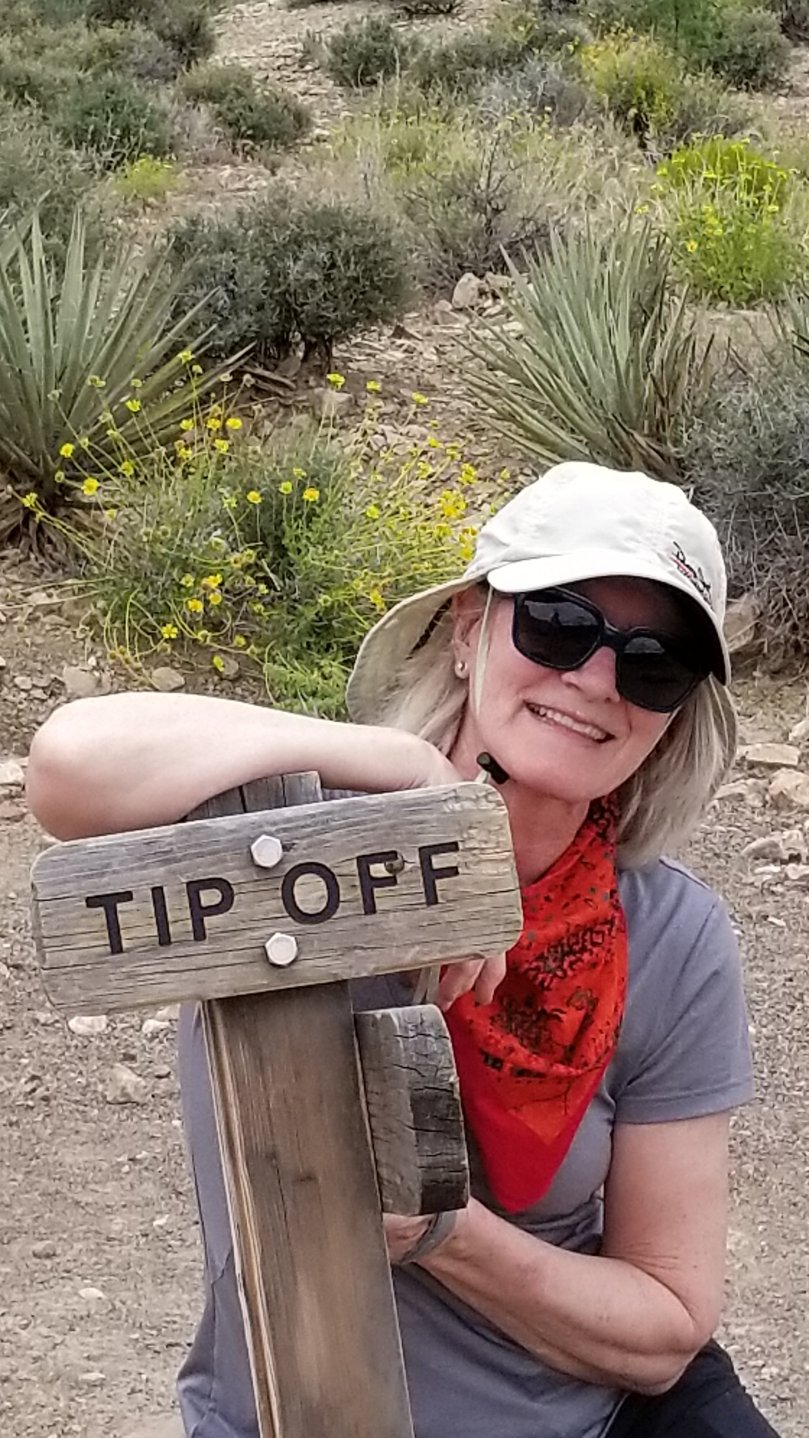
  • Followed by Tip Off at 4.6 miles where the steepest section of switchbacks starts, taking us down to the Black Suspension Bridge, Bright Angel Camp and Phantom Ranch. 

Although it is described as knee jarring, it is all downhill, right? I think I can do it.

The river – there it is!

Oh, What Shall I Wear?

Oh, what shall I wear (that doesn’t make me look like a dork)?

I have photos of all my most memorable hikes. Most of them were taken by me so I am not in them (before selfies) but the ones I am in are always a little embarrassing. Some people look really cool when they’re hiking (and that is SO important) but me, not so much. I just don’t look like I know what I’m doing.

This hike might be different, although I’m not going to bet on it. I’ve had time to prepare and get some real hiking clothes. I justify it more on the practical side so I don’t appear totally vain and superficial. The right hiking clothes do make a difference in comfort, and I have listened to people talk about comfort a lot.

I’ve already shown you about the weather extremes that are possible in May (in post E) so you know that layering on top is going to be important. I also value things that breathe, dry quickly, and are stretchy to allow me to move. I love pants with good pockets, that will not look dirty even if I wear them all three days, and are somewhat water resistant. With these things in mind here is my list.

  • 2 short sleeve T shirts
  • 1 long sleeve T shirt
  • 1 fleece pullover
  • 1 rain jacket (which I might leave behind if the forecast is for no rain)
  • 1 pair convertible pants/shorts
  • 1 pair long pants
  • Socks and underwear
  • Brimmed hat and bandanna
  • Warm hat and gloves

I already wrote about my hiking boots and socks, but I’ll also take along a pair of lightweight camp shoes to give my boots a rest at night.

Actually, I am going to look like a dork on this hike too, because I found this awesome hat that I can also wear all summer in Wisconsin. It will keep the giant mosquitoes and deer flies off my head because it has a bug net that I can lower for ultimate protection.

Front and back selfie – my awesome bug hat.

Another useful purchase for this hike was a set of gaiters. These attach to my boots and come up to my knee to keep my pants and legs clean and dry, and keep debris out of my boots. They are easy to put on and comfortable to wear. I’ve already tried them out – they are good in the snow, an added bonus.

Gaiters

So, what do you think? Am I ready? (ready to look “not cool” in this year’s pictures too?)

Layer Cake Geology

Geology has never been a compelling subject in my world. I would just as soon leave it to those who find it fascinating – like my niece Jamie who is a geologist. But I have to say that the Grand Canyon is a very unusual, actually singular, place when it comes to geology. The rock layers are found in chronological order, the youngest on top with evidence of past marine life, and the oldest, Vishnu schist, on the bottom with no evidence of life in it. Every kind of formation you can imagine can be found there: mesas, buttes, temples, platforms, castles, terraces, massive walls, amphitheatres, canyons, ridges…

As the Colorado River cut down through the earth it exposed layer after layer of deposited soil and rock. Because the layers were of different kinds of rock, they are different colors, different hardness and different levels of stability. The scenes in the canyon are like looking at a record of time, laid open on the walls of the canyons. The layers match on both sides of the river which proves that it was the process of erosion over time that caused the chasm. The plateaus on either side of the river were once continuous.

Science estimates it has taken 1.2 billion years to erode through all those layers and countless numbers of people, scientists, geologists have been left speechless looking at the grand scale of it all.

That’s all for L.  Short and sweet, but lots of pictures.

Even looks kind of like a layer cake…

scene at Grand Canyon National Park

Photos from canstockphoto.com