
Of course I’d like to be a better writer. For a while, as I try to be better, I’m going to at least try to be prolific. They say that if you write a lot, you have a much better chance that some of it will be good. If you write seldom (or not at all), none of it will be, so be writing. That’s my goal.
You have to be your own health care advocate. If you find that impossible, make one good choice – someone you trust to advocate for you. This is not a new revelation to me, but newly reinforced by my recent wellness checkup with my primary care office.
I’m somewhat of a rebel, offspring of a family that believed that 99% of what’s wrong with us heals itself if not aggravated by medicine. This mindset was pretty well in place in my high school years so I don’t know what made me choose nursing as a career. It was mostly that I was fascinated by how complex human anatomy, biology and physiology were, and because someone gave me “Cherry Ames, Student Nurse” for Christmas one year. Cherry was the medical world’s answer to Nancy Drew.
Nursing has given me an inside look into the strange reasons why some things are done the way they are. The reasons are many and complex. You can’t always figure them out. What’s more, sooner or later, what’s good for you is going to come into conflict with what’s good for someone else. It’s nice to know at that point if you have options and what they are.
The husband and I are at the age where we have more time to devote to our physical condition, and it’s a good thing being that it’s also the age where there’s some new thing going wrong every week. We are still moving around under our own steam and able to read so we are researching. I read to him in the evenings, after we walk, and we discuss health issues and diets, sleep, exercise, medicines – all of that.
Without going into too much detail in this post, suffice it to say that we see a lot of new research that flies in the face of traditional thought about these issues. It seems that what we’ve been doing traditionally for the last half century or so has created an epidemic of obesity, diabetes, heart disease and depression. Oh, and Alzheimer’s dementia. Oh, and autism. Oh, and autoimmune disorders. And cancer. At some fundamental level, we are a very sick country.
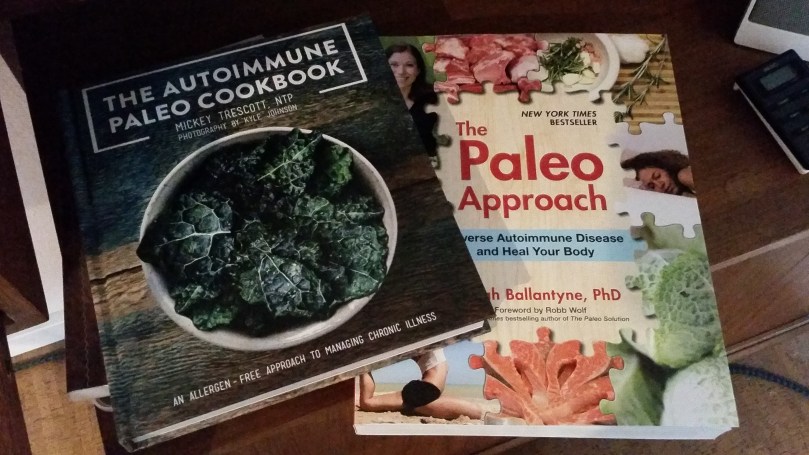
Having decided to get smarter about simple things we could do to help ourselves avoid as much sickness as possible, we are starting with eating differently.
I was sitting with the PA who was doing my wellness questionnaire and telling him some of these things. I told him how I was limiting carbohydrates by cutting out most bread and sources of sugar. I mentioned ketogenic diet and how I’d lost ten pounds on it. I told how it was a high fat, moderate protein, lo-carb diet, and that I was feeling pretty good overall. He nodded and appeared to be listening (how do I know what he’s thinking…). We talked about stress relief and I told him that I dispelled it by writing for my blog. Then he wrapped up the interview with “Okay, just keep doing what you’re doing and keep on that low fat diet.” Sigh.
Traditional advice is not always for everyone. Sometimes, it’s not even true or based on real evidence. I’m going to end this post in the same way I started it. You have to be your own health care advocate because no one doctor or health professional can concentrate on what’s good for you. You are it.
More to come on this and related subjects.









 I don’t remember if I did this when I was a child or if others did it to me, but, the memory is there of orange peel being squeezed in my face and of feeling the light, stinging spray of citric acid -my first introduction to citrus zest.
 My food choice for Y is yogurt. I have been eating a lot of it lately since doing a round of antibiotic. It is made with a lot of active bacterial cultures (good ones) that are naturally found in our intestines and which are a vital part of a healthy immune system and digestive system. Because it is more economical I have developed my own way of making yogurt at home. Here is how I do it.


 X is for xylitol. Xylitol is a chemical called a sugar alcohol (the “ol” suffix gives that away). It is a substance found naturally in many plants. It has lately become a popular choice of sweetener because it does not affect blood sugar the way other sugars do, and it has some anti-viral and anti-bacterial properties that are beneficial in cases of ear infections and tooth decay.
 Starfruit or Carambola – you might not have heard of this one if you live in a northern climate. Florida is one of the states where it is grown in the U.S. and it is interesting that one man was responsible for the particular cultivar that is grown commercially and bears his name, Adkin. He was a backyard horticulturist and his work produced this really, tasty and lovely fruit.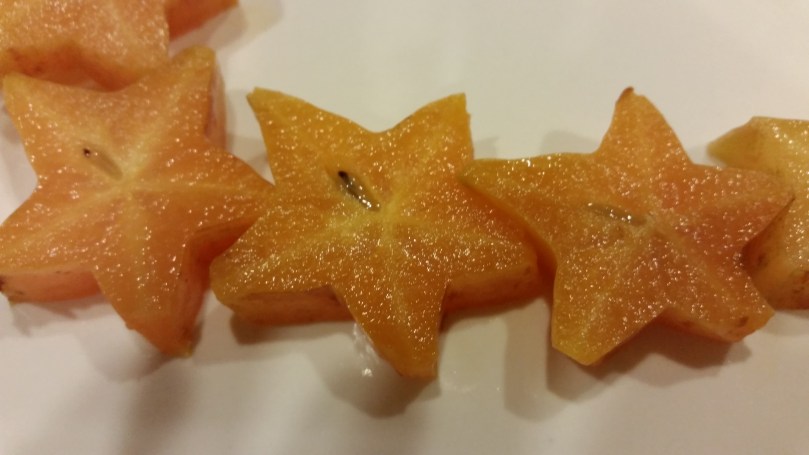

 I Just Have to Say...