
The 2025 Birkebeiner Nordic Ski Race is over, so now the snow can melt. It was nearly 50 degrees today and water is dripping everywhere outside. Coming off the roof it sounds like an open faucet. I didn’t even bring my skis down from the attic (many reasons) this winter. That didn’t keep me from my own experience with the Birkie.

The last few years I have signed up to work the food tent, serving hot soup to tired, cold skiers. I also would get very chilled after hours standing on frozen ground in a breezy tent. This year I chose a volunteer opportunity inside a heated building – the Lost and Found department.
When 11,000 skiers and all their people come into town for this weekend of skiing, lots of stuff gets lost. Zippers don’t get closed and things fall out of backpacks. People pick up something that looks just like theirs, only it isn’t. It gets hot out there skiing and off comes the jacket onto the ground. I’ve heard many variations of these stories in the last couple of days. I got a whole different view of what goes on during a major sporting event this year. It was quite interesting.
On Friday I stopped by my station to orient to my job. I met the couple in charge, my new friends Barb and Morris. Our workplace was a large room filled with banquet tables and a few folding chairs. Nothing had arrived yet. By Saturday afternoon the tables were filled with jackets, sweaters, broken ski poles, hats, and gloves. I was shocked. Didn’t people need their coats? I was told that most of the items would not be reclaimed. Other garments that did get claimed were ones that show up year after year. That was surprising, and led to my first “behind the scenes” revelation.
The Friday and Saturday races start early in the morning and it is normally cold. Everyone starts out quite bundled up. But, no one stays cold very long. Nordic skiing is not just slipping down some slopes and catching a ride up on a lift. It’s skiing up and down hilly terrain over long distances. It creates heat. So, off come the outer layers of clothing. They are usually discarded, picked up by crews of volunteers and transported to Lost and Found. Many skiers get a jacket at a thrift store and don’t care if they ever see it again. Others come looking for their “lucky” jacket and use it year after year.
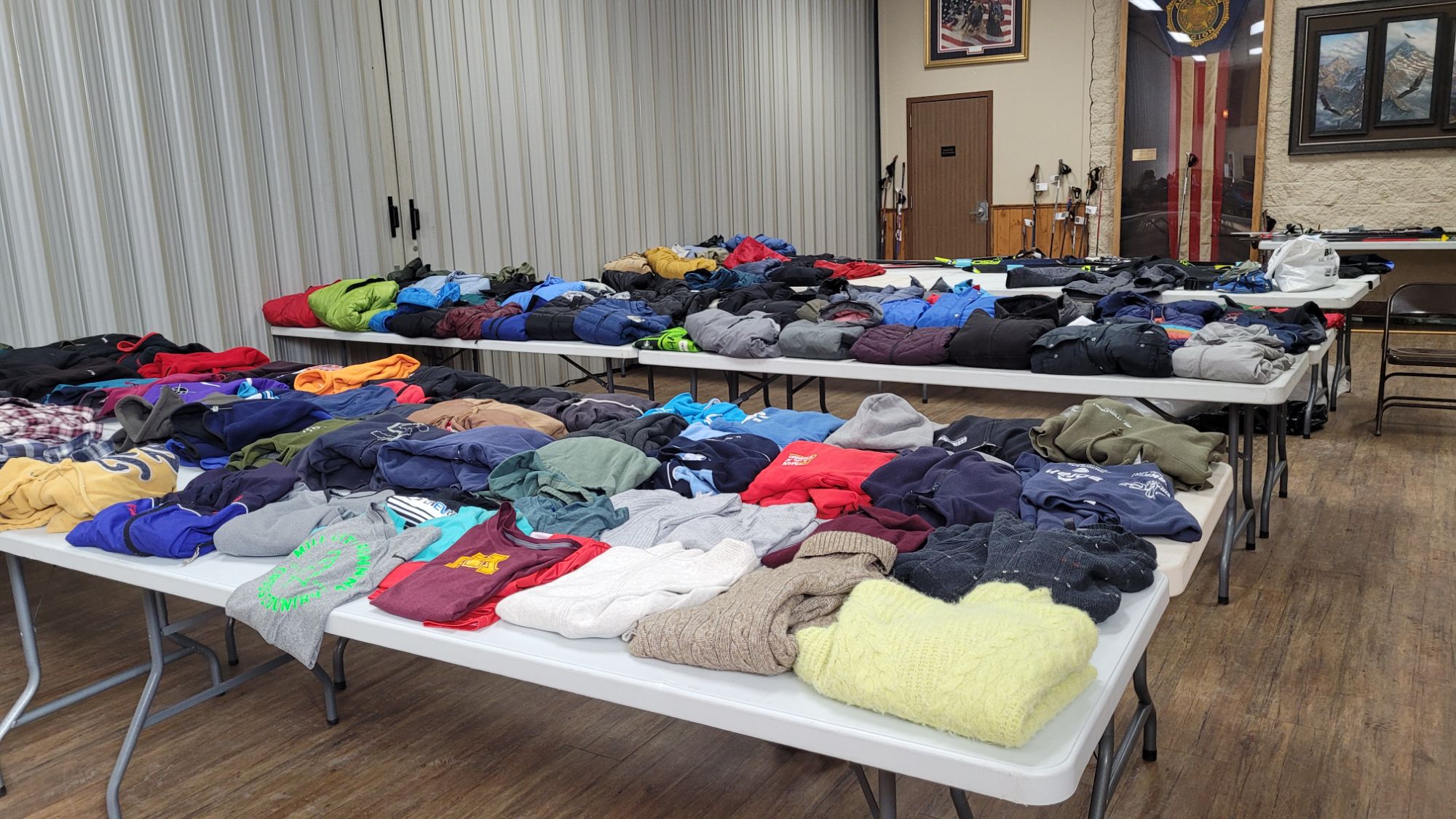
The Birkie Association keeps the lost items for one month before donating them back to a thrift store. But initially they are all laid out on the tables where people can search for them. The pockets are searched to remove food or valuables. Before all this clothing is sent to storage it is catalogued. A list is attached to each bag of clothing detailing what is in it.

Broken ski poles are another common item in Lost and Found. Volunteers at the aide stations tag the broken poles with the bib number of the skier. Believe it or not, skiers want their broken poles back for the parts that come off them. Hand straps can cost $50 to $80. The baskets on the tips can be put on new poles. Skiers usually get a loaner pole at an aide station to finish the race. They return that when they pick up their broken pole.
So, what did I actually do while there? I folded and put items on the tables in their categories. Having done that, I knew what was there and helped people find what they were looking for. I greeted people and answered questions. I called people to let them know their item had been found. I sympathized with people who had lost their car keys, their IPhone, their new prescription glasses, their expensive gloves. I talked with Barb and Morris and found out they were retiring from that job after 13 years. Lost and Found certainly isn’t the most exciting part of the Birkie, but it is a necessary part. Working there gave me a window into volunteer roles that I hadn’t even thought of before.
At the volunteer lunch after the event finished I talked with another volunteer who had an unusual opportunity. His sole job was to take care of one of the winners of the elite group. He accompanied the third place winner through the process of signing paperwork and getting his recognition recorded. That sounded more exciting. Maybe next year?
So there is a lot to learn about this event. I learn at least one new thing every February when Birkie Fever hits our small town. It takes around 4,500 volunteers from several counties around us to put on this event. I am proud to be one of them, even if it’s just in Lost and Found. This year I didn’t get cold, just sayin’…
 I Just Have to Say...
Fun article, Shirley! Thank you.
Mar