The Snow Can Melt Now

The 2025 Birkebeiner Nordic Ski Race is over, so now the snow can melt. It was nearly 50 degrees today and water is dripping everywhere outside. Coming off the roof it sounds like an open faucet. I didn’t even bring my skis down from the attic (many reasons) this winter. That didn’t keep me from my own experience with the Birkie. 

Volunteers help put up this bridge over our main highway. It’s covered with snow and skiers finish the race up Hayward’s Main Street.

The last few years I have signed up to work the food tent, serving hot soup to tired, cold skiers. I also would get very chilled after hours standing on frozen ground in a breezy tent. This year I chose a volunteer opportunity inside a heated building – the Lost and Found department. 

When 11,000 skiers and all their people come into town for this weekend of skiing, lots of stuff gets lost. Zippers don’t get closed and things fall out of backpacks. People pick up something that looks just like theirs, only it isn’t. It gets hot out there skiing and off comes the jacket onto the ground. I’ve heard many variations of these stories in the last couple of days. I got a whole different view of what goes on during a major sporting event this year. It was quite interesting. 

On Friday I stopped by my station to orient to my job. I met the couple in charge, my new friends Barb and Morris. Our workplace was a large room filled with banquet tables and a few folding chairs. Nothing had arrived yet. By Saturday afternoon the tables were filled with jackets, sweaters, broken ski poles, hats, and gloves. I was shocked. Didn’t people need their coats? I was told that most of the items would not be reclaimed. Other garments that did get claimed were ones that show up year after year. That was surprising, and led to my first “behind the scenes” revelation. 

The Friday and Saturday races start early in the morning and it is normally cold. Everyone starts out quite bundled up. But, no one stays cold very long. Nordic skiing is not just slipping down some slopes and catching a ride up on a lift. It’s skiing up and down hilly terrain over long distances. It creates heat. So, off come the outer layers of clothing. They are usually discarded, picked up by crews of volunteers and transported to Lost and Found. Many skiers get a jacket at a thrift store and don’t care if they ever see it again. Others come looking for their “lucky” jacket and use it year after year. 
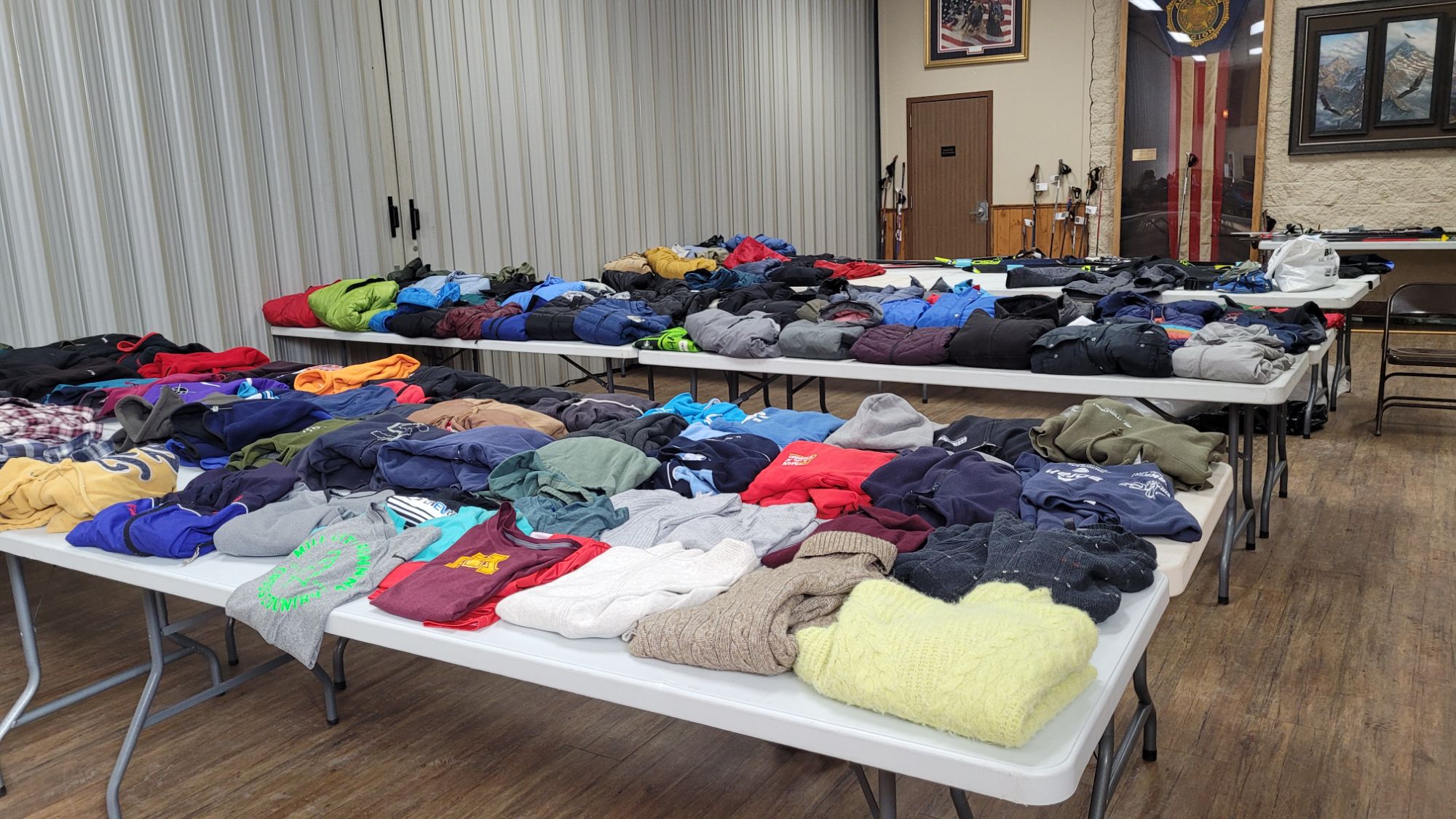
Only a few of the discarded/lost jackets, shirts and sweaters

The Birkie Association keeps the lost items for one month before donating them back to a thrift store. But initially they are all laid out on the tables where people can search for them. The pockets are searched to remove food or valuables. Before all this clothing is sent to storage it is catalogued. A list is attached to each bag of clothing detailing what is in it. 

Breaking a pole is a disaster. You really can’t ski the Birkie without them

Broken ski poles are another common item in Lost and Found. Volunteers at the aide stations tag the broken poles with the bib number of the skier. Believe it or not, skiers want their broken poles back for the parts that come off them. Hand straps can cost $50 to $80. The baskets on the tips can be put on new poles. Skiers usually get a loaner pole at an aide station to finish the race. They return that when they pick up their broken pole. 

So, what did I actually do while there? I folded and put items on the tables in their categories. Having done that, I knew what was there and helped people find what they were looking for. I greeted people and answered questions. I called people to let them know their item had been found. I sympathized with people who had lost their car keys, their IPhone, their new prescription glasses, their expensive gloves. I talked with Barb and Morris and found out they were retiring from that job after 13 years. Lost and Found certainly isn’t the most exciting part of the Birkie, but it is a necessary part. Working there gave me a window into volunteer roles that I hadn’t even thought of before.

At the volunteer lunch after the event finished I talked with another volunteer who had an unusual opportunity. His sole job was to take care of one of the winners of the elite group. He accompanied the third place winner through the process of signing paperwork and getting his recognition recorded. That sounded more exciting. Maybe next year?

So there is a lot to learn about this event. I learn at least one new thing every February when Birkie Fever hits our small town. It takes around 4,500 volunteers from several counties around us to put on this event. I am proud to be one of them, even if it’s just in Lost and Found. This year I didn’t get cold, just sayin’…
Birthday Week, Half Over

Writing it down because I want to remember, and because Mom wants to know what I’m up to.

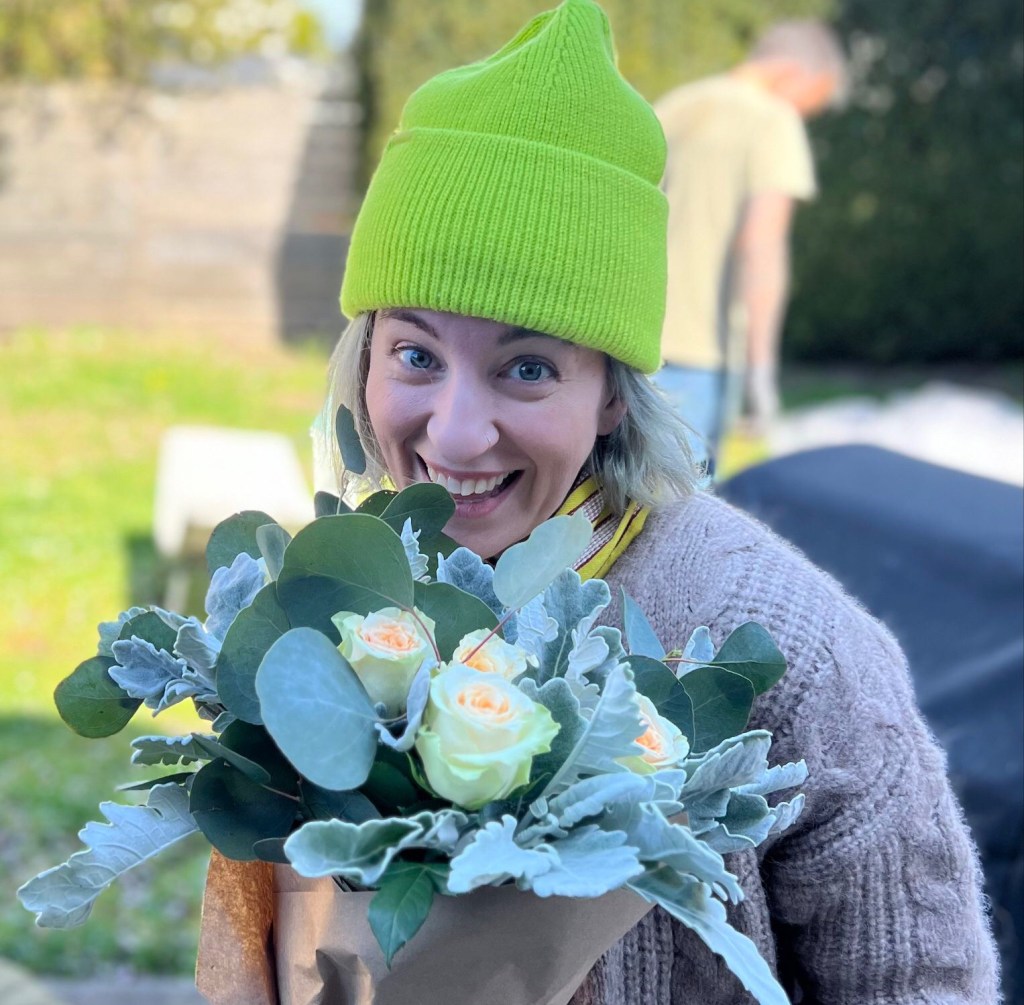
Esther with birthday bouquet. Photo credit Ryan Bruels

It is so much fun to be having Birthday Week with Esther again. I can hardly believe it’s half over already. It’s been full of good conversation, good food experiences, and good outings to new-to-me places and a few familiar ones.

It has been cloudy, cool and wet, but isn’t that pretty much what we should expect in Seattle this time of year? I’m pretty sure the noise I hear in my bedroom, like dripping water, is dripping water. When it rains at night, something is happening in the nearby downspout, but I have already gotten used to it.

One of many interesting gardens

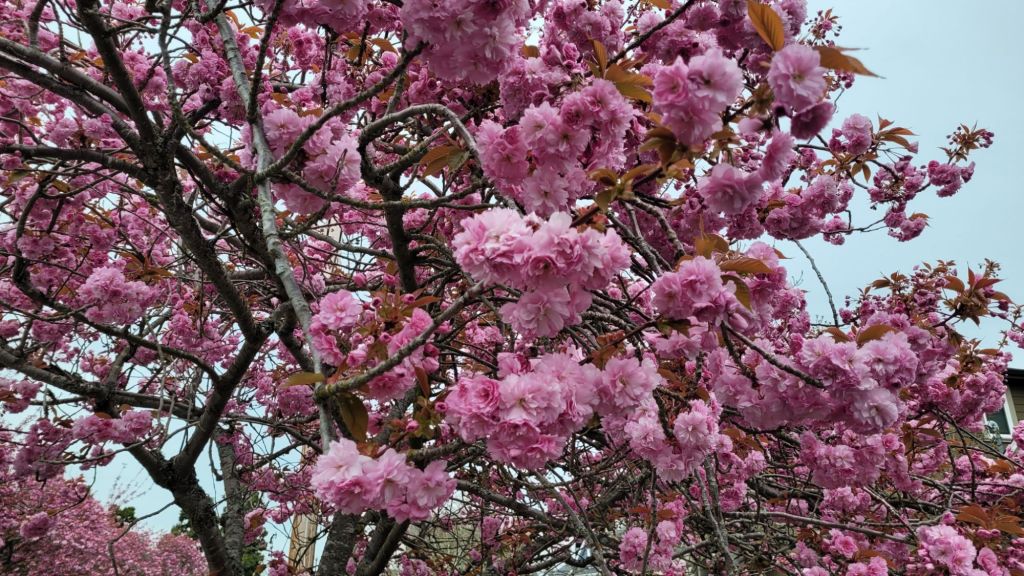
The flowering trees are blooming and gardens are showing off as we hike around West Seattle. This is such a visually beautiful area – Puget Sound, the Olympic Mountains, old forests, Alki Beach. There is an unforgettable view in every direction and I wish I could let you see what I see. But pictures will have to do. Esther and I walked over 4 miles on Wednesday, half along the West Seattle shore, half down the main business street.

Ornamental cherry trees out do themselves with blooms!

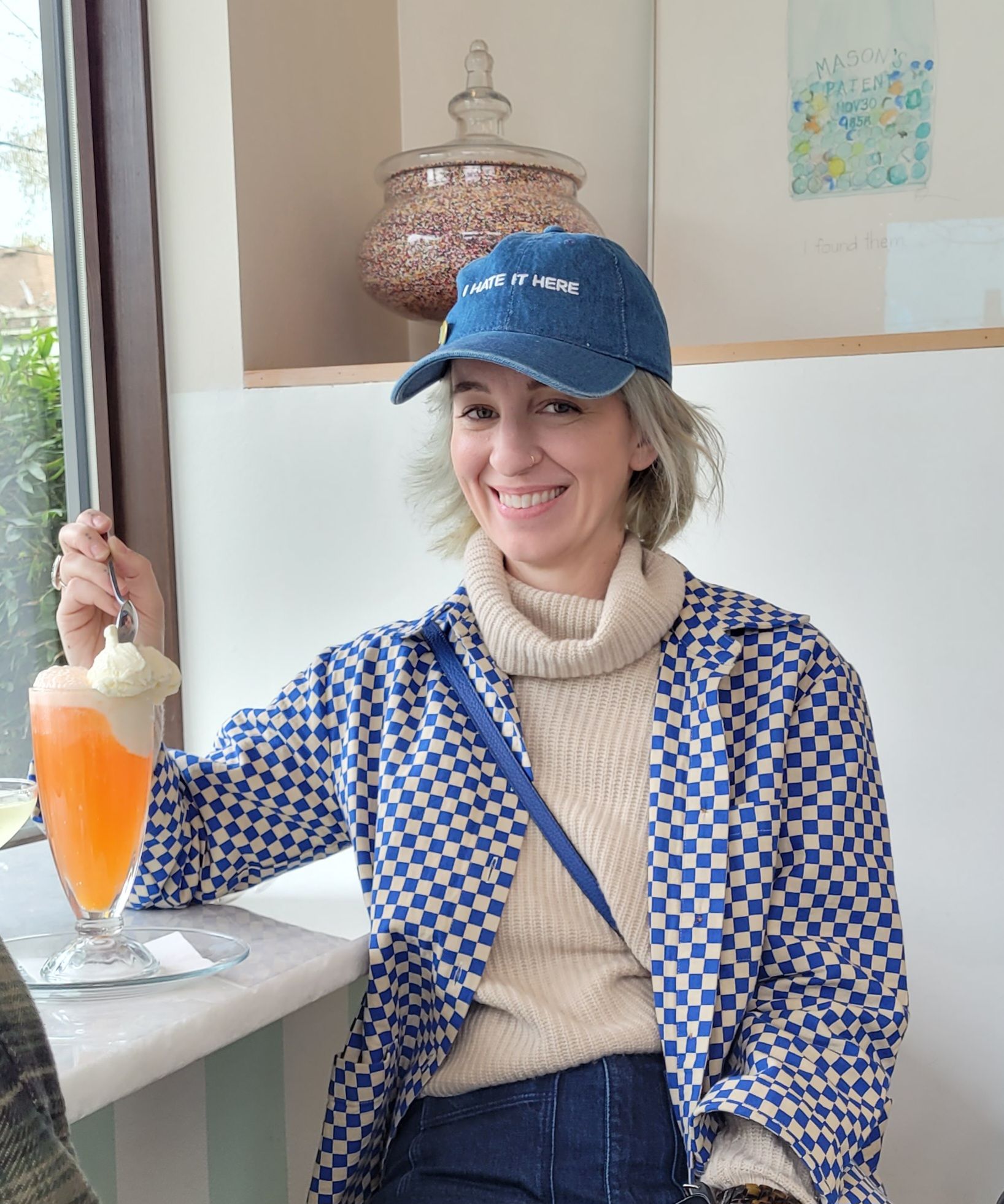
On Thursday we met some of Esther and Ryan’s friends, and my nephew Jon at a specialty ice cream shop. It was a birthday treat for Esther, and a treat for all of us too. Thank you, Jon. (He bought.)

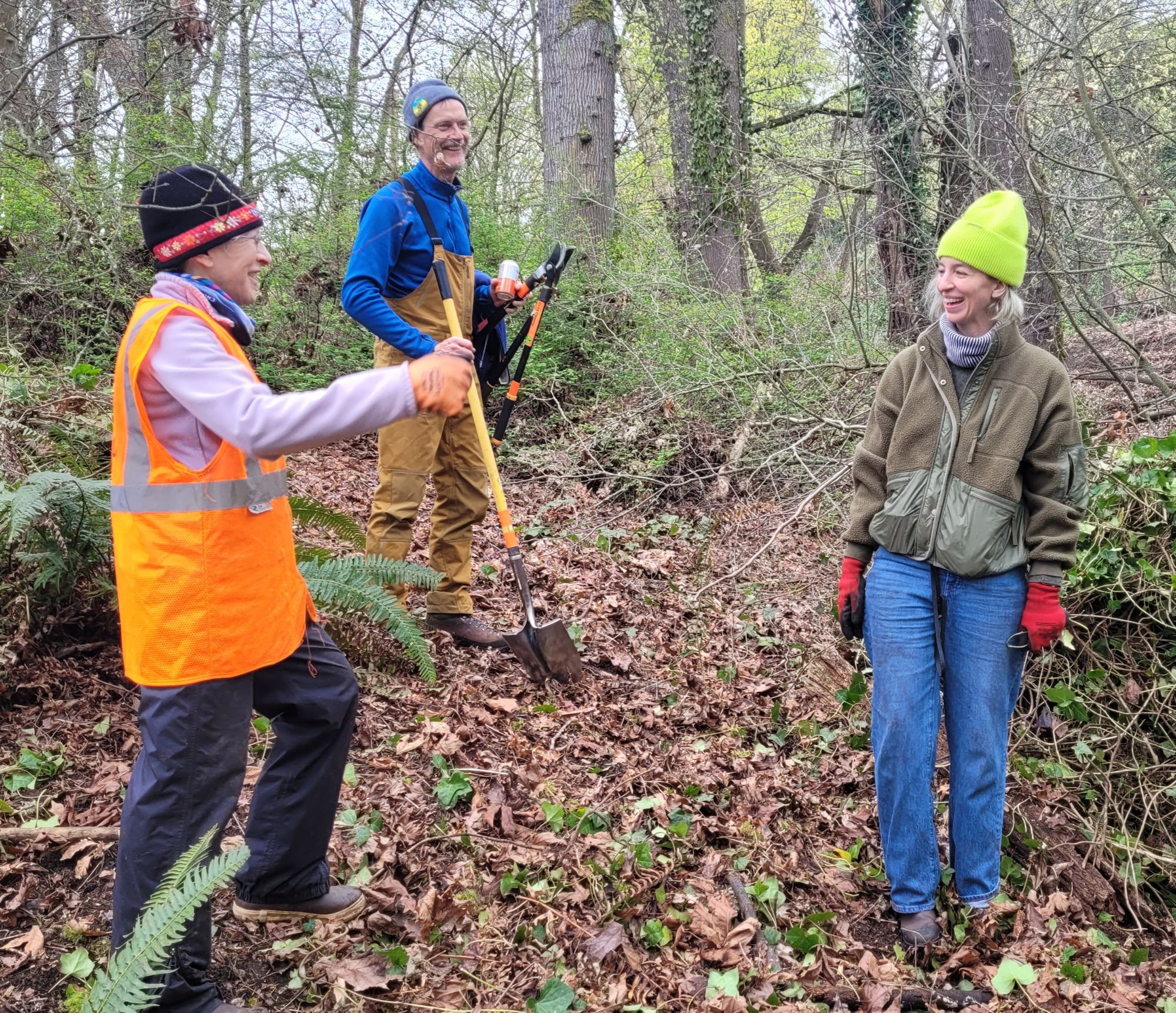
Today, Friday, Esther and I joined with some others to do forest clean-up in a local park. It’s one of Esther’s favorite community service opportunities and a great way to meet people and be active. We pulled up a large area of English Ivy, which is an invasive plant here. The challenge was to not fall down the steep inclines when the vines gave way. This volunteer project was started during the Covid lockdowns and has resulted in many hours of work donated all over West Seattle. I’m a little sore now, but it was fun.

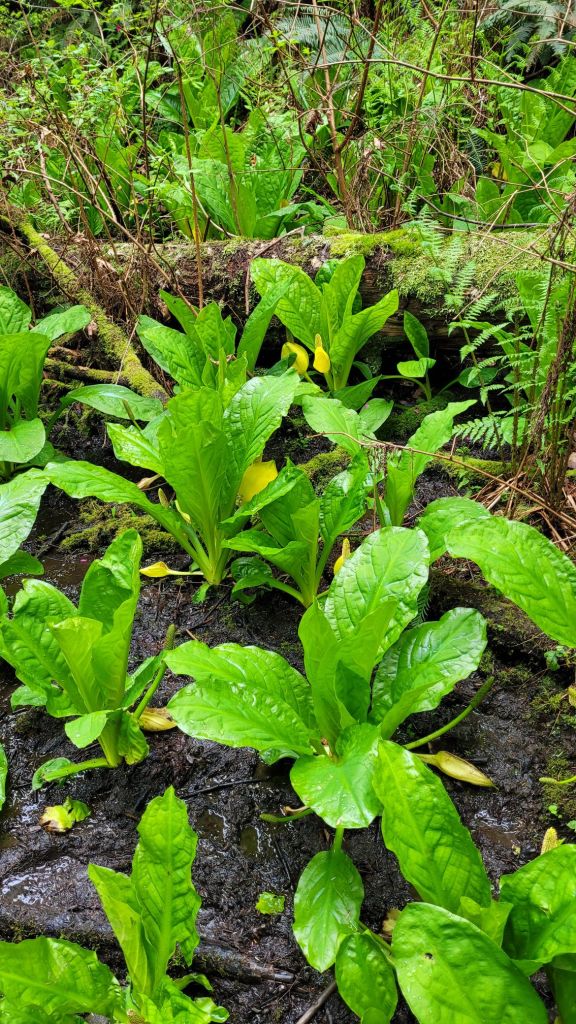
Esther and I, and Nina the greyhound, also took a walk in Schmitz Park, right behind Esther’s house. It’s been one of my favorite places since the first time I came here, and the only place I’ve ever seen Skunk Cabbage. Old growth redwoods, little creeks, all kinds of plants along these trails that lead up a deep ravine to the top of a bluff. Such an interesting place!

Unusually large leaves, bright yellow flowers, and I guess it sometimes smells bad. I didn’t smell anything.

These are some of the fun outings I’ve had so far. But there are four days left and we’ve got a really different, kind of crazy activity coming up tomorrow. Can’t wait.

Fighting Isolation: Caregiver’s World

My husband is in the last stages of Lewy Body dementia and can no longer do anything for himself. He is in hospice care and he is at home where I am his main caregiver. This is my world.

One of the biggest changes for me after my husband’s stroke was accepting all the things I could no longer do. When he was still able to manage by himself, I could do music at church, volunteer with my favorite organizations, and meet with others for exercise. Since the stroke, and after bringing him home, I can’t leave unless I have a sitter to be with him. I have to prepare him ahead of time by giving his feedings and medications before I leave. I can’t be gone for more than three or four hours max – usually only two.

I started losing touch with my community and feeling isolated.

But now, after six weeks with my husband at home, I’m finding new, small ways to get involved that don’t overwhelm me or cause more stress. This week Mom has joined me and we are stuffing baby bottles. Yes, you read that right.

Baby bottles, only one of four boxes.
Fold and stuff with these

Every year, one of my favorite organizations, Northwoods New Life Resource Center, does a fund raising campaign. Plastic baby bottle banks are distributed, mostly through churches. People fill them with spare change, bills and checks and bring them back within a couple weeks. Last year I went to New Life Center and helped stuff instruction sheets in each bottle. This year Mom and I are doing it from home. It’s the perfect, low stress activity. I’m also able to do some chores, like washing donated clothing. I have frequent contact with others and get to be involved in a great cause. Volunteering from home, what an idea!

A big anti-isolation factor for me has also been learning to utilize the helpers I pay for and the ones that come with Hospice enrollment. My hired company gives me two morning hours and two evening hours each week day and every other weekend. Now that we know each other, my daily helpers let themselves in and tell me to get lost. I use the time to shop for groceries, pick up prescriptions and other odd errands, or I go over to spend dinner time with family. My Hospice volunteers give me a couple hours more in the middle of the day, once a week. I want to use this time to find out if I can still remember how to ski – it’s a bit sketchy…

Hospice has also been a blessing because of the number of people who come to us in an average week. The husband and I see the weekly volunteer, a nurse, a CNA, a chaplain, and a masseuse (she works on the caregiver too, yay!) We’ve gotten some good conversations and some new friends.

As hard as this time is for the husband and I, there is no sense in adding to the sadness by letting ourselves feel isolated. Separating from meaningful activity and caring community only hurts us. We don’t have to let that happen, and won’t.

February Goodness: Volunteering

I can hardly believe February is nearly over! So many good things to report, and many I missed writing about because I was busy living them…

What an amazing event! And I have gotten to volunteer to help with it, in a very small way, for the third consecutive year. The American Birkiebeiner is the largest cross country ski race in North America and the third largest in the world, and it was created by a visionary man who lived right here in Hayward, my home town.

Part of my amazement is the way the race has adapted to pandemic times and become even more available to sports enthusiasts all over the world. The Birkie went virtual. There were still over 8,000 skiers participating this 47th year of the race but half of them were not here in person. Yesterday I got to watch some of them as they passed the Fire Tower Aid Station. Unlike other years, they had to bring their own water containers and food, but we dispensed water and electrolyte drink and watched out for those who might need medical attention.

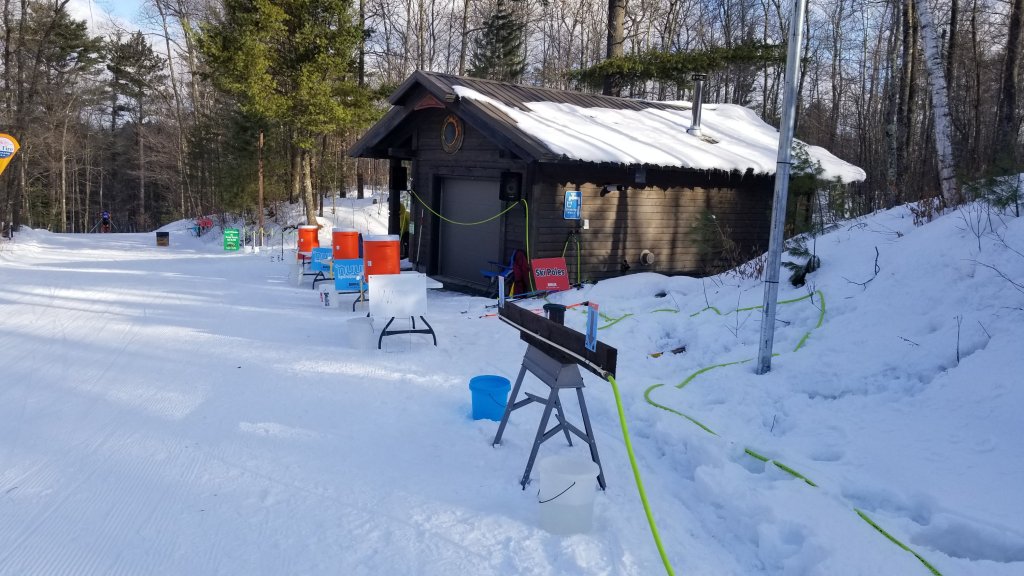
Our cozy aid station with drink systems in place. Challenge was to keep the hoses from freezing.
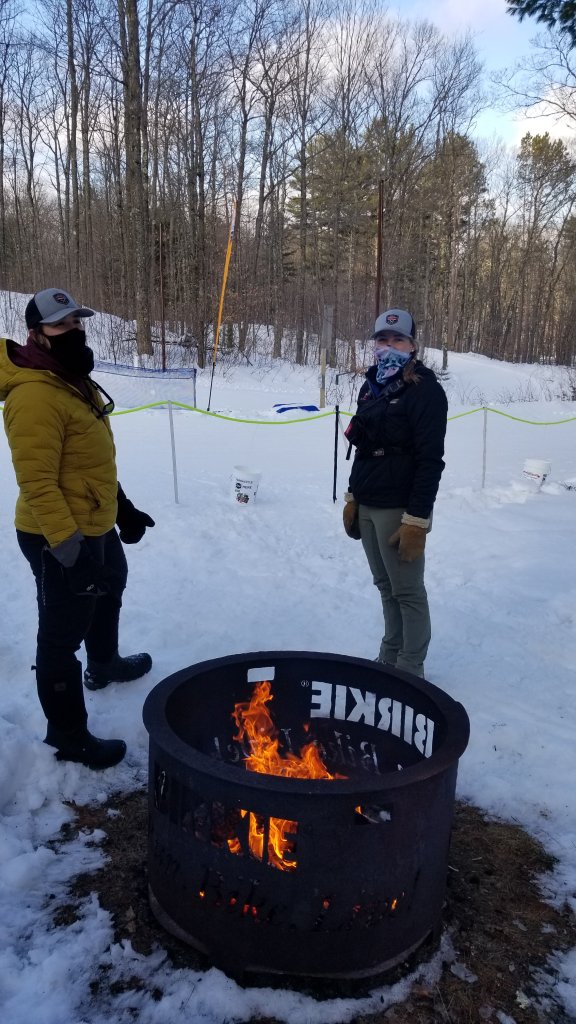
Volunteer and Birkie employee, keeping the fire going.

It was a perfect skiing day with temperatures getting into the 30’s and barely any wind. Many skiers remarked about the snow being just right. What they complained about were all the hills. There are few places that have the kind of hilly, glacial terrain found in the 43 K forested trail of the Birkie, so skiers have a challenge to prepare for it. I talked to one man who thought he had prepared but was seriously considering cutting his distance in half after reaching our aid station.

Most skiers would expect to be skiing down hills like this, but not in the Birkie, no, no, no. Every “down” is partnered with an “up”.

What did I and the others on our team do? We set up the aid station with water hoses, touch-less dispensing systems for water and drink, got the fires burning for those needing to warm up (but seriously, there were people with shorts and T-shirts in this race and they still thought they were hot) and served as the cheering audience. No spectators were allowed this year. I mixed up several batches of Noom in the 10 gallon coolers, answered questions (like “how much farther do I have to go?”) and held ski poles while people filled their drink bottles.

It was a great day to be outside. We started at 7:30 am and were done by 2 pm when most of yesterday’s skate skiers had passed our station. As I watched some of the last stragglers wearily climbing Fire Tower Hill, I remembered my Grand Canyon experience, and was glad I was going home in my truck and not skiing another 12 K out in the forest wilderness of north Wisconsin.

These were the elite, early wave skiers. The later ones did not power up this hill with the same energy.

I will probably never ski the whole Birkie Trail – it’s not on my list – but I would like to hike the whole thing. Maybe this summer will be the right time to do it. Tell me if you want to come along. It will be epic, in one way or another, I promise.