A series of memories around a fascinating subject – fire
Two days of hiking in the rain, with temps in the 30’s, just above freezing. We had spent the previous night in a small shelter with 20 other hikers and about that many mice, so there hadn’t been much actual sleep. We were tired, and tired of being cold.
We crawled into camp in the last few minutes of daylight. Tents were going up. I could hear people thinking how nice it would be to sit around a nice, blazing campfire for a while. Some kind trail angel had left large pieces of dry wood in the shelter and it had been arranged in the fire pit, There were obvious signs of attempts to get it burning, but there had been no success. Now it was getting damp.
You can’t hold a match to a large piece of wood and set it on fire. It’s too big of a jump. You must start small, with kindling, and add progressively larger pieces of fuel until the heat load is enough to start the burn in the large piece. It’s a simple principle. But there is a major deficit when any available kindling has been rained on for two days.
I admit to being prideful when it comes to starting fires – one of my many faults. That was part of why I decided I would have a fire that night. The other reason was that I knew people could die of hypothermia and I didn’t want to be one of them. I was hoping this potential blaze would feel my affinity for fire and respond.
Looking in sheltered places, I did locate some less damp sticks and leaves and took my stash to the fire pit. My hope was that a small flame would dry out more of the kindling, if I could keep it alive. It takes getting close and intimate, and it takes patience. I knelt and started tending “the baby”. That’s exactly what it is, a baby fire. It must be given another leaf, another twig, another blast of oxygen, and never allowed to die.
No one wanted to help with this and some probably thought I was crazy to waste time trying to burn wet wood. I was too cold to do anything else. My daughter was setting up our tent, leaving me free to be crazy. I put my face close to the flame and blew gently until I had no more breath, then turned and got a gulp of fresh air, over and over. The dampness was creating a lot of smoke, but that gave me hope that things were drying out a little.
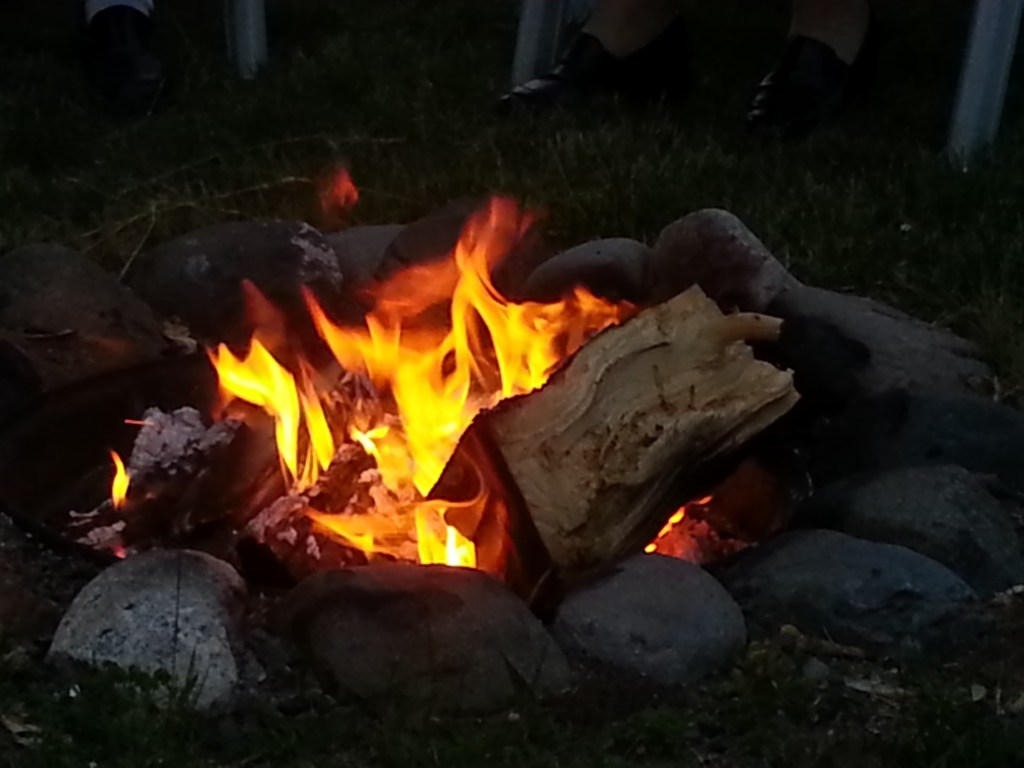
The end of this story is, of course, that the fire progressed as I had hoped. As the larger pieces of dry wood caught and turned into a healthy blaze. It was lovely and it was regarded as near miraculous, which added to my pride, but I knew. It was no miracle but rather persistence, motivated by need. We all enjoyed getting warm again before getting in our sleeping bags for the night.
And my personal attraction to a small, useful fire grew. An intriguing, mysterious gift is what it is… just sayin’.


 I Just Have to Say...