A to Z Challenge: Letter K for Keeping Records

Do you trust your memory for a lot of things? Do you ever forget if something happened a week ago or two weeks ago? Do you ever complete a routine task without concentrating on it and later wonder if you did it? I have been in all these places at one time or another. Sometimes the person I’m caring for can help me out. Other times my person has been too young, too sick, struggling with dementia, or maybe just as distracted as I am. Learning to keep records would save me in these situations, and I admit I haven’t got this down perfectly. But, there are a few things I’ve found helpful.

I have started the habit of writing things down, and keep paper and pencil in multiple places. Even the things I think I’m going to remember may get clouded with other facts and happenings. My aunt and uncle keep a calendar close to their phone and write down their appointments when they get a reminder call. I use a datebook for appointments but also to record significant events, like a fall, the start of a new symptom or a medication side effect. Doctors often ask about these things so the datebook always goes along to appointments.

Another good use for your notebook is to record blood pressure readings if your “person” has hypertension and is on medication for that. Ideally, the doctor will want to have BP taken each day, at the same time of day and with the same monitor, until he knows the medication is working well. If you are buying a blood pressure monitor, get one that records date, time and pressure and stores the information for later reference.

See the little button bottom left? It keeps record of past readings.

Monitoring medications is one of the more serious tasks of caregiving, and it does require keeping records. A helpful website for this is Drugs.com. It keeps track of all the medications and their possible interactions for anyone who cares to make a free account and input their information. It’s almost like having your own personal pharmacist.

I love to make use of online apps that help me connect with doctors and clinics. Our rural clinic gives access to primary care and specialty docs through a health app that keeps track of all appointments, visit summaries, and medication lists. As a caretaker I had to set up my family members’ accounts and sign the necessary legal papers (proxies) to have access to their records. All four of the people I help through the app are linked to my own account and I only need one password. I can ask questions and get answers for them, change appointments when necessary, and see test results. This has been especially helpful during this pandemic time.
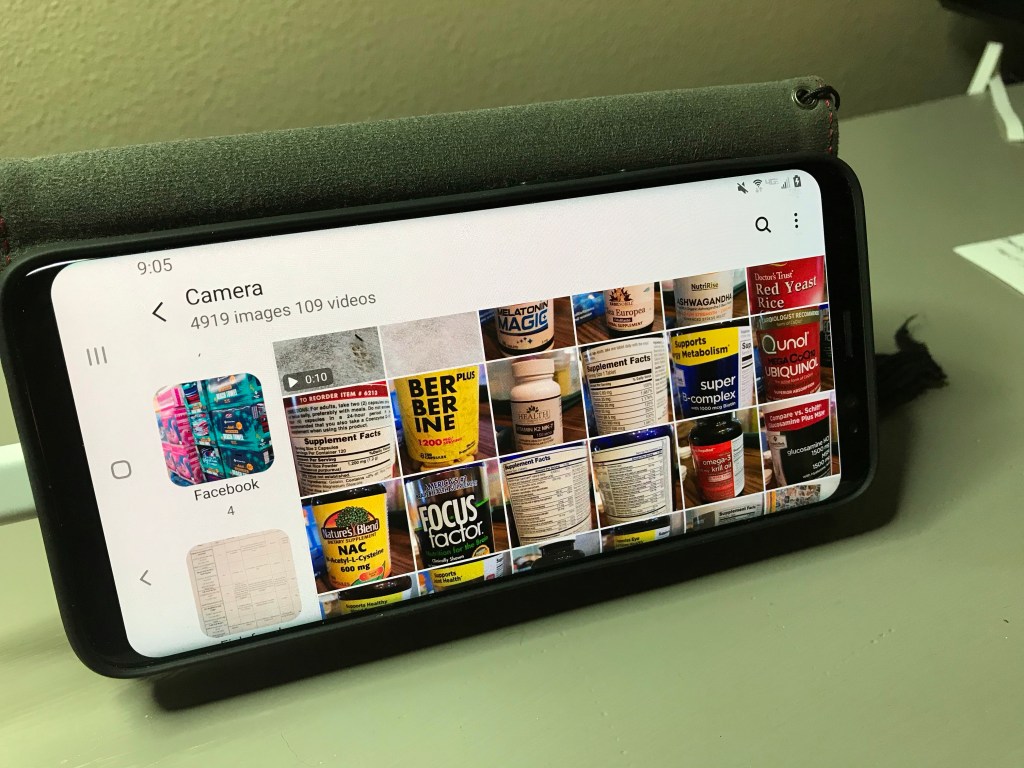
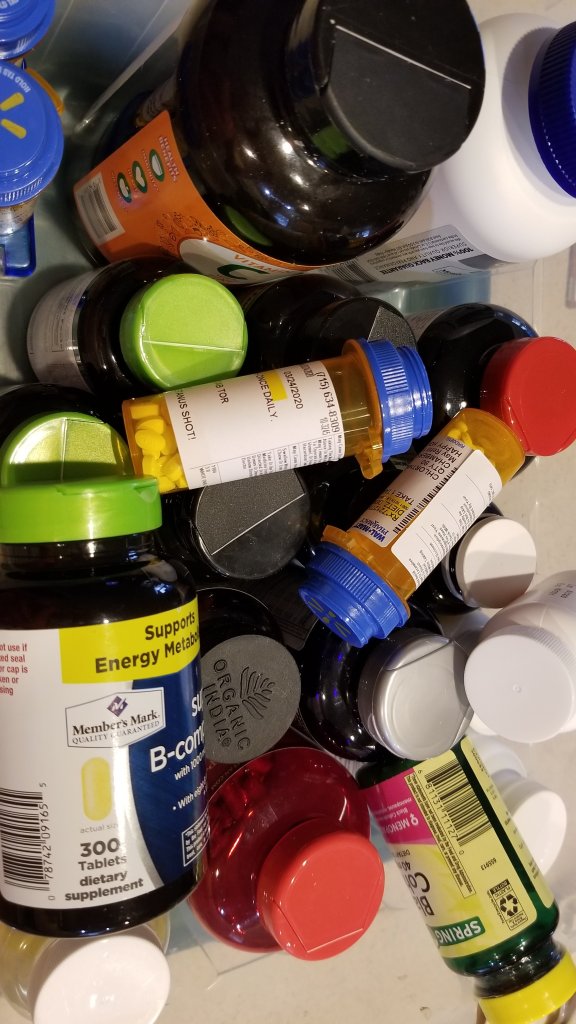
Portraits of our vitamin friends.

Don’t forget that if you have a smart phone, you have a valuable helper. I took pictures of all my husband’s supplements and medications, which can be referenced any time someone asks me about dosages. I also put my family members birth dates, addresses, and doctor’s names in the notes section of their contact record on my phone. It really helps to have that information handy when filling out forms at doctor’s offices.

And do you have a file cabinet? I do. I have folders for our medical, dental and vision visits and bills. I also have files for those papers from insurance companies that tell you what they’ve been billed. I’ve heard so much about insurance fraud and if I see procedures that I don’t recognize, I ask questions. I don’t always understand what I’m seeing, but I’m afraid to throw them away (most of the time.)

Start your stash of records now and keep them up to date.

A to Z Challenge: Letter J for Joy

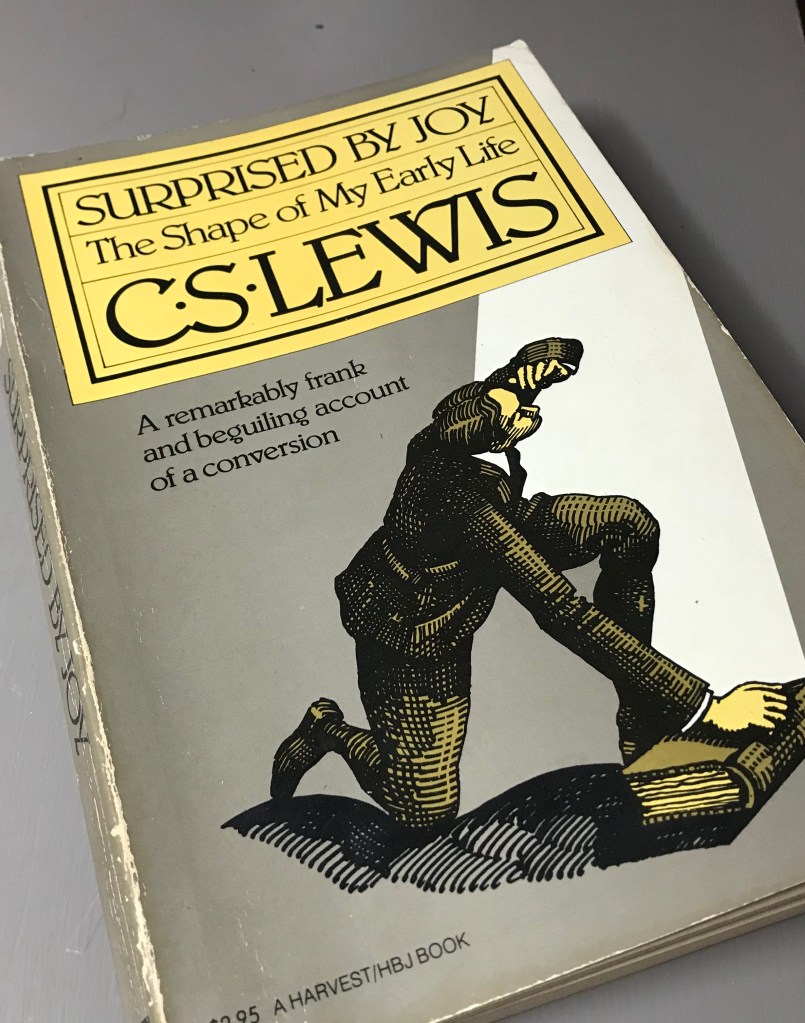
Deep, esoteric reading material leaves me feeling dumb and vocabulary challenged as a rule, but there is something that I took away from a recent read that resonates with me. It was about joy. (And I may have gotten it wrong, but forgive me C. S. Lewis.)

He uses lots of big words…

I agree with C.S. Lewis that real joy has a sadness, and a longing behind it that makes it what it is. I have found that to be true about caretaking. Every time I’m doing something for someone, I’m wishing they were well and able to do it for themselves. I’m thinking about what I have that they don’t, what I can do that they can’t, and I’m grateful that I can help them. There is joy in adding to their life something they cannot have on their own.

There is also the joy of coming together, collaborating and accomplishing a task, that is different from anything I can do on my own. I believe we are meant to be in community with others and find our greatest satisfaction in sharing our skills, our words, thoughts, and our time – and that is often what caretaking is about. Almost always, the people I am caring for have something that they give back and share with me. There is joy in that.

I am sad when caretaking seems like a one way street with no feedback, no acknowledgment, no life giving return. But even then, I feel that I am honoring God by caring for a life that he values until he says that care is no longer needed. Caretaking teaches me things about myself that I couldn’t learn any other way. Persistence, integrity, compassion, acceptance, courage are all attributes that get challenged and honed… courses in Caretaking University.

That’s it. JOY. Caretaking is hard work, at times frustrating, exhausting, discouraging and other “bad things”, but joy is there to be found. I have named it and realize that it makes me able to continue taking care of others.

A to Z Challenge: Letter I for Investigator

There may be some things in the world of health that remain the same over time, but a whole lot more things change. It can be hard to keep up with the latest knowledge. Caretakers should not be afraid to investigate on behalf of the person they care for. Be curious and be a problem solver.

One of my favorite clients was always asking me to solve problems and invent ways to keep her comfortable. Curiosity and investigation would usually lead me to a solution of some kind. She named me Shirley McGyver. (I’m very proud of that.)

The husband and I have both had to investigate his diagnosis and care. Most of the time when we tell people he has Lewy Body Dementia they say “Lewy who?“ In fact, many people in health care have not heard about LBD, even though it is the second most common dementia behind Alzheimer’s. It has largely been up to family caretakers to know the ins and outs of their loved ones condition and make sure that they are treated appropriately. I belong to two online support groups for LBD and they have given a wealth of information about the difficult and unpredictable course of this disease.

It is important to investigate for others when they cannot do it for themselves. As a caregiver, you don’t have the same limitations that your person has. Often you can see what they cannot, go where they cannot go, and use resources that they cannot access.

Investigative caregiving has led me to:

-research drug interactions when I notice a new skin rash appearing

-check vital signs when my person says they “feel” a heart arrhythmia

-notice hypertension and bring it to the doctor’s attention

-determine that a person’s allergy symptoms are caused by her cat!

-avoid serious problems for my patient by listening carefully to their complaints

Investigative caretaking takes observation skills. It also takes the persistence to follow up on things that just don’t seem “right”.

My “closest to home” example of timely investigation happened years ago when I was still in nursing school. I would visit my grandmother when I was home on weekends. She was an intelligent, sociable lady who was alert, oriented and mentally competent. She was also on a daily diuretic medication for congestive heart failure. I was very surprised one week at school to get a phone call saying that she was disoriented, frantic, and acting very strange. Knowing this was not her usual behavior, I looked up adverse effects of her medication and was able to tell the caregiver that Grandma needed to be taken to the ER to have her potassium level checked. I was so thankful when they were able to reverse her condition quickly and easily by giving her potassium.

It’s helpful to me to think of myself, my person or client, and their medical professionals as an investigative team. Giving frequent, sometimes daily, care means that I have eyes on situations that the doctors never see. My job on the team is to report, as accurately as possible. For that reason I go to all doctor appointments, and all procedures. I also have proxy access to the online health charts of all those I care for. I am well acquainted with all the ladies at the registration desk since I sometimes see them several times a week, with a different patient each time.

I am a private eye (always wanted to be one…).

I am an investigator.

I am a caregiver.

A to Z Challenge: Letter H for Hygiene

Good hygiene is important and needs to be addressed. I started thinking about this back on letter B when talking about bodily care and the work involved in having good hygiene. But there is an additional issue or problem that I have noticed with almost every person I’ve helped. It’s not just having good hygiene, it’s convincing them that they need to have it.

All that showering, brushing and grooming is work and people often don’t care. Some are vehemently opposed. Who would think? But those basics of hygiene, if built into a routine, will keep your person healthier, and prevent problems. You can keep them simple.

For instance, elderly people don’t need to shower every day, or even every other day. They aren’t working up a sweat usually, they aren’t playing in the dirt (are they?). Their naturally drier skin doesn’t need frequent soaping, and as Mom’s doctor tells her, soap is only needed on the places that smell. I’ll let you figure out which four places those are.

Sadly, people with dementia often don’t remember those routines that they have followed all their life. As a caretaker, you become a coach – helping them know when something is needed and what the steps are in accomplishing it. Something as basic as toileting can be suddenly confusing. Accidents can occur simply because they don’t remember what to do first, second, third, etc…

My aunt would sometimes stand at the bathroom counter and ask me “why am I in here?” I would remind her “You are here to brush your teeth. Take that brush and I’ll help you put toothpaste on it.” It’s much easier for me to be patient and helpful when I know there is a real reason for the forgetfulness.

I also don’t like to ask my elders to make too many decisions. I suggest as though it has already been decided. If it needs to be done, I don’t ask them if they want to do it.

“It’s been a few days since you showered. Let’s get it done today.”

“Something got spilled on your shirt. Here’s a clean one to put on.”

“Here’s a washcloth so you can clean your face.”

I like to give grace to the elderly and others who aren’t perfectly groomed because I know that some things are superficial and not worth mentioning if it will embarrass them. That is, if I am not their caregiver. If I am their caregiver I have to help them avoid embarrassment by telling them what they would want to know.

This was hard for me at first, but I got over it. If I know the husband can’t see well and wouldn’t want to go out with spaghetti sauce in his mustache, I need to tell him it’s there. If my uncle has two inch long eyebrow hair, I need to offer to trim for him. (I mean, if it’s on purpose, he can still say no…).

You might think you can’t wash and set a woman’s hair, or shave a man’s face but any caretaker can learn those things to some degree. Even if they aren’t done perfectly, it’s better than not having them done at all. Even if they protest at first, most people are ultimately thankful for the care.

Don’t we all want to be?

A to Z Challenge: Letter G for Guilt

“Guilt: the gift that keeps on giving.” Erma Bombeck

There is a tremendous burden of responsibility that we take on when we become a caretaker. Sometimes it can mean the difference between life and death for those we care for. But we are human and mistakes happen. If you are a caretaker you have signed up for big time guilt in so many areas that you can’t even imagine.

Almost all dependent persons, those who are ill, or disabled, or elderly take medication of some sort. I have a nursing nightmare, which comes from a similar real life event, of being responsible for giving medication to dozens of patients without time to do it. Errors of giving the wrong medication or not giving a med on time are so common in the medical world that whole systems have been developed to prevent them.

No chance I’m going to make a mistake here, right?

At present, I only have one person (the husband) who needs help with his medication so we haven’t had nightmare material lately, but I have forgotten at times. There are also many other kinds of errors that can devastate us. Saying the wrong thing, giving the wrong information, errors in judgment, errors in attentiveness. I hear of it happening all the time in the online support groups that I frequent.

I want to say something to those of you who truly care about “your person”. You probably are going to do something that you consider an error. Do the best you can to avoid making mistakes but when they happen, forgive yourself and learn whatever you can from them. Continue as best you can. My way of doing this is to pray for those in my care. I ask God to protect them and to help me know what to pay attention to and when to listen. I ask him to give me the necessary skills, and help when I need it. He does this.

By being willing to be a caretaker you are giving “your person” a gift. Maybe you are making it possible for them to be in their home rather than an institution. Maybe you are saving them great expense. Maybe you are providing a sense of family, of belonging. Maybe you are giving them something that money can’t buy. Don’t let the fear of making errors keep you from giving something precious and needed.

A to Z Challenge: Letter F for Food

Food Can Be a Problem

People who need our caregiving are probably people who have issues with food. For one reason or another, they may not have the energy to shop and cook. Often they need special diets. Often nothing sounds appetizing to them or the opposite – food is one of their few comforts and everything sounds good. Whatever the case, what happens in the kitchen is very important in caregiving. It’s true, food is medicine that you as a caregiver can give. (Different perspective, yes?)

It is also true that a lifetime of eating poorly can’t be turned around in meal or two. There will be some foods that take effect more quickly than others (ask anyone who likes prunes) but complex processes like weight loss or building strong bones, strong immune system, a resilient nervous system, etc… take lots of time. My role as “caregiver in the kitchen” is one of the hardest for me. Maintaining consistency, making meals attractive, serving a good variety – a real challenge when life gets busy.

Places to Find Help

What a surprise it was to learn that the gut is like a second brain, and it needs to be treated as special, and fed with care. This is an area where it will serve you well to become a learner – first of the diagnosis of the person you care for, and second of the current diet recommended for that diagnosis.

Medical schools do not spend a lot of time teaching about the role of diet in disease so your doctor may not have a lot to say about specific nutritional guidelines. There are specialties in the areas of functional medicine, naturopathic medicine, and integrative or wholistic care that will spend a lot more time with you on the subject of food. Dietitians and nutritional specialists will be more helpful if they follow current research. Be proactive and ask them to work with you. Don’t be lazy about this, and don’t let them be either.

You can find much of the latest research on diet yourself, if you have a computer. There are some tremendous changes coming in the Standard American Diet and the Food Pyramid due to discoveries about the causes of many chronic diseases (including the big ones like heart disease, diabetes, cancer and dementia). It’s an exciting field. I’m posting links to some of my keto meal discoveries as well as listing some of our most helpful references at the end of this post.

Food is pretty, and pretty amazing.

Five (easy) Guidelines

This is such a big topic, and new changes and discoveries are frequent, but here are some things I’ve found to be basic for most chronic conditions:

– avoid processed foods as much as possible. If there are more than two ingredients it’s probably processed.

– buy organic when you can

– increase eating of fresh vegetables and fruits with bright colors. It’s hard to go wrong with this.

– decrease carbohydrates, which includes anything containing large amounts of sugar (soda, desserts, alcoholic drinks) and also breads, pastas, rice and white potato

– don’t give up if things don’t go well for a few days. Return to sensible eating as soon as you are able.

A keto salad lunch

My husband has Lewy Body Dementia/Parkinson’s and he is a researcher of his own remedies. We have seen promising results from his diet which is built on a conservative approach. Lots of colorful vegetables, moderate amounts of clean protein (eggs and meats) and as much healthy fats as we can get (avocado, coconut and olive oils, animal fats, butter, etc…). We also addressed our magnesium and vitamin D levels after finding out that we were low in those nutrients, as are most people these days.

We’ve tried some extreme diets, but found we just couldn’t build a life around weird food choices. The desire to eat has to be kept alive.

Our Ketogenic Strategy

The Keto Plate

  • “The Grain Brain Whole Life Plan” by Dr. David Perlmutter
  • “Fat for Fuel” by Dr. Joseph Mercola
  • “The Paleo Approach” by Sarah Ballantine, PhD
  • “The Ketogenic Kitchen” by Dominic Kemp and Patricia Daly

A to Z Challenge: Letter E for Equipment

Equipment. I feel like saying “don’t get me started!” The truth is there is a piece of equipment to make almost every job easier. Yes, it’s true. If you are a caretaker, make your life easier by becoming a student of what’s out there.

My most memorable piece of equipment was a 400 lb. electric wheelchair owned by a quadriplegic friend (and client) of mine. It was in the price range of an expensive car and was customized to her needs with joystick, recline features, etc… One of my tasks, in addition to nursing, was to wrap this wheelchair so it could go in the cargo hold of a plane when we traveled. Several egg crate mattresses for padding, rolls of duct tape, and warning signs plastered all over it – that was just the beginning. We also had a smaller regular wheelchair, and a hoyer lift to disassemble and carry along. I remember sitting in the window seat watching the baggage handlers try to get the big chair into the cargo hold, and trying not to let my client see. Keeping track of, and guarding, all that equipment was… an interesting challenge.

There are other, much more common pieces of equipment, that I’m often surprised that clients don’t think about until I suggest them. Are you helping someone who needs to use the bathroom often, and can’t move very fast? Portable commodes are a favorite piece of equipment. Time in the bathroom can also be made a lot safer and easier by toilet seat risers, shower benches, and grab bars, grab bars and more grab bars. You probably can’t have too many of those. (Toilet seat risers are tricky. I thought I was getting the right thing, but no. I have two and neither one is being used… a story that won’t get told here.)

It’s so nice not to have to carry things when you’re feeling a bit unbalanced.

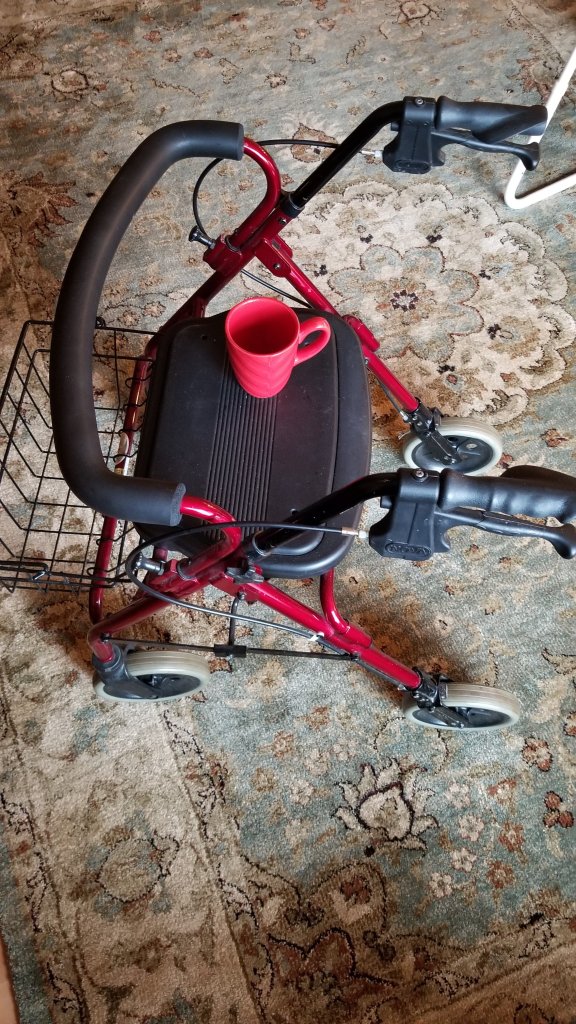
Keeping my people mobile as much as possible is important to me. A simple pair of hiking sticks is what Mom uses outside. Those extra points of balance are all she needs. Inside she has a shiny, red walker which she uses to transport small items (and her coffee cup) because it has an attached basket and a seat, and brakes to keep it from moving when she doesn’t want it to. Walkers and wheelchairs have come a long way in design and there’s one out there for every level of mobility.

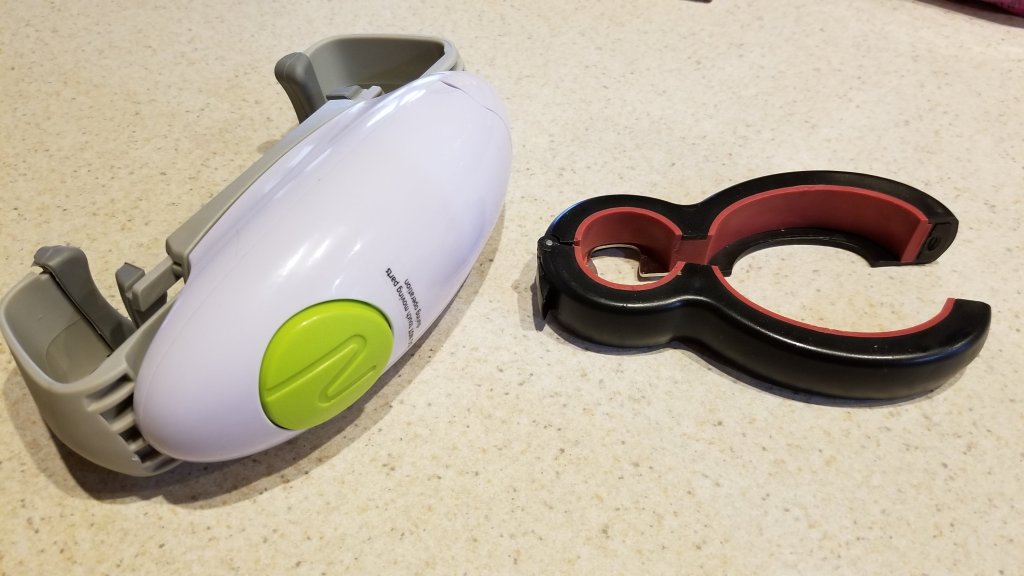
Occupational therapists are so helpful when it comes to equipment for the things that need to be done every day. There are gadgets to help pull on socks, extend your reach, open jars, and button and zip garments. For people with low vision or blindness there are a lot of useful tools as well. There are special plates and flatware for food, clocks that speak the time and identifiers that can be placed on surfaces like the microwave control panel.

Seriously, these things work! Who uses them? Me.

Do you have a medical equipment store that you can visit? It’s a good practice to go there and look – at everything. You might not need it now but knowing what is available will make you feel very smart.

The world of equipment is large and varied. There is something for all ages and all situations. Some of it is mysterious (computers and smartphones) and even a bit controversial, like our Alexa (she’s always listening…). My husband loves this internet lady and asks her all kinds of questions. She plays any kind of music he wants and reads to him. And that brings up the equipment needed for safety too. Life alert buttons that are worn on the body can be lifesavers. And how about special locks for limiting access to doors and drawers? These can be useful for children and for elderly with dementia.

You get the idea? If you have a caretaking problem, take it to an internet search, a catalog, a medical supply store or a professional who can point you to equipment that will help. We need all the help equipment can give us.

A to Z Challenge: Letter D for Depression

I can’t believe I made it through the first week of the challenge! I can’t believe I made it through three weeks of coronavirus sheltering in place! I’m thinking by now we all know a little more about what it feels like to be depressed…

Depression is one of the hallmarks of chronic conditions of any kind, and of long term caretaking. What an awful combination it can be when both of you – client and caretaker – are both depressed. Believe me, it happens.

I don’t know what your experience with depression is, but I’ve seen enough of it that I know not to discount anyone’s experience. I’m not genetically given to long term depression but I’ve had moments, maybe days, where I’ve been unable to help myself. Unable to find motivation to do anything. I can’t do anything but wait for something to change.

Depression is sometimes hard to recognize in myself, and hard to admit. It doesn’t present the kind of image I like to have of myself. Because I’m aware of how I’ve felt, I kind of know what to look for in others. Chronic disappointment, chronic pain, unrelenting fear/stress, and other critical situations can trigger depression -when we can’t be sure change will ever come, when we can’t find a resting place, or a safe person. Sometimes it’s not apparent what the cause might be.

If you are a caretaker, you need to know that failure to practice self care can lead to depression. It is okay for you to practice self-care. If you don’t you will eventually be unable to care for others.

You also need to know the symptoms of depression for those under your care. Parents (you are caretakers!!!) recognize the changes that signal depression in a child. Healthcare workers, make emotional health of your patients part of your observation and concern. Those caring for family members, where there is more likelihood of long-term disability should be particularly aware of the silence, the apathy, the resignation and behavior changes that suggest depression.

I can’t give you the sure-fire cure for depression. For some medication helps, and it seems to be one of the easiest attempts to solve the problem. Exercise, sunshine, music, distraction, the passage of time can all help, even if that help is only temporary.

There is one remedy that you as a caretaker can apply that will never hurt, and often is one of the best aides. You can be genuinely caring and show it by your willingness to listen, your words that express your concern, your notice of suffering, and your faithfulness to difficult situations.

The perfect message – hanging on the wall in one of the halls of our small hospital.

A to Z Challenge: Letter C for Clothing

Day 3 of posts on the theme of caregiving. Do you help someone get dressed in the morning? Truth is, I have trouble getting dressed most mornings. Yoga pants are the best, probably for doing yoga too, which I never do.

Let’s face it. Most of the time, for most people, clothing is a necessity of life. I’m thankful for that. But I know from personal experience that clothing can be a frustration as well. Clothing, done well, is a learned skill.

I’ve always bought clothes for my husband – he never thought he had time for shopping – but he always dressed himself fairly well. That is, until he started dealing with Lewy Body Dementia.

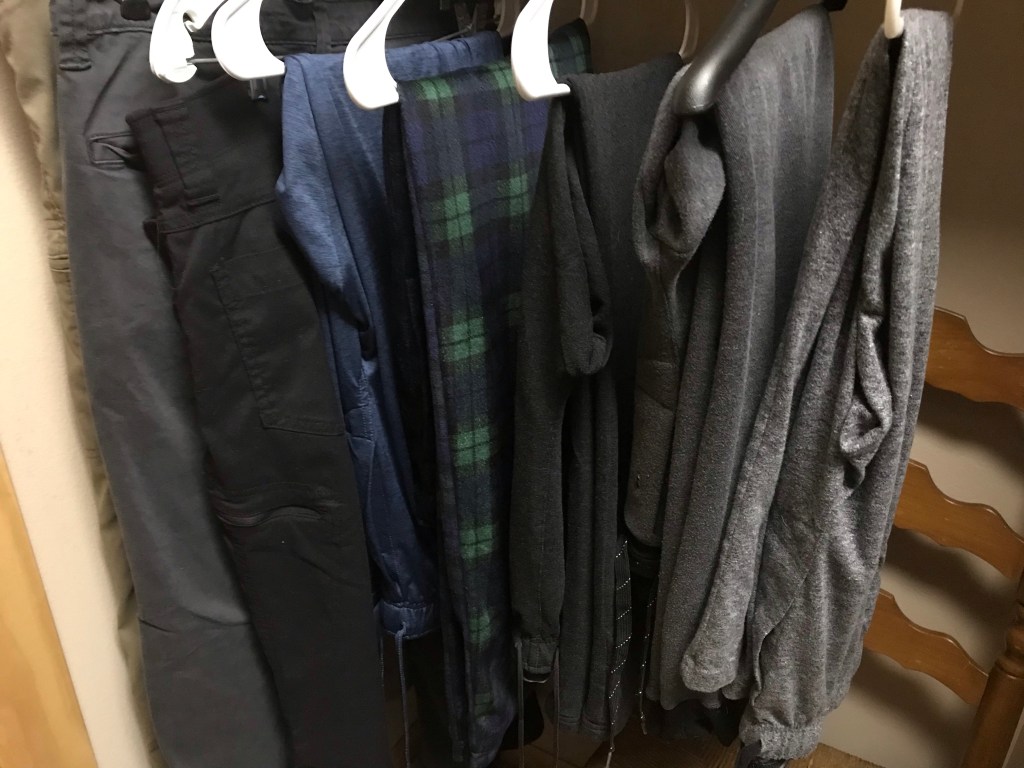
The first thing we learned was that pants with belts, snaps, buttons or zippers were not going to work. Putting the belt through all those loops was a frustrating chore. Those kinds of pants weren’t very comfortable for napping either. We learned that flexible, knit pants, elastic waists, and material that doesn’t drag on the bedsheets was our “go to” combination. We bought numerous pair of pajama pants at Walmart and he wears them everywhere. No one cares.

Pajama pants outnumber the others 5 to 3, plus the ones he’s wearing.

Ample sizing became the rule for everything from socks to underwear, because tight things are hard to put on. It’s so much easier to find the armholes of shirts and jackets when they have a loose fit. Again, clothing like that is easier to sleep in too.

I have learned the hard way that an important caretaking job is the final inspection before heading out. More times than I want to remember I have looked at the husband, often when we are late leaving for an appointment, and discovered some stain on his shirt front, his jacket buttoned up wrong, his fly unbuttoned, his pant legs caught in his socks, and hair/dandruff/stuff all over his shoulders. He’s mentally much better than he looks, but he doesn’t see the dishevelment because of his macular degeneration (and general disregard of propriety which he has always had). Fixing him up is a caretaking job.

Other thoughts on making clothes easy:

Have extra clean clothes along on any outing.

Slip on shoes.

Light weight shirt jackets – he loves the quilted, down ones.

When you find something that works well, buy two or three of them.

The same general rules of simplicity and sizing go for women too.

There are a lot of small, daily decisions to make in life. What to wear is one of those decisions that we have a lot of control over. I think we should not make it hard. There is a reason they put you in those awful gowns at the doctor’s office, and the hospital. That’s how they make it easy. Thankfully we don’t have to go that far, just sayin’…

A to Z Challenge: Letter B for Bodily Care

It’s Day 2 of the A to Z Challenge! Only 24 more posts to go on the theme of caregiving. When it comes to caring for bodies, don’t forget to take care of your own, fellow caregivers! Like the flight attendants tell us “put on your own oxygen mask first”…

I am a caregiver. I care for people when they can’t care for themselves. Since we all live in bodies, bodily care is pretty high on the list of things to do.

When I studied to become a nurse, I thought of bodily handicaps in a very superficial way. It was more about learning to do interesting procedures correctly, or knowing what external treatments would help in different situations. Working in hospice, and in elder care has given me a different perspective. I began to think of all the things I do for my own body, that gradually become difficult, then impossible, for some to do for themselves.

As a caretaker, I have clipped fingernails and toenails, given haircuts, tweezed eyebrows and chin hairs, scrubbed backs, wiped butts, picked food out of beards, rubbed lotion on dry parts and cleaned up every kind of bodily discharge there is. I’ve chosen clothing and dressed people, washed, blow dried and combed their hair and flossed and brushed their teeth. I’ve cleaned ears. I’ve helped people walk, sit, and lie down when they couldn’t make their bodies do those simple actions. And I’ve spent hours trying to help people be comfortable in their own bodies.

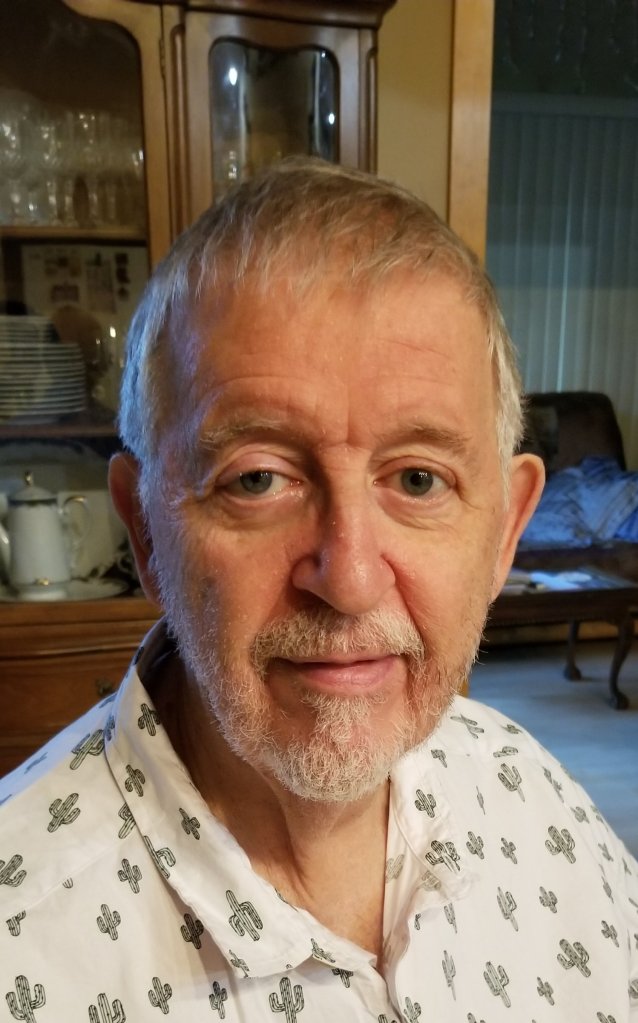
Haircut and beard trim day

Two questions serve as my starting points. The first, “Am I taking as much care with my client/family member’s body as I would with my own?” It’s kind of the “do unto others…” philosophy. And the second question is “Am I being sensitive to, and respectful of, their own ways of doing things?”

I have a whole different outlook on the world when I’m clean, comfortable, and well groomed. I like to look good – most people do. That desire is still there even when people are disabled, elderly, or sick. Helping them achieve those qualities helps them feel better, and heal better. It’s important work.

I am a caregiver.