A to Z Challenge: Letter B for Bodily Care

It’s Day 2 of the A to Z Challenge! Only 24 more posts to go on the theme of caregiving. When it comes to caring for bodies, don’t forget to take care of your own, fellow caregivers! Like the flight attendants tell us “put on your own oxygen mask first”…

I am a caregiver. I care for people when they can’t care for themselves. Since we all live in bodies, bodily care is pretty high on the list of things to do.

When I studied to become a nurse, I thought of bodily handicaps in a very superficial way. It was more about learning to do interesting procedures correctly, or knowing what external treatments would help in different situations. Working in hospice, and in elder care has given me a different perspective. I began to think of all the things I do for my own body, that gradually become difficult, then impossible, for some to do for themselves.

As a caretaker, I have clipped fingernails and toenails, given haircuts, tweezed eyebrows and chin hairs, scrubbed backs, wiped butts, picked food out of beards, rubbed lotion on dry parts and cleaned up every kind of bodily discharge there is. I’ve chosen clothing and dressed people, washed, blow dried and combed their hair and flossed and brushed their teeth. I’ve cleaned ears. I’ve helped people walk, sit, and lie down when they couldn’t make their bodies do those simple actions. And I’ve spent hours trying to help people be comfortable in their own bodies.
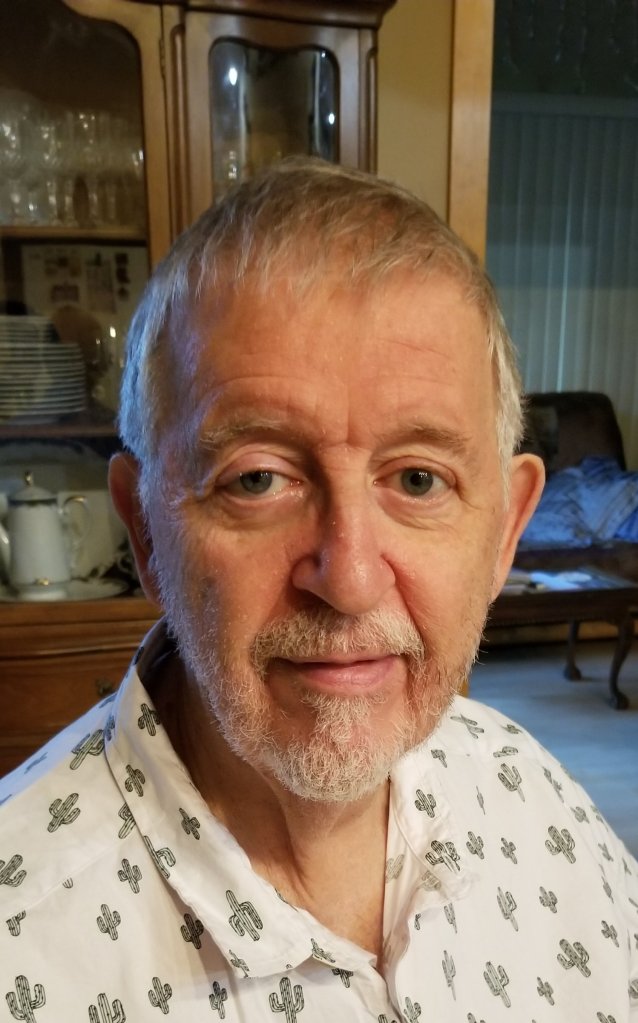
Haircut and beard trim day

Two questions serve as my starting points. The first, “Am I taking as much care with my client/family member’s body as I would with my own?” It’s kind of the “do unto others…” philosophy. And the second question is “Am I being sensitive to, and respectful of, their own ways of doing things?”

I have a whole different outlook on the world when I’m clean, comfortable, and well groomed. I like to look good – most people do. That desire is still there even when people are disabled, elderly, or sick. Helping them achieve those qualities helps them feel better, and heal better. It’s important work.

I am a caregiver.

A to Z Challenge: Letter A for Acceptance

Ever since “sheltering in place” and “social distancing” became the norm, writing has become difficult, more like work I can’t concentrate on. I’ve been worried that this year’s A to Z challenge would be hard, maybe unsuccessful, and probably not fun. Rather than give up, I will possibly write things that are a bit strange, just to make the 26 days easier, and maybe more fun. Fun is good and worth pursuing.

Way back in the dark ages I got married and left behind a good life and a good friend, my mom. We’ve remained close, but I’ve always told myself that I wanted more time, daily time, to renew that relationship and do life together again. When my dad died a few years ago and mom was alone, I started to think that it might be time. She was starting to want help in small ways, and I knew I wanted to be there, to give whatever care was needed in the future.

Mom and I

Meanwhile my husband, who thought he would work at his desk until the day he died, started not enjoying work as much as before. He struggled with some physical problems. He lacked energy and motivation. Retirement started looking good to him.

It took a long year of planning and hard work but in July of 2018, the retirement happened, our house in Florida was emptied and ready to sell, and we moved to Wisconsin to be near mom. A couple months later my husband was diagnosed with Lewy Body Dementia, which changed our lives significantly. I was suddenly thankful to be in a simpler living situation, near a supportive family group. Caregiving life had started.

The husband and I

Accepting caregiving as part of my life, something I chose to do, not a lifestyle forced on me, was key in helping me to be a satisfied, basically happy caregiver. Maybe it wasn’t as hard for me as for some because I had already been a parent (the ultimate caregiving opportunity) and chosen nursing for a good part of my working life.

Nevertheless, one of the most confusing things about caregiving has been the temptation to feel like my life has been “taken over” by the needs of someone else. I’m working at a job that, at times, feels like I have no choice. I’m trapped and have to do it. If I rebel, guilt can start to dictate to me. Nagging voices try to tell me what I “should be doing” if I’m a good mother/wife/daughter/family member. My thinking gets filled with those limiting words; trapped, forced, should do, have to, guilt.

But the truth is that I have a choice of how to respond to people in need. I could choose not to be a caregiver. There are options these days and not everyone is able to offer the same kind of caring. What I do know is that if I feel like a martyr, I won’t be as effective in the care I give and I also won’t be fun to be around. It can get toxic.

I believe there is a realistic way to look at the limitations of caregiving. Being married has limitations when compared to being single. Having children has limitations when compared to not having children. Some jobs are limiting when compared to other jobs. So it is with caregiving. There are days when I am tempted to think of fun things I could be doing, other than taking care of someone else. But, thinking about all those other options will probably rob me of opportunity to find value and fun in what I’ve chosen to do.

Caregiving, as a choice, has it’s hard times just like any other path, but IT IS MY LIFE. I’m accepting my choice. Instead of holding others responsible for my happiness, I’m going to use that energy to make this life as good as it can be. Acceptance makes that so much easier.

Am I alone here? When have you found yourself in a time consuming caregiving role? What limits were especially hard for you to accept? Can you tell me about it? Would you have moved NORTH for retirement?!

Zigzag

the letter Z

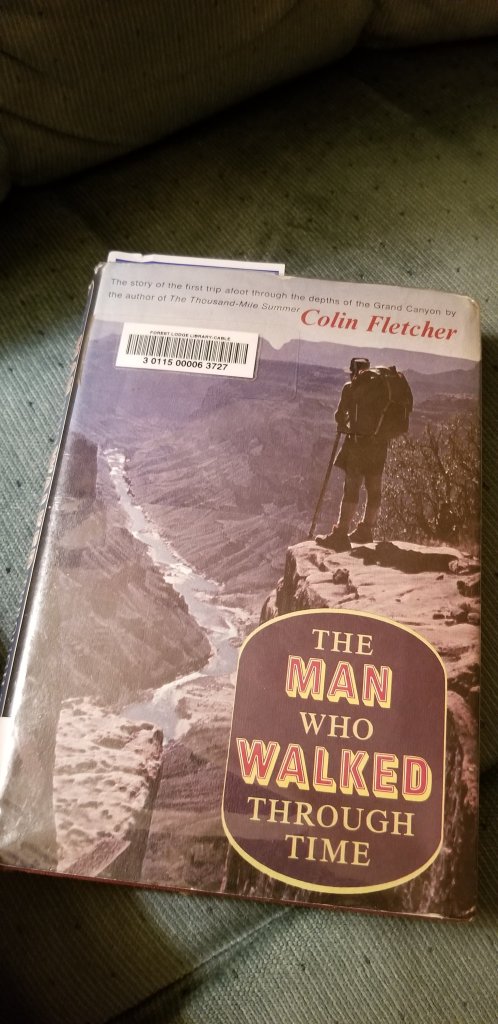
Distances in the Grand Canyon are described in various ways by those who have hiked them frequently. There are straight line miles, “as the crow flies” miles, and the miles spent zigging and zagging, as Colin Fletcher called it.  From “The Man Who Walked Through Time”,

“Cross-country on foot, miles are always misleading: the hours are what count. In the Canyon, miles become virtually meaningless. From start to finish of my journey I would cover, in a straight line, only forty-three. The river mileage came to one hundred and four. When I ran the map measurer from one end to the other of my proposed route, carefully following each winding contour, it registered just two hundred. But I felt sure, and Harvey Butchart greed, that I would walk at least four hundred miles as the foot slogs. And there were times when I would be lucky to travel half a mile in an hour.”

Another word, switchback, is often used to describe hiking trails and roads that go up or down steep hills. The trail will go in one direction up the hill, turn 180 degrees and continue uphill in the opposite direction, and repeat until the hill is climbed. The main purpose of this zigzag process is to protect the hill, and the trail from erosion. It is also a way of controlling the grade for ease of hiking, although it makes the distance considerably longer.

Almost every place I’ve hiked has been in hilly or mountainous terrain. Often there are switchbacks and there will also be signs to stay on the trail and not take shortcuts. Shortcuts that go straight down the hill will get worn down and become a path for rainwater to follow, producing erosion and eventually the trail will be ruined. It’s tempting at times but I’ve learned not to take those shortcuts.

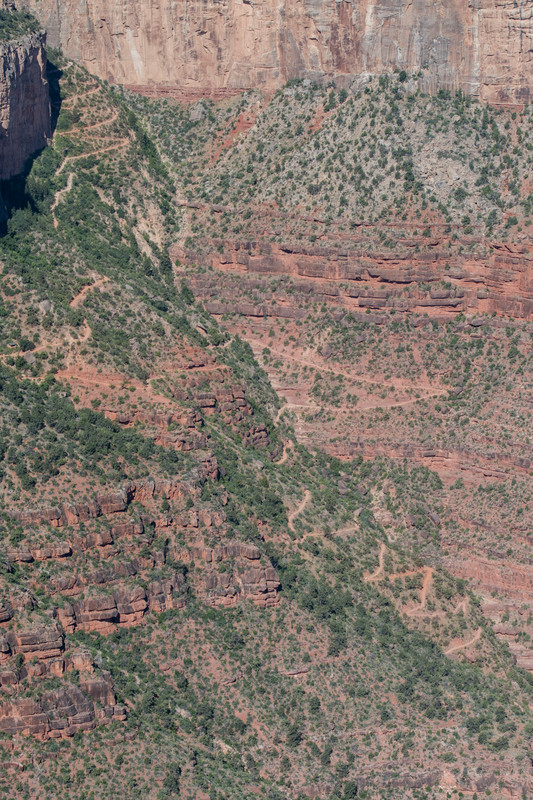
The descent into the canyon includes so much vertical distance in such a short space that there will be a lot of zigzagging, especially on the South Kaibab. The picture below is of a section of the Bright Angel Trail, the upper left corner and lower right corner have a lot of visible switchbacks. Looking at this picture makes me think this is going to be a long, grueling climb. What fun! I can’t wait. The word zigzag is interesting because of the z’s which sort of mimic the shape of a switchback. 

portion of Bright Angel Trail, Grand Canyon
Switchbacks on the Bright Angel Trail (most visible at top left and bottom right)
photo from canstock.com by Kelly Vandellen

We are at the end of the alphabet once again. The A to Z is a valuable writing experience for me, but more than that, it is a joy to meet others in this online blogging community. I am always amazed at the creativity, the sharing of comments and encouragement, the friendship extended, and the way it is all shared through the written word. Thank you to everyone who read and commented, and to the organizers of the A to Z. It has become my April habit.

YIZI GO

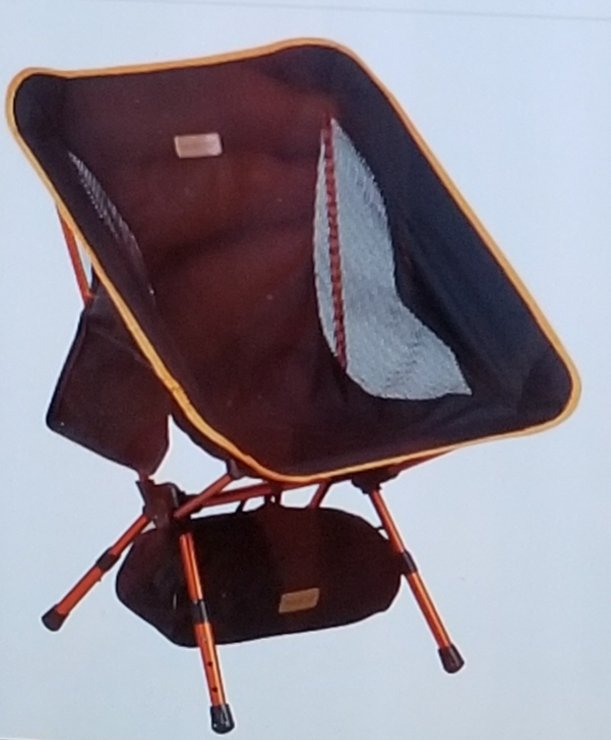
YIZI GO This is a portable camp chair made by Trekology. Who knew that I needed a camp chair? According to the hike guidelines it is nearly a necessity, listed in fourth place, right after tent. They must have anticipated my skepticism because they also listed their reasons, “Canyon surfaces are invariably hot, cold or uncomfortable to sit on”.  Okay.

So, I dutifully went online and spent four hours reading reviews and looking at camp chairs. What a job!

Do I want it to be light enough to carry for miles, or do I want it to be strong enough not to break when I sit on it? If I believe reviews, it’s one or the other, not both.

My chair, here it is.

I decided on the YIZI GO. Do you know why? Yes, so I would have a pretty cool subject for the letter Y. No kidding. It also turned out to be a good buy and I feel favored in my choice. I put it together a couple of times and once I learned how, it wasn’t as hard as the reviews indicated. I sat in it and it was comfortable. It has adjustable legs so it can be a little higher than some, and yet it is lighter than quite a few of the models. I like that it has a little pocket, a carry sack, and a ground tarp (had to order this extra) so the legs don’t sink into the dirt.

There are so many interesting pieces of equipment that are tempting to buy. I have a hard time getting out of stores that sell camp equipment without getting something. But this was the only one that had a really useful name. We all have our reasons… just sayin’.

Xeriscape of the Canyon

Xeriscape: a landscaping method that employs drought resistant plants and special techniques to conserve water.  I love plants! Can’t forget to do a little research on plants…

I’m thinking that someone did a pretty good xeriscape job in the Grand Canyon. Looking at the chart below with rainfall averages for the South Rim, North Rim and the Inner Gorge, I see only one month, August, with significant precipitation. The highest number for any month is 2.85 inches. The Grand Canyon is mostly desert.

I am so glad we are not going to the Inner Gorge in July or August (the numbers with the little stars by them – see note about 120 degree temps!!!)

In spite of that, and because of the climate changes with elevation, it is amazingly rich in plant life and almost all are drought resistant. Here’s a list:

  • 1, 737 known species of vascular plants
  • 167 species of fungi
  • 64 species of moss
  • 195 species of lichen

There are 12 plants that are only found in the Grand Canyon (endemic), and only 10% of the plants in the Canyon are exotic (from somewhere else and probably invasive). Those are pretty special statistics.

There is such a variety of eco systems in the canyon. As you can imagine, along the river where there are seeps and springs and tributaries joining the Colorado, there will be willows, acacia, rare plants and hanging gardens. At higher elevations there is desert scrub, then pinyon pine and juniper, then at about 6,500 feet above sea level the Ponderosa pine forests start. On the north rim there are some mountain meadows and subalpine grasslands.

I’m glad I don’t have to forage for food while I’m visiting the canyon, but how good is it to know that there are things there that can be eaten? I found a website telling me that the top three plants that could save me from starvation are the banana yucca, the currant bush, and the cereus cactus. Maybe you should know about them too – you never know where you’re going to find yourself. Click the link. https://grandcanyonhelicoptertour.net/top-3-edible-plants-of-the-grand-canyon/

I would have a tough time creating a xeriscape that would have the natural features and beauty of the Grand Canyon (unless I had a couple billion years to work on it) but I am expecting to enjoy and photograph it – a favorite pastime. Hoping to add some stunning pics to this post after the hike.

Why?

Why?

Do you ever wonder why you are drawn to adventure? Even if you only like to read about adventure, discovery, exciting lives and times, have you stopped to think about why those stories are appealing? Why do we have bucket lists? Why do we purposely choose some challenges and count them worth the pain they may cause? Why do I want to sleep on the ground for five nights, hike 20 miles up and down a distance greater than four Empire State Buildings, in uncertain weather with only what I can stuff into one duffel bag, and do all this with 7 strangers who might snore even worse than I do? Why?

My thinking – it’s because we are made in the image of an adventurous God. Big plans, big ideas, a view of existence so broad and all encompassing that we can’t begin to understand it, all that starts with him. It’s mystery and we are made to be curious and to seek it out.

The Grand Canyon is a project on a scale bigger than we can imagine, yet the processes that formed it were designed and patiently overseen.  Colin Fletcher in “The Man Who Walked Through Time” was trying to wrap his mind around the length of time represented by the Grand Canyon – millions of years.  He had this to say, and I quite agree.

 “Most of us, when we first think deeply about such time spans, tend to draw back in fear from their brink, just as we tend at first to draw back in fear from the brink of anything so immense as Grand Canyon. But it is worth remembering, I think, that some element of fear probably lies at the root of every substantial challenge. And it makes no difference at all whether the challenge is to your mind or to your body, or whether – with richer promise than either, alone – it embraces both.”

The Man Who Walked Through Time, p. 4 by Colin Fletcher

That fear thing! I will admit to being drawn to things that are capable of frightening me.  Isn’t that the essence of challenge? I am habitually choosing challenges, small, large, and in between, because I want to know if I can prepare well enough, mentally and physically.  The prospect of seeing and experiencing wonderful things that I would otherwise miss pulls me into adventure.

My adventure is somewhat ridiculous when compared to Colin Fletcher’s goal of walking the Grand Canyon from one end of the park to the other, but another quote from him resonated strongly with me.

 “I looked east and west, as far as my eyes could strain, until cliff and terrace tapered way into hazy distances. It was mysterious and terrible – and beckoning. And some time during the afternoon, as I sat on the rink of this strange new world, it came to me that if a route existed, I would walk from one end of the Canyon to the other. Once the idea had crystallized, no hideously sensible doubts reared up to plague me.  And I did not need such fragile props as “reasons”. The only question I asked myself was whether the project would turn out to e physically possible. Perhaps it is in this kind of simple certainty that most of the world’s ridiculous and wonderful dreams are born.”

The Man Who Walked Through Time, p. 6 by Colin Fletcher

Hmm… I know what he means by “hideously sensible doubts” and from time to time they may plague me.  But sometimes, like with this Grand Canyon thing,  a challenge just comes to me, from out of nowhere, and if it’s physically possible to do it, I don’t need reasons. Just sayin’…

Unable

Unable

It seems I am unable to come up with any U word that has relevance to my Grand Canyon adventure, other than unable. I was complaining about this to my brother and sister in law tonight while we were walking around the wetlands, enjoying 60 degree weather and the sights and sounds of spring.  They felt obligated to help me out with these suggestions:

  • Underwear (not sure I need to write about that…)
  • Ugly (that would be why I’m not writing about my underwear)
  • Underwire (not even in my underwear vocabulary)
  • Under (appropriately broad topic…)
  • Useful (but I think I’ve covered all the useful gear already, or plan to)

 Since I only have a few hours of April 24th left, I’m just going to combine all the above in a very short post.

Yes, I’m taking UNDERWEAR, serviceable, comfortable but possible UGLY underwear, which rules out anything UNDERWIRE. In my single person tent, UNDER my sleeping bag, I will have a USEFUL sleeping pad. I’ve never had a good night’s sleep on it but it insulates and is better than nothing. I also went to the thrift shop today and found a light weight, long handle spoon which will be very USEFUL.

And the last things I will say about this adventure is that it is a bit UNUSUAL but not UNPLANNED. Here is a picture of some of my USEFUL gear.

backpacking gear - tent, sleeping bag and pad, water pack and mess kit.
Top to bottom: Plastic bin to hold my gear, sleeping pad (compressible foam but also can be inflated) Camelback water pack and mess kit, my tent, Naljean water jar, down sleeping bag.

Trekking Poles

On most of my long hikes, somewhere along the way I’ve found a stick I could carry and lean on.  On one of the Appalachian jaunts I picked up a ridiculously heavy branch and kept it because it had a natural hand grip that I liked. It has been varnished and is where I keep all my hiking stick badges – the kind made of metal that you can nail on.  It’s pretty but not very practical.

But now I am happy to report that I have real trekking poles. I’ve only used them once but I was very happy I had them.  They are like having an extra arm, or maybe an extra leg to support, share the weight, and give balance. It’s definitely worth looking at what’s out there and getting some poles if you are going to do a lot of walking on uneven ground.

I searched in all the usual places – Amazon, REI, sporting goods stores – and finally found a company called Montem, that makes trekking poles and, well… pretty much just trekking poles! It’s their area of expertise.

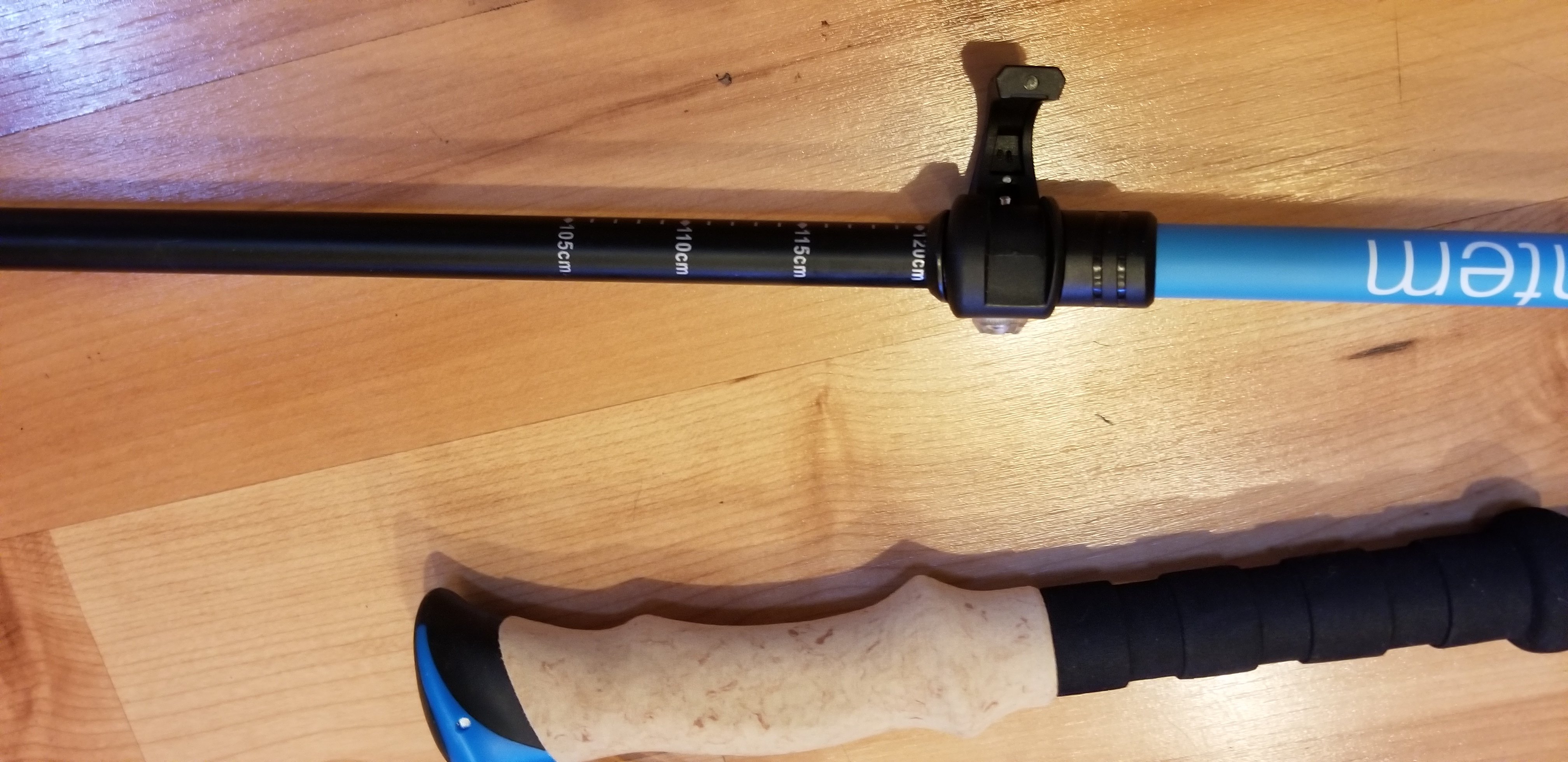
Trekking poles should be strong and light, adjustable in length, and have comfortable hand grips. I’m very satisfied with mine. I chose hand grips made of cork because I thought they looked cool because they are soft, and somewhat absorbent when my hands get sweaty. The adjustable length feature has strong locking clamps that hold well, and they will telescope down to a length that fits in a suitcase. That’s very handy when you fly somewhere to hike.

Close up of adjusting mechanism and hand grips.

I’m sure that the poles will really help on this hike, especially on the knee jarring descent. My brother, who knows, told me so. I’m going to believe him.

Have you tried using trekking poles for a hike or even a long walk around the neighborhood? You never know when you’re going to have to fend off a stray dog, or need to poke something. Might as well have a good pole, just sayin’…

South Kaibab Trail

We are on the homestretch of the A to Z this week with only eight letters to go. As in hiking, this final stretch is going to be challenging since I no longer have posts written ahead and am getting tired (and would rather enjoy spring outside than do writing inside). It feels like uphill all the way…

The South Kaibab Trail is the one my hike will start on – they call it a corridor trail, meaning that it is one of two or three that is regularly patrolled and maintained. It is part of the Arizona Trail system going all the way from Mexico to Utah.

After our first day of having our gear checked over and learning about the area we will walk through, I’m guessing we will meet early at Bright Angel Lodge and take the first shuttle bus of the day to the trailhead. It’s a ways away from Grand Canyon Village and there is no parking there for private vehicles. We will start our descent of 4,700 feet over the next seven miles. We will meet mules and other hikers on the trail. There are a couple restrooms on the way, but no water sources until we reach the bottom of the canyon. About the only shade will be from the canyon walls. The grade will be as steep as 22% at the final section and there will be many switchbacks. Doesn’t that sound like fun? But wait, it’s worth it.

There just aren’t a lot of ways to go down these amazing cliffs.  The South Kaibab was supposedly built to foil Cameron who had started charging $1 per person to use the Bright Angel Trail. It is steeper and shorter but has some of the most amazing views available.

  • One of them is .9 miles on the way and is called Ooh-Aah Point, because that is what most people say when they get there. I’m going to try to say something more original. It’s a good distance for a casual day hike.
  • Next is Cedar Ridge at 1.5 miles, another good point for day hikers to turn around.
  • Followed by Skeleton Point at 3 miles, where there is reportedly a 360 degree view of the canyon, and the first view of the river.
  • Followed by Tip Off at 4.6 miles where the steepest section of switchbacks starts, taking us down to the Black Suspension Bridge, Bright Angel Camp and Phantom Ranch. 

Although it is described as knee jarring, it is all downhill, right? I think I can do it.

The river – there it is!

Reservations

Even as I was typing the R word, I realized several applications of the word to my study of the Grand Canyon and my upcoming hike. 

Reservations #1

As I began reading “A River Running West” the life of John Wesley Powell, I found interesting stories of how the Midwest was settled and the Native Americans living there were forced west. They did not share the concept of land ownership that European settlers had, and eventually found themselves limited by government treaties to reservations. Most of the land surrounding the Grand Canyon is reservation land for various Native American tribes.  John Wesley Powell had very strong opinions about this and also a strong respect for and interest in Indian culture. When he later became influential in exploring and surveying in the western states, he was responsible for putting the Grand Canyon on the map and that is one of his big accomplishments.

I’m pretty sure the Indians didn’t always get a fair shake as this country was settled. I feel bad about that and I think John Wesley Powell did too.

Reservations #2

The other kind of reservation I need to mention is the kind you need for many of the special things in Grand Canyon National Park.  Visitors to the park number around 5.5 million each year. There are long lines of traffic, especially on holidays and other times when people vacation. Because there is limited parking space in the park there are services in nearby towns that include a shuttle bus ride to the park. Flagstaff, Sedona, Tusayan and other nearby towns also have numerous guided tours (do you want to ride in a pink jeep? they have it), helicopter tours, whitewater river rafting and other excursions.

There are five holidays when admission to the park is free. Otherwise, you must have a pass ranging in cost from $35 for a vehicle and all riders to $20 for an individual. All those passes are good for seven days. There are special passes for year long admission, for military families, seniors.  Trip planning suggestions and admission information for all kinds of park passes can be found here www.thecanyon.com/fees or at https://www.nps.gov/grca/planyourvisit/basicinfo.htm 

Going into the canyon for more than a day requires a backcountry permit, no matter where you intend to camp. For the preservation of the canyon, the number of people allowed to go in is limited. We missed one whole year because we didn’t apply early enough. The reason we are able to go on this trip is because my brother joined the National Park Conservancy, and got immediate notice when the trips opened for application.

Most of the visitors arriving for a day take one of the bus rides along the rim or hike part way down one of the major trails and back. These ways of viewing the canyon only require a park pass, not any special permits and offer a good taste of the canyon’s beauty, but if you need a hotel for your stay, you had better make a reservation.

Reservations #3

Lastly, on the topic of reservations, are the reservations I have myself about doing this hiking trip. I wonder whether my knees are going to last, whether I’ll get by with little sleep, if I’m strong enough physically and mentally. So, I have them, but my reservations are not going to keep me from going ahead, just sayin’…