Hiking Boots

A number of years ago I trained for and participated in a 60 mile walk over three days.  From the first days of training there was emphasis on what we were to wear on our feet. Your shoes will make or break your walk, they told us.

One of our training meetings was held at a retail outlet for a major athletic shoe company. I won my first pair of expensive, properly fitted hiking shoes. To be honest, I didn’t understand what people were talking about when they said their perfectly good appearing shoes had worn out. I wore all my shoes until the soles came off or holes appeared.

That hike taught me how important foot protection is when walking long distances. I had some major blisters. Some people lost their toenails, and others had to drop out of the walk with other foot problems. I made it to the end, but it was challenging.

I have two pair of hiking shoes now, low ones and ankle high ones. I’ve had them for over a year and both pair are pretty well broken in.  I know how they feel and how they perform. I’m not sure which pair I will take to the Grand Canyon, but it will probably be the ankle boots, both for protection and stability.
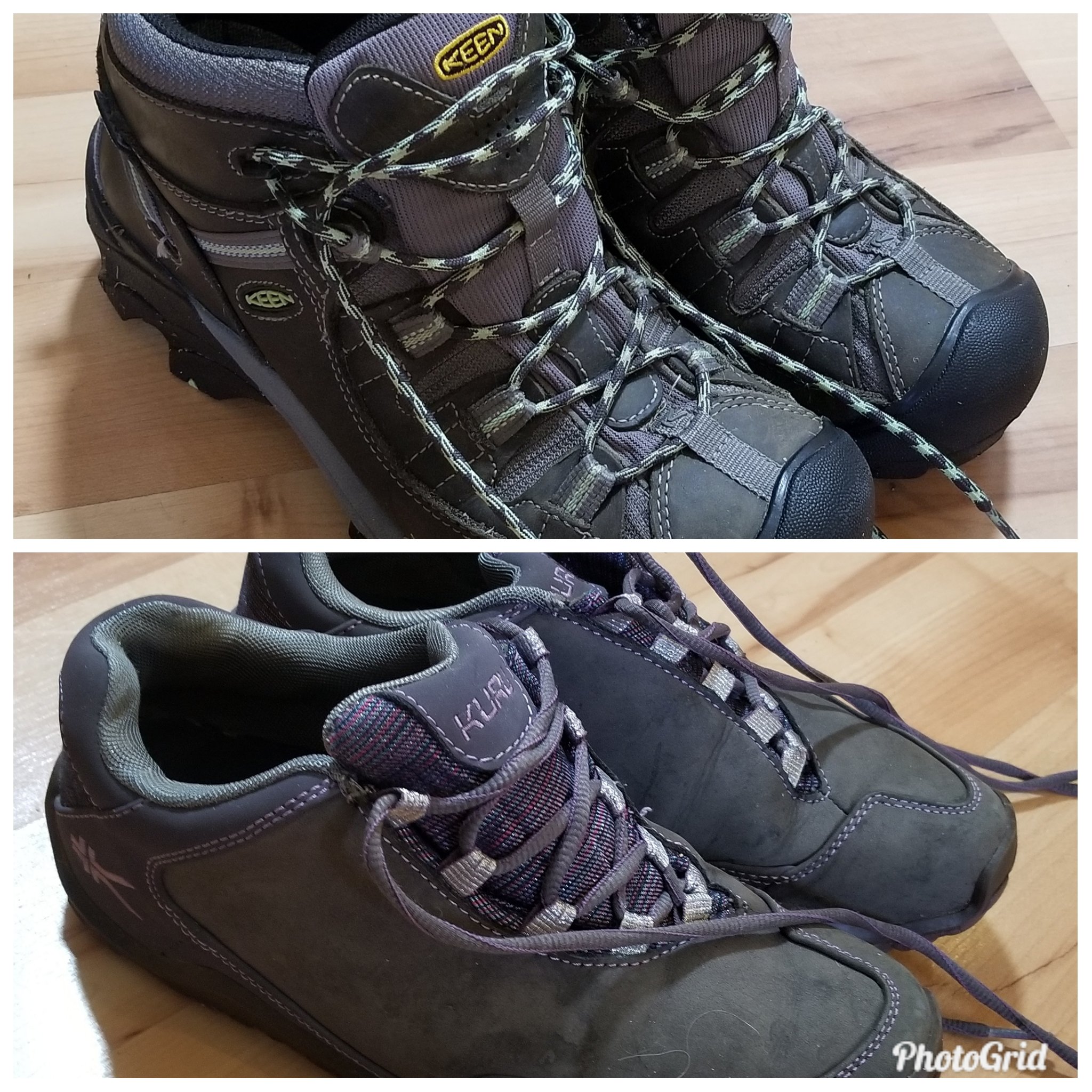
Keene and Kuru – I probably should have used these for letter K

The steep grade on the descent requires shoes with plenty of room in the toe. With every step I’ll be sliding forward slightly and I don’t want my toes rubbing against the toe of the shoe. I’ve seen the recommendation of finding a shoe that’s comfortable and then buying one half size larger. I didn’t do that with my ankle boots, but I’m hoping with the extra lacing up over my ankle that my foot won’t slide much, if at all. These boots also have a thick sole, water resistant qualities and some breathability. Sometimes I wear them for everyday wear just because they are very comfortable.

I’ve also invested in thin, wool hiking socks that don’t bag or bunch up. They are padded and wick moisture away from my feet. (Cotton absorbs moisture, stretches out, and can chafe, so no cotton.) Guidelines for the hike suggest a thin, polypropylene sock as a liner underneath the wool sock but I haven’t found those yet. The most irritating sock problem is that pair that slides down, step by step, and disappears into my shoe. I’m testing all socks to make sure that doesn’t happen.

Another foot saving precaution I’m going to take is to carry certain items in my first aid kit. I’m taking moleskin to cover any blister that appears. I’m taking a product called Body Glide which is great to prevent chafing anywhere it occurs.
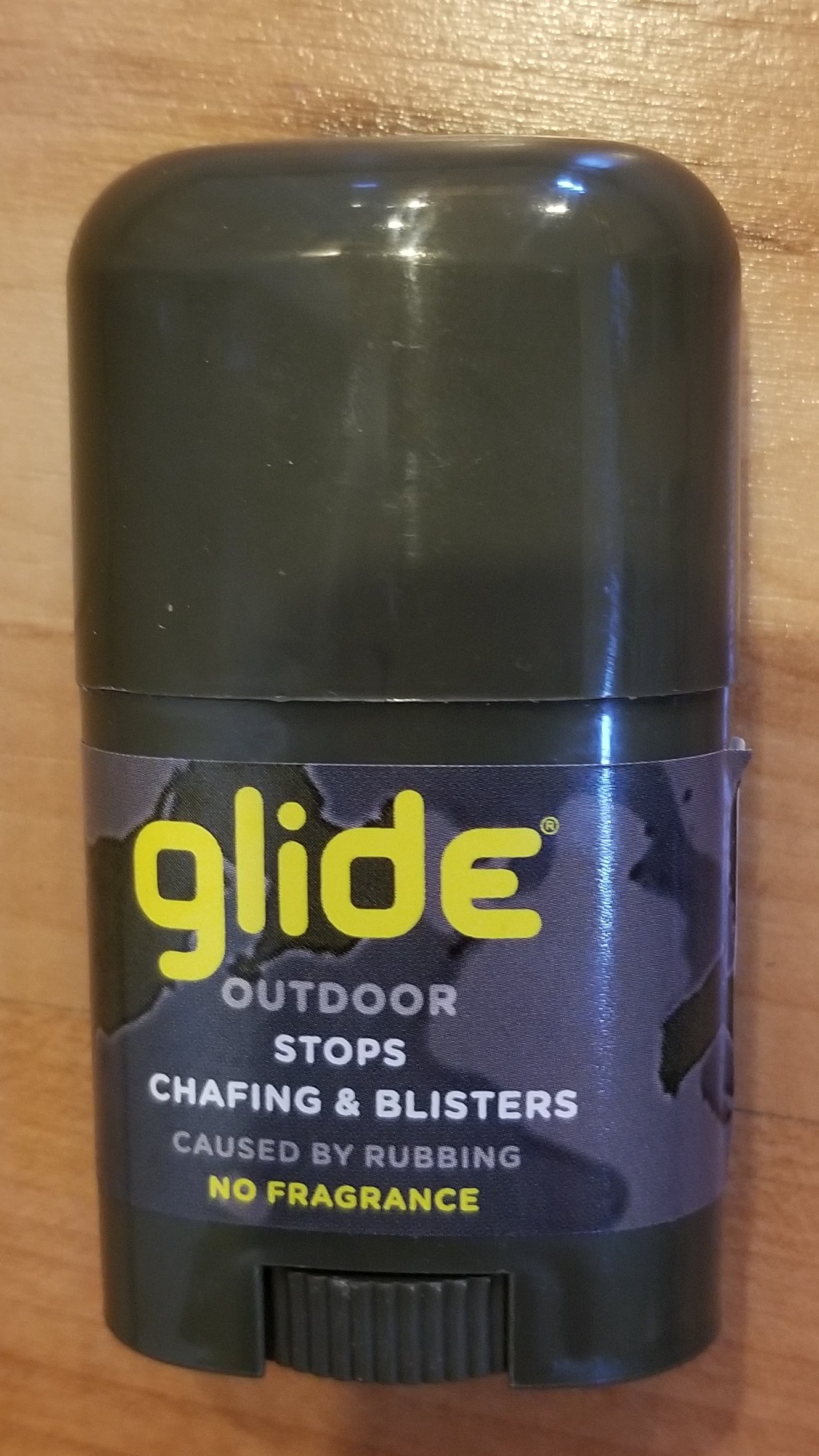
Good stuff to have on a hike.

Guidelines

Generally, I am appreciative of guidelines for adventures like this. Guides are people who have been there, done that. Guidelines are their words given to me to make my trip easier and safer. There is nothing about that to not like.

For this hike, I downloaded several pages of guidelines. I feel like winter has contributed nothing to my level of physical fitness, so the guidelines on training for the physical demands of the hike were… well, daunting at least, terrifying at most.  The tips start out with language like this

“The physical demands of hiking Grand Canyon are in stark contrast to those found in mountain climbing or hiking on relatively flat terrain. The first portion of your trip will be a knee-jarring descent. The climb out will come when your legs are most tired. The atmosphere will become increasingly thin as you near the top (the average South Rim elevation is 7,000 ft.), making it considerably more difficult to breathe.” (I highlighted the scary parts.)

Following this part where they got my attention, were schedules for cardio training, muscular strength training and body/joint flexibility training, the likes of which I have followed NEVER. And that was just a “suitable” workout schedule for general fitness.

This was the next schedule for the month leading up to the hike where a “tougher” training was recommended:

  • Day one: 1.5 hours cardiovascular workout, 30 to 40 minutes lower body strength training
  • Day two: 30 minutes cardio warm up, 30 to 40 minutes upper body training
  • Day three: repeat day one
  • Day four: repeat day two
  • Day five: repeat day one
  • Day six: Day hike at least four hours in duration. Try to simulate the Canyon’s trails by hiking on steep hills wearing hiking boots and back pack.
  • Day seven: Rest

I don’t know. I just don’t know.

And the summation was in bold type: Remember-the fitter you are the more fun you will have and the more you will learn.

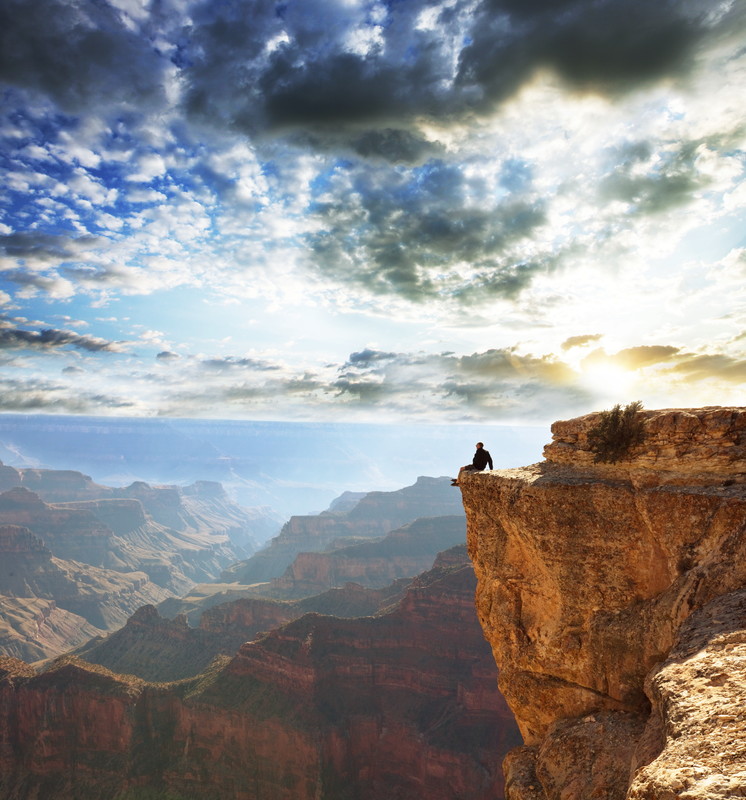
I’m pretty sure this guy missed the guideline about staying away from the edges of scary cliffs.

The food guidelines are a subject for another post so I’ll skip them now. Protecting the park itself is important though, so I will mention some of the National Park regulations of interest:

  • Carry out your trash. Burning, burying or leaving trash or toilet paper is prohibited.
  • Wood or charcoal fires of any type are prohibited. Sterno or fossil fuel backpack stoves are permitted.
  • Use of biodegradable or any other type of soap in creeks or camping within 100 feet of any water source (except at designated sites) is prohibited.
  • Feeding, touching, teasing, or intentionally disturbing wildlife is prohibited.
  • Throwing or rolling rocks or other items down hillsides or mountainsides, into valleys or canyons, or inside caves is prohibited. 
  • Leaving a trail or walkway to shortcut between portions of the same trail or walkway, or to shortcut to an adjacent trail is strictly prohibited.
  • Possessing, destroying, injuring, defacing, removing, digging, or disturbing from its natural state any plants, rocks, animals, mineral, cultural or archeological resources, natural features, or signs is prohibited. Walking on, entering, traversing, or climbing an archeological resource is prohibited.
  • Traps and nets are prohibited. A valid fishing license is required for all fishing.
  • Because of their sensitive and sometimes dangerous nature, entry and/or exploration of any caves or mines must be approved in advance through Grand Canyon N.P.

I can imagine how all these rules became necessary, and what a job it must have been (much like parenting) to figure out all the words that would have to be used to cover all the excuses people would make.

The thought of carrying out used toilet paper is not pleasant but then neither is the thought of seeing someone else’s used toilet paper stuck on a cactus or sticking out from under a rock. I can see their point. Good to know. I can keep these rules. Just sayin’, how hard can it be?

Fletcher, Colin

Fletcher, Colin – writer and hiker

I’m including a post about Colin Fletcher, yes, because his last name begins with F, but also because he was somewhat famous for hiking. In spite of being interested in hiking for quite some time, I had never heard of Mr. Fletcher, so I was surprised and intrigued to find out that he’s considered the grandfather of backpacking. He was one of the first persons who thought long and hard about where he was hiking, how to get there and what to take along. His book “The Complete Walker”, a sort of hiker’s bible, has sold over 500,000 copies and is still in print. So, as a result of studying up on him, I now have a new reading list that I can’t wait to get into! See it at the end of this post.

Fletcher was born in Wales, educated in England and did time in the military in World War II. He also spent time teaching in a Mountain Warfare Training Camp and living in Africa, surveying and helping to build roads. He did some prospecting in Canada, which led to a move to San Francisco in 1956. He hiked the nearby mountains. By this time, exploring and getting out alone into the wilderness was in his blood.

This is funny. His first extended backpacking trip in 1963 was from Mexico to Oregon, all along the eastern coast of California. He did what he called “contemplative walking”.  According to the NYT obituary, he took this hike to think over whether or not to marry his girlfriend. He did end up marrying her but it only lasted a few weeks. He probably should have taken a longer hike and contemplated more.

Daughter Julia and I are out for a “contemplative walk”.

He wrote his first book about this experience and called it “The Thousand Mile Summer”.

His second book, “The Man Who Walked Through Time” was written about his hike from one end of the Grand Canyon National Park to the other. He was the first to do the complete length in one hike.  The park at that time didn’t include the entire canyon but it was 200 miles in length. Apparently, with all the zigzags and explorations, he walked closer to 400 miles.

Not many have done this hike even today. It is incredibly difficult to cross the many deep tributary canyons. In an interview with NPR, Chip Rawlins, who co-authored the latest edition of Fletcher’s book “The Complete Walker”, said that Fletcher had devised a sort of life vest that would float him across some of the rivers he had to cross.  One of Rawlins friends, a river guide, said Fletcher must have been “nuts”. Here is a quote from “The Man Who Walked Through Time”:

“I saw that by going down into that huge fissure in the face of the earth deep into the space and the silence and the solitude, I might come as close as we can at present to moving back and down through the smooth and apparently impenetrable face of time.”

The Man Who Walked Through Time, by Colin Fletcher

Colin Fletcher also traveled the complete length of the Colorado River, from source to sea, when he was 69 years old. His book “The River” is said to have his reflections on growing older.  It sounds like all of his books, in addition to having detailed guidelines on wilderness backpacking (solo), have a lot of philosophical musings. A bonus, all of the reviews say his writing is witty and enjoyable as well. I can’t wait to read these books!

The Thousand Mile Summer (1964)

The Man Who Walked Through Time (1968)

The Complete Walker (2002 edition)

River: One Man’s Journey Down the Colorado, Source to Sea (1997)

Elevation!

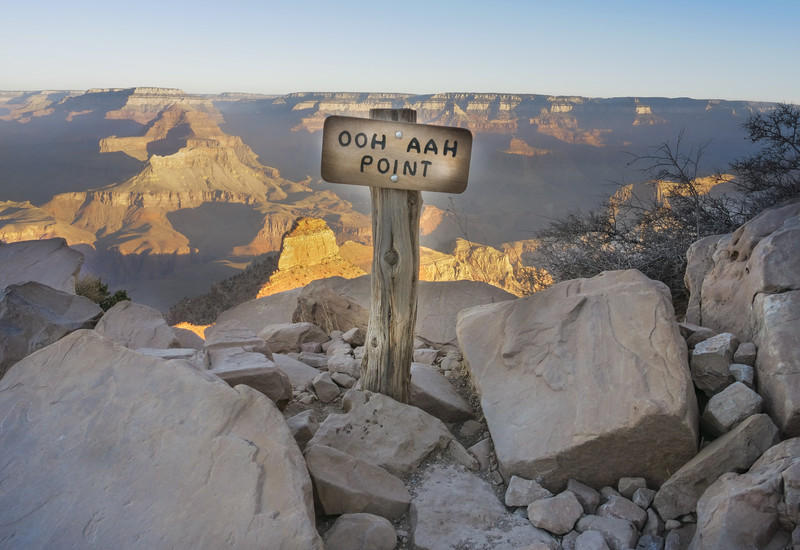
Yes, ooh aah!

I am not going to give a lot of statistics on elevation in this post. What is significant about elevation, as you would expect, is that this is a very deep canyon. Viewed from the rim, the Colorado River at the bottom looks like a tiny ribbon when, in fact, it is quite wide in all the places that you can see it.

Standing at various lookouts on the rim during my first brief trip, I remember feeling that rush looking out over the cliffs. You almost can’t help but think of what it would be like to fall, or jump. The drops are so extreme.  ( I was saddened to hear the news last week of a tourist who fell to his death. Taking pictures can be hazardous. )

The rims vary from 6000 to 8500 feet above sea level. The drop down to the river at the bottom of the canyon varies from 3500 to 6000 feet. Our gain/loss of elevation on Day 2 and Day 4 of the hike will be about 5,000 feet. That is enough difference in elevation to produce a climate change. It is often much cooler up on the rim and quite warm to very hot at the bottom.

That might make it tricky to pack the right clothing. In May, when I am going, it should not be oppressively hot at the bottom and hopefully, it won’t be snowing up on the rim.

This is what I can expect for May weather:

South Rim (where we start) Max 70 degrees, Min 39 degrees, Precip 0.66 inches

Inner Gorge (lowest point) Max 92 degrees, Min 63 degrees, Precip 0.36 inches

One very curious fact – the plateaus on both sides of the canyon are higher than the elevation upriver. Why did the path of the river run from low to high elevation when it first began cutting the Grand Canyon? Of course, it didn’t. There are several theories about why it appears this way. None of them are certain. Geology is sometimes very strange and although it has stories to tell, we don’t understand them all.

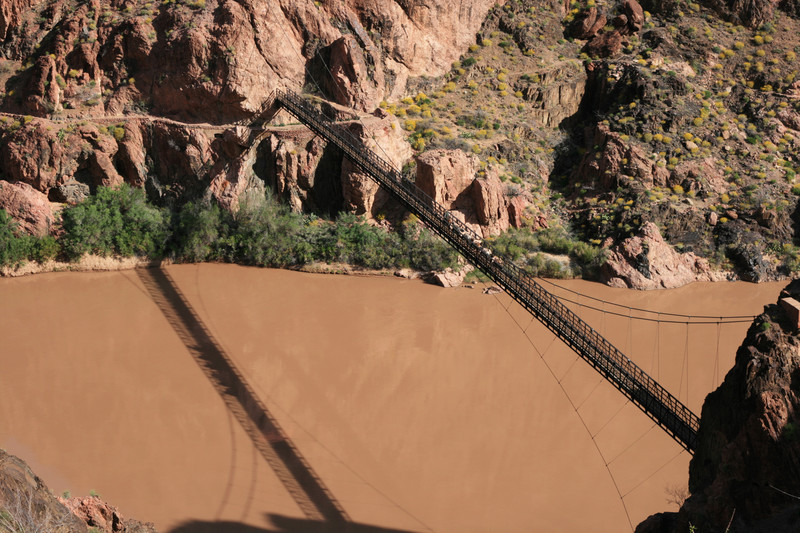
I will end with a picture of one of the bridges that we will cross at the bottom of the canyon – a bridge that still seems scary high, even though it is dwarfed by the walls of the canyon.

It’s difficult to see but there is a mule train crossing the Black Bridge to Phantom Ranch. This footbridge has a solid floor to keep the animals from looking down and freaking out.

Dehydration!

Welcome to Day 4 of the A to Z Challenge. My theme for this year is the Grand Canyon, which I will be hiking this May. As I go through the alphabet I am educating myself about the canyon, the equipment I’ll need and the specific hike I’ll be going on, the Take A Load Off: Mule-Assisted Camping 0514

One day while hiking on the Appalachian Trail I started feeling a little light headed and maybe a little less certain of my footing, on a trail that was rocky and precarious. I was able to make it down to a place where the trail crossed a maintenance road, but couldn’t go any farther. Feeling worse by the minute, I had one of my hiking buddies flag down some rangers in a truck on their way to a campground a few miles further away.

They loaded me up, took me to the campground, helped me set up my tent and gave me some electrolyte tablets to put in my drinking water. That was the end of hiking for me that day. The rest of my group reached the campground before nightfall and joined me. This was my first experience with dehydration. I don’t want to repeat it.

The Grand Canyon, in May when I am going, could have some warm weather. There will often be places without shade. We will be moving and carrying light packs for hours. Dehydration is a serious possibility under these conditions and this is most certainly a place where I don’t want to lose my footing.  Water is scarce there and although there are places on the trail where it is available, we will carry what we need plus some extra. One of my guidebooks says this about the subject:

“Dehydration accounts for more fatalities in the Grand Canyon than any other single cause. Some victims have died with water in their canteens. It’s not enough just to carry water, you must drink it.”

p. 228 of A Field Guide to the Grand Canyon, Stephen Whitney

Great advice. Drink the water. Also, in my hike guidelines, marked as an important note, is the instruction to have sufficient sodium and fluids in the 72 hours before the hike commences. So, no low sodium diet, and make sure that travel time to the canyon does not keep me from drinking plenty of water (not coffee or alcohol).

Here are the symptoms of dehydration. You don’t want to experience these so be on guard: 

  • early on you may have thirst, malaise, irritability, fatigue, flushed skin, and increased pulse
  • leading, later on, to dizziness, headache, labored breathing, tingling, dry mouth, difficulty speaking and walking.
  • It gets worse and then you die.
  • You can recover from mild cases, like the one I had, by resting and drinking as much as possible. Advanced cases take medical intervention.

I will carry three liters of water each day of hiking and drink small amounts frequently, regularly. For me, the easiest way to do this is my water pouch, which I carry in my backpack, with its tubing that comes over my shoulder with a bite valve on the end. It is within inches of my mouth and so handy that I can’t ignore it. I do not plan to miss any of the hike being dehydrated this time. And I certainly don’t want to have to be hauled out in a helicopter, a not uncommon occurrence.

Yes, they standby for emergencies like dehydration.

Colorado River

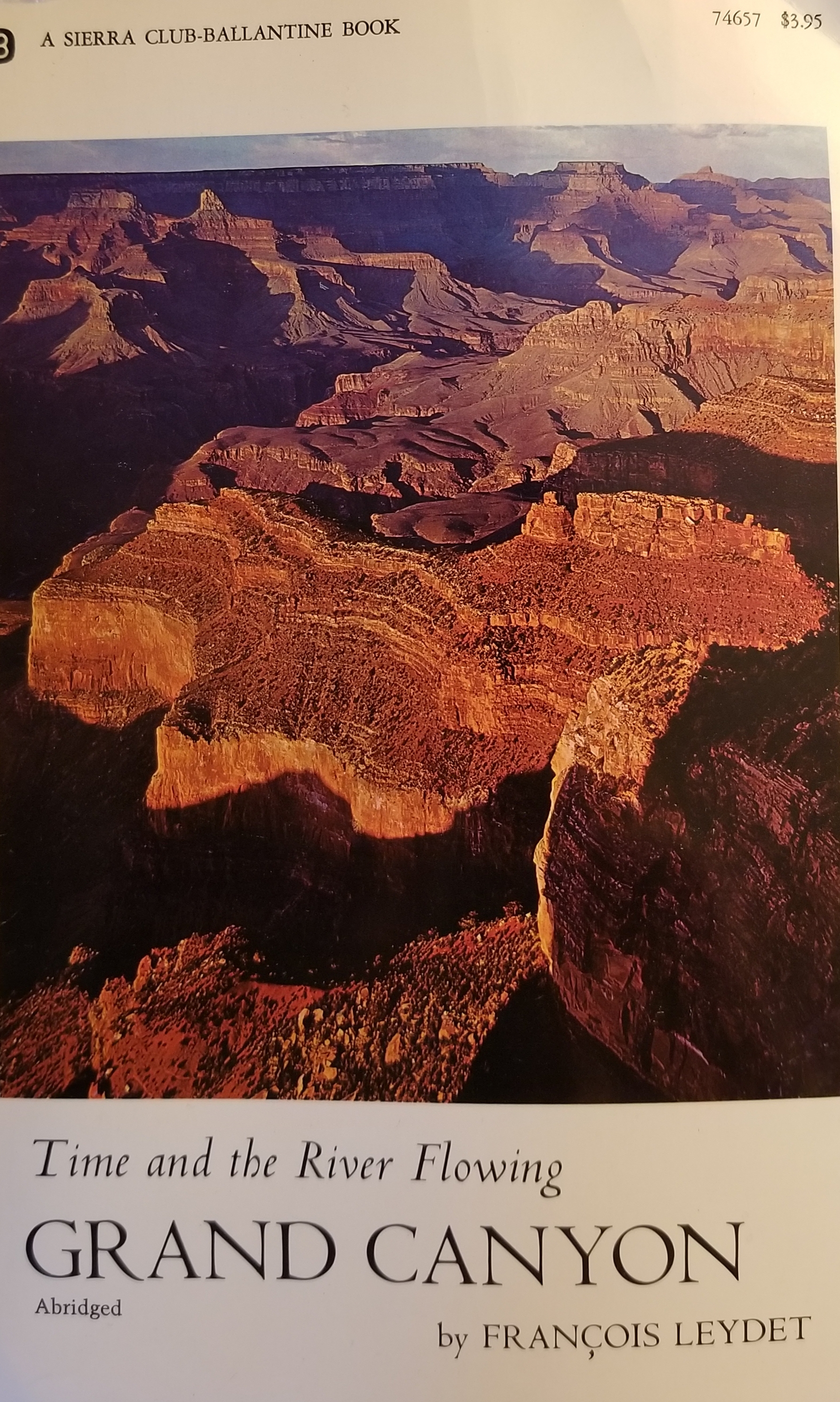
Colorado River – I have a huge poster of the Grand Canyon, a gorgeous picture, that I bought on that first, brief trip past the canyon. Since then I’ve learned that it’s actually the book cover of “Time and the River Flowing” by Francois Leydet. The book is full of photos of the canyon, and quotes and stories from its explorers. The “river flowing” is the Colorado River, and I thought I should know something about it before the hike.

Beautiful pictures with quotes and excerpts from those who have written about the river from the conservationist viewpoint.

It’s easy to get overwhelmed by facts and numbers about this river, because there are so many. Here are a few that I found informative:

  • It’s one of two major rivers that cross the southwest of our country, the Rio Grande being the other one.  
  • It’s part of amazing scenery everywhere it runs as evidenced by the 11 national parks that it goes through.
  • It starts in the Rocky Mountains of Colorado where 90% of its water is snow melt, the rest coming from tributaries along the way.
  • It’s a very managed river in that there are many dams, reservoirs and claims on its water for irrigation of crops.
  • By the time it passes the surrounding crop areas in Mexico, on its way to the Gulf of California, every bit of its flow has been apportioned. The last 100 miles are dry most of the year.
  • There has been much controversy surrounding the building of dams and restriction of the flow. ” The ages have been at work on it, and man can only mar it.” Theodore Roosevelt
  • It used to have a delta and tidal bores much like other larger rivers.
  • It provides the water needs for 40 million people in towns and cities along its course.

The Colorado River was one of the forces creating the Grand Canyon. It’s mind boggling to view the depth and breadth of this chasm and realize that the water, way down there at the bottom, was responsible for this wonder of nature. It took a long, long time. I found this quote that illustrates just how long it took to form the many layers of rock, compared to the time the river has been doing its work.  

  “if the two billion years that have elapsed since the creation of the schists of the Inner Gorge were telescoped into a single day, each minute would represent about 1.4 million years. If the schist formed at 12:01 am of that day, the Paleozoic Era began about 6 pm and ended three hours later. Shortly after 11:00 pm the Mesozoic rocks were eroded away and the Paleozoic strata were uplifted. The Colorado River began to carve the Grand Canyon sometime between 11:45 and 11:58 pm. The entire span of human existence has occurred in the last minute before midnight. “

A Field Guide to the Grand Canyon by Stephen Whitney p.242

I’m told the river is cold, swift and has lots of exciting rapids. We will get to hike along it, perhaps wade in it a little on the day we explore the bottom of the canyon. I can’t wait to see it.

Adventure!

Adventure. I am always looking for it and will tell you that I think of myself as an adventure loving person. I do. In that regard, I have a bucket list of adventures and experiences that I try to work on every now and then. On my list for this spring is to spend time hiking to the bottom of the Grand Canyon.

Years ago, I drove to a family reunion in the “four corners” region, an interesting geographical area, where four state square corners meet.  There is a monument there explaining that as you look in different directions you are seeing Utah, Colorado, New Mexico, and Arizona from that one spot. It is not far from the Grand Canyon so we added a side trip. We had not arranged any excursions ahead of time and were only able to take a shuttle ride along the south rim, but that was enough. The views from the rim are breathtaking and the thought of starting down that trail was so compelling it has stuck with me ever since. I knew I had to do it, someday.

As it happens, one of my brothers spent summers working at the canyon, in various capacities, when he was younger. It has been one of his favorite places over the years and he has hiked nearly all the main trails. I finally gave up waiting for him to ask me on a hike and begged. It worked.

This year’s A to Z Challenge will cover the inspiration, the preparation, the expectation, and the anticipation of my hike down the South Kaibab Trail, my two nights at Phantom Ranch, and the hike back up on the Bright Angel Trail. Since the hike won’t actually take place until May 14th, I’m planning on adding “participation” notes and pictures to my posts after I return.

There is a lot to consider, a lot to learn before going. We have been planning for months already. My brother is taking good care of me as evidenced by the guided trip he chose for us. It is the Grand Canyon Conservancy’s Take a Load Off: Mule-Assisted Camping 0514. In addition, I’ll be spending a few nights in the Mather Campground on the south rim before and after the hike.

Read along on the next 25 posts and you’ll know how to get ready for it too. You will want to go. It will be an adventure!

And so we start on our adventure!

Winter is so great…

20190311_131423909696210527245029.jpg

Today I found out who (not a bird) had discovered the bird feeder. He comes from somewhere via an under-the-snow tunnel to the area beneath the feeder where the birds have tossed out a lot of sunflower seeds. I think he got tired of hunting in the snow and decided to go for the source. It was fun to watch him hang upside down by his back feet while chewing. He looked skinny.

20190311_1712135375164841838744206.jpg
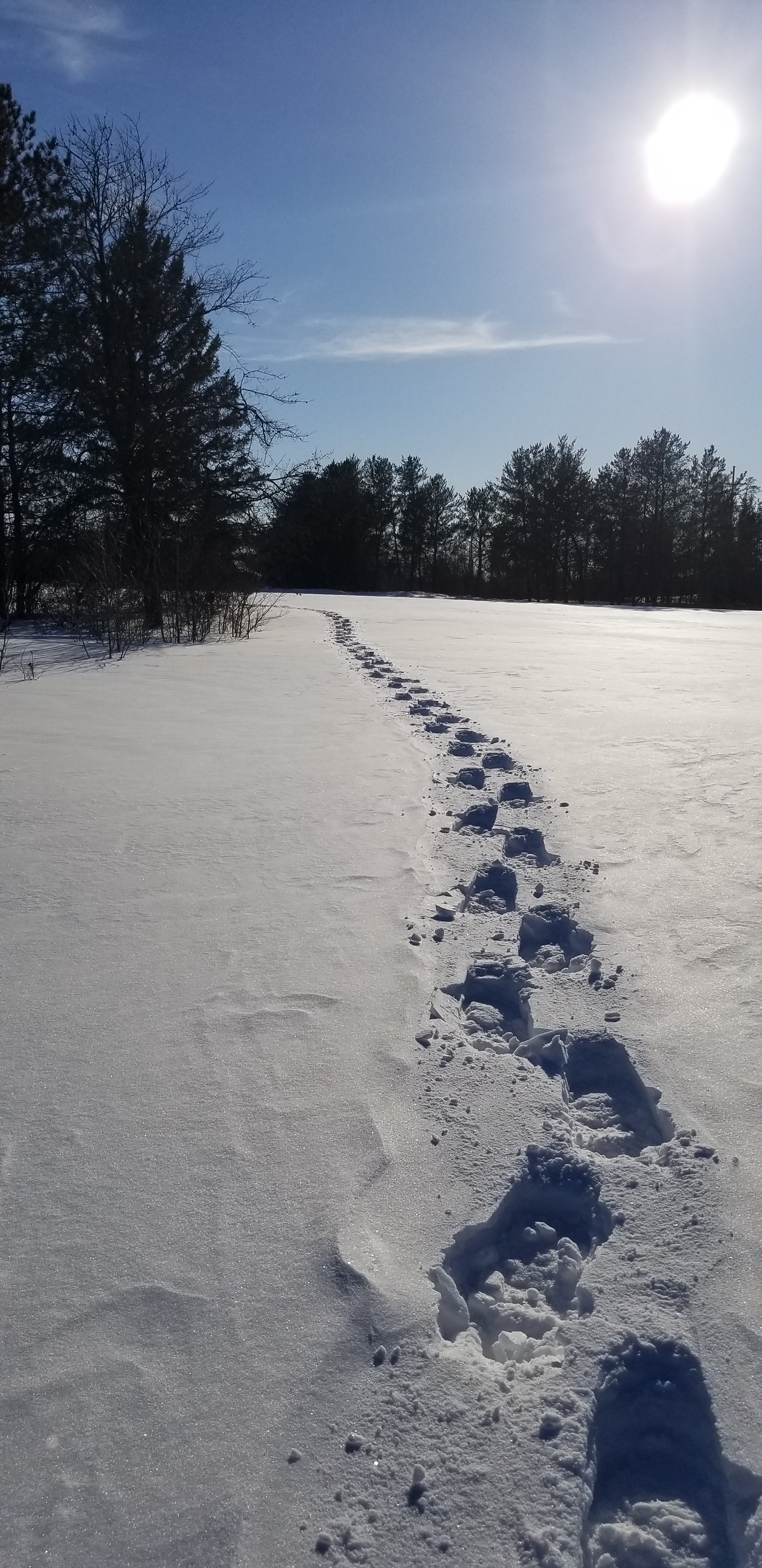
Following the drifted trail, which at this point I can still see.

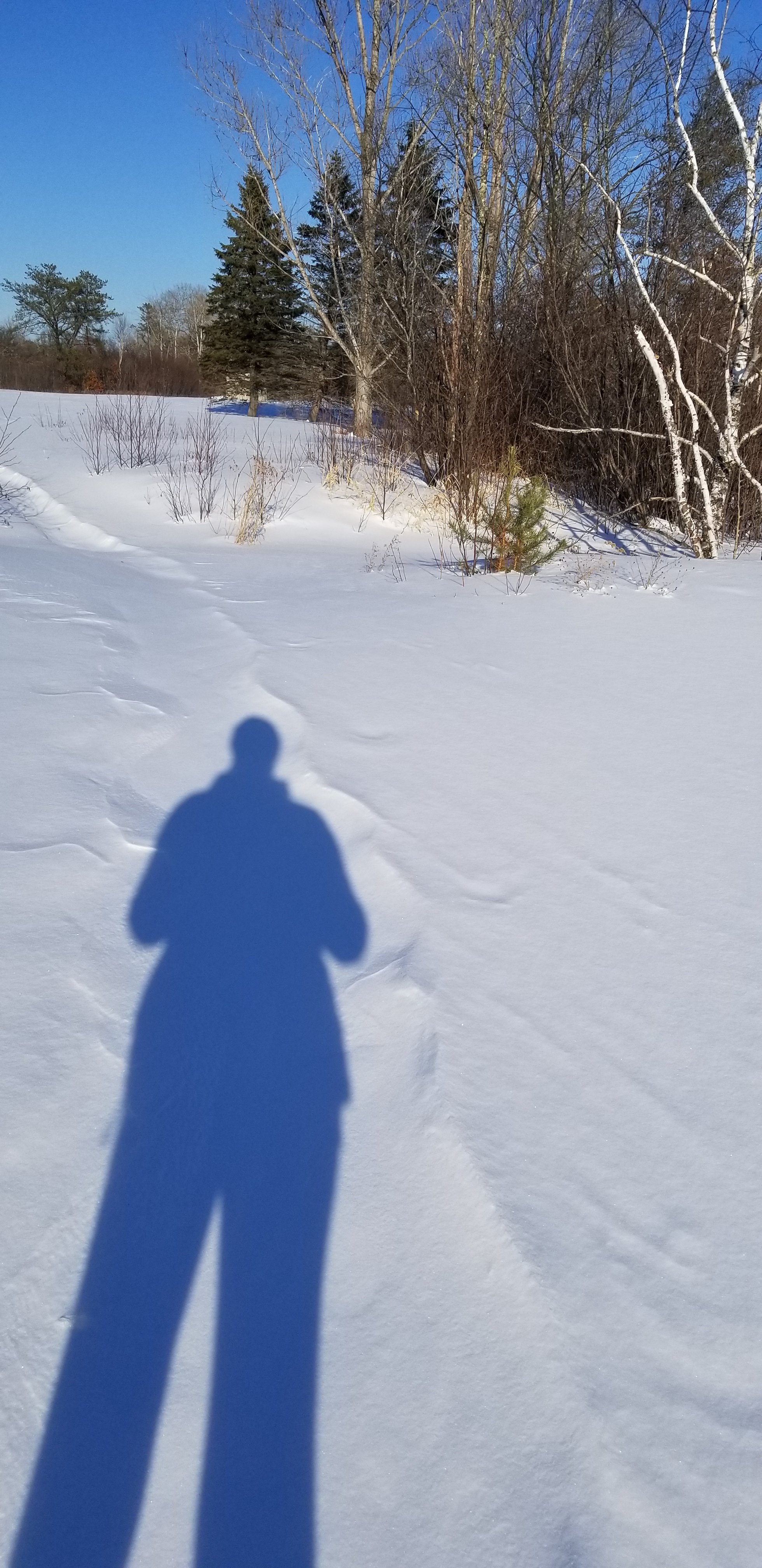
The snow is really deep out there in the untrodden places. I decided to take a snowshoe walk today because it was relatively warm, with a clear blue sky and sunshine. It was odd at five o’clock to still have plenty of daylight, thanks to Daylight Savings Time, and thanks to spring which is just around the corner, I’m sure.

I so, so, so wish I could have had a video of this excursion to cheer me someday when I’m living in the nursing home.

I set out following a drifted trail that had been packed down by several previous walks, but it disappeared rather quickly. The last snow and the accompanying wind had drifted it over and there was nothing except innocent looking whiteness to indicate where I should walk. The field was wide, the trail was narrow. I lost it completely.

At the point in my walk where I was as far from the house as I was going to go, it started getting frustrating. Every step was putting me in snow up to my knees, in spite of having snowshoes on. I had to pick my feet up high and with the weight of the shoes and the snow clinging to them – kind of like working out with weights on your ankles. I started looking for the beeline back to a plowed area, but it looked equally far in all directions.

Then I started experiencing unsteadiness. The snow was giving way unevenly and my shoe would tip to one side or the other, or go toe-down so steeply that it would throw me off balance. This is how I ended up in a rather deep, soft hole with my face in the snow and my feet up higher than my body. Pushing one’s self up does not work well when you can’t find a “bottom” to push against. My arms sank in even deeper than my legs. Did I mention that the snow is really deep now?

Luckily, there were no hungry carnivores chasing me. Actually, I saw no animal tracks at all today proving that the other animals were smarter than I was and either found a path or stayed put. If you’ve never had to get yourself up from this kind of position, you have no idea of how difficult the logistics are. I tried several different tactics before finding one that worked, and once up, I made sure not to fall again. I did a lot of stopping and measuring the distance with my eyes… closer that way? No? Maybe this way? Maybe it’s time to call my brother for that snowmobile ride he’s been promising me? No, too embarrassing.

It felt ridiculous to be talking myself down from pseudo-panic when I was within sight of a dozen houses. I knew it was just a matter of trudging on until I could climb the last snowbank and get on a road, which I finally did.

I would have paid someone to give me a workout like that, and it was free! This is me, convincing myself that winter is so great. Yeah, so great, I love winter. No more walks like that, just sayin’…

20190311_1713046669176871032051922.jpg
Isn’t it pretty out here? And this is not even where the snow was REALLY deep.

Evening Walk

Today I spent a lot of time sitting in the car, sitting in waiting rooms, sitting… and trying not to fall asleep. When there were a few free minutes at home before dinner, I had to get out and stretch with a walk.

This world is such a beautiful place, and if you don’t have places that bring that fact home to you, you need to find some NOW.

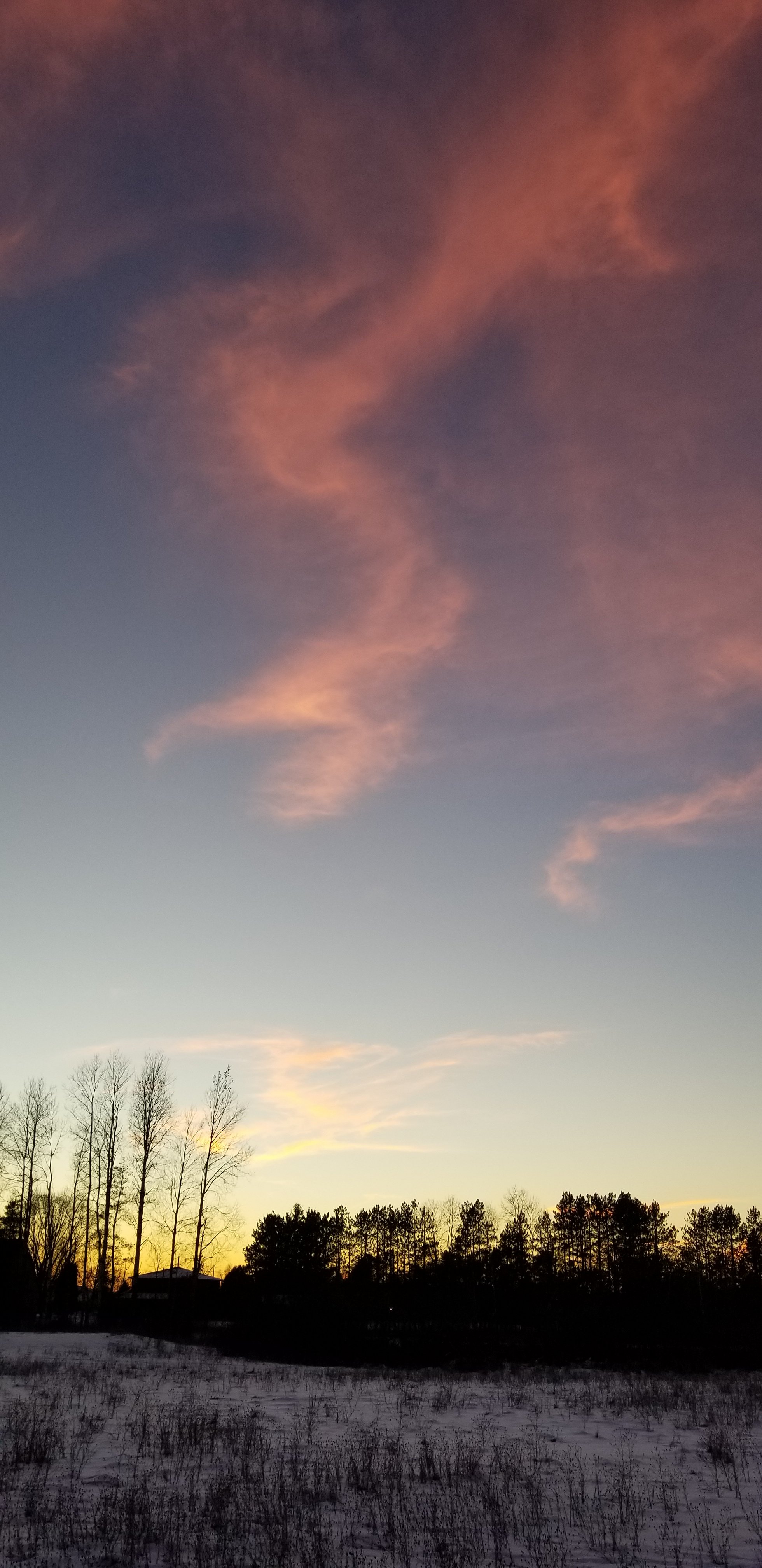
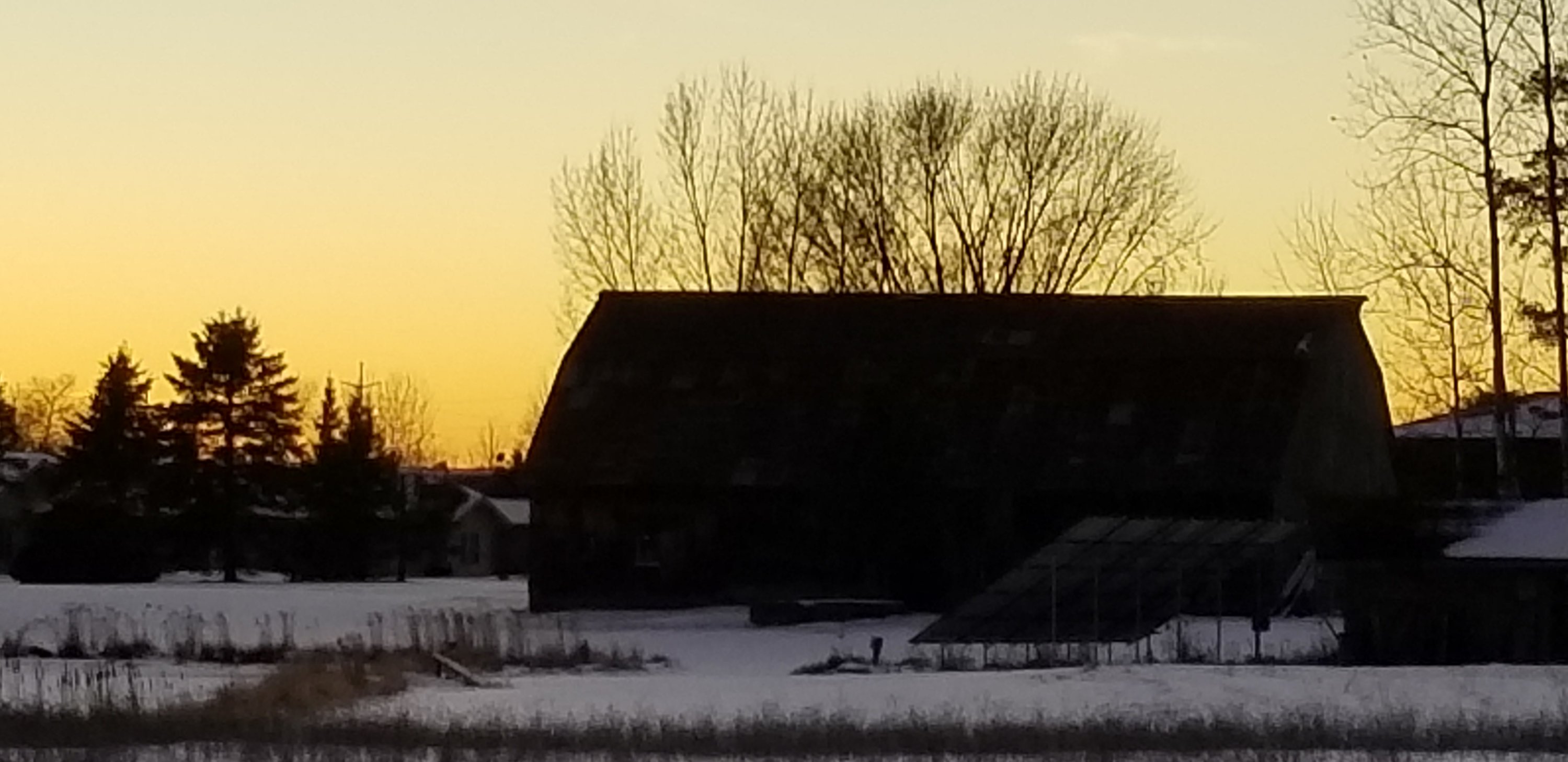
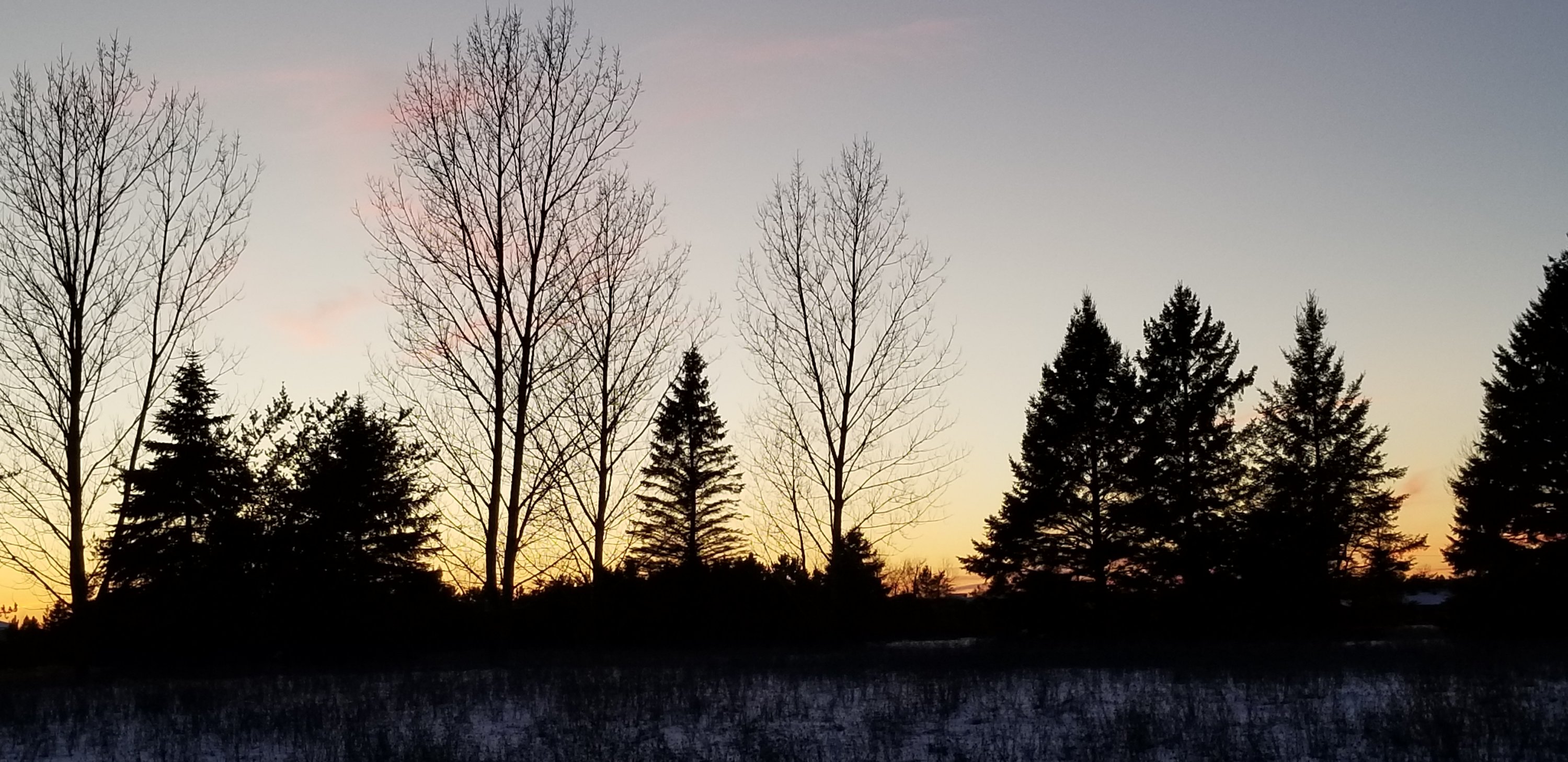
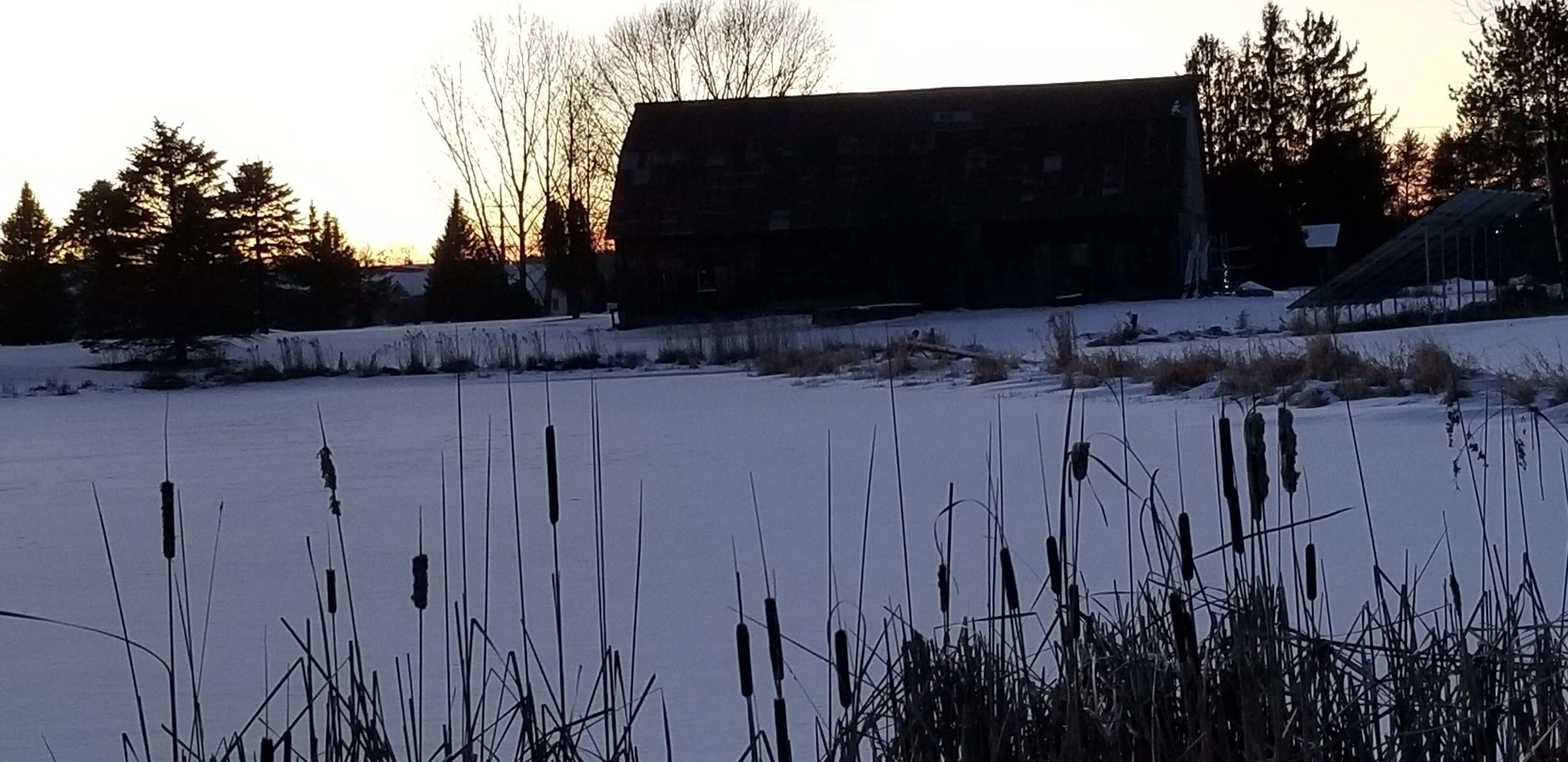
You can come to my place. This is how it looks at sunset on a fairly warm (34 degrees F.) winter afternoon. Enjoy.

20190104_1647386311034754183371393.jpg


The Lodge

Nothing refreshes me, body, soul and spirit, like being outside in the woods and marshes. I had a good dose of nature today.

20181230_1306151315233294094005238.jpg

I have a fascination with the beavers here on our wetlands. (I feel like I’ve said this before, at least once.) Today I was dressed well enough and had no time constraints so I went off the track into the woods to make my way to the beaver lodge – not that beavers live in the woods, but the wetlands are complicated. The water flows into ponds that have fingers of marsh that spread out into all the low places in the woods. I could see the beaver lodge from the path but to go directly to it would mean crossing a bit of ice with occasional open spots. I like to stick to the wooded areas around the edges.


The path, and I was surprised to see that it was an obvious trail, led through the most awesomely beautiful snowy wonderland. There were a lot of animal tracks, but a person with their dog had left prints as well. It’s kind of special when I get to go someplace that I know not many people have gone. I could hardly stop taking pictures.

20181230_1303287999891314992292640.jpg

20181230_1303162355326755450302018.jpg
Ice, followed by snow, piled high on every little twig and branch.


We’ve had some storms in the last few year which have taken down a lot of trees. In addition to that the high water levels have killed trees, and the beaver have chewed a few down too. The woods look like they’ve a rough time of it, but even that has a beauty, in that life and death are there, entangled with each other. The starkness of winter leaves it all visible.

20181230_1306478471673285277179797.jpg
Life and death, in close proximity.


I found the lodge. I walked out on the ice. I even found a place that looked like it might be an entrance into the watery world below the ice – a dark hole, under a log at the edge of the marsh with open water and lots of animal tracks. Could it be where the beaver come and go? I was looking for tracks that might look like a beaver tail was dragging behind, but I couldn’t say for sure that I saw any.

20181230_1255561017659744907691289.jpg
The lodge – easily as tall as I am.

20181230_125942347596505830488850.jpg
and the nearby hole into open water, that has obviously been well investigated by animals.


The lodge is quite a large structure, a mound that can be seen from quite a distance away. On the way there I crawled into the fort built by the survivalists in the burn pile. There was snow in the entrance but further in it was dry and cozy looking. I imagine it could look a little like that in the beaver lodge.  I hope they are in there, safe and warm.

20181230_125523271795504464990357.jpg
Beaver tracks? I don’t know… probably not.

Winter is awfully long here. I don’t know what beavers do in the winter, but it’s probably eating and sleeping for the most part. I hope they don’t get bored…


20181230_1256137184506415551145554.jpg